Thursday, September 30, 2021

The Wrist Watch Man


Sunday, September 26, 2021

World War 1 and the Development of the Wrist Watch


Picture
World War 1 changed society. One of the lesser known ways was the development of portable timepieces.
 
At the beginning of the twentieth century, when most people were out and about, they got the time from church bells and factory whistles. Many had mantel or wall clocks in their homes. Alarm clocks had been patented in the middle of the nineteenth century and were being used increasingly. But outside the home, people went without a watch.

There were two exceptions to this. Gentlemen and people whose jobs relied on timeliness, such as railroad conductors, carried pocket watches. Women who wanted to appear modern hung petite pendant watches about their necks, pinned tiny, brooch-like watches to their blouses, or bound dainty watches to their wrists. These small watches were not very accurate and were more decorative than precise and made small watches appear too feminine for most men to consider wearing.
Picture
The Great War changed that perception. It was one of the first times that artillery and infantry synchronized their movements over long distances. Some of the biggest guns were 75 miles from the front they were shelling, and in order to not rain havoc on their own troops, they had to coordinate who was where to a greater precision than “at dawn.” 
 
 
The phrase “synchronize your watches” was developed. The concept of the creeping artillery barrage, where artillery laid down a curtain of fire that the infantry was supposed to follow close behind, made precise timekeeping imperative. It was clear that men at war needed watches.
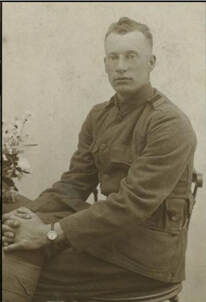
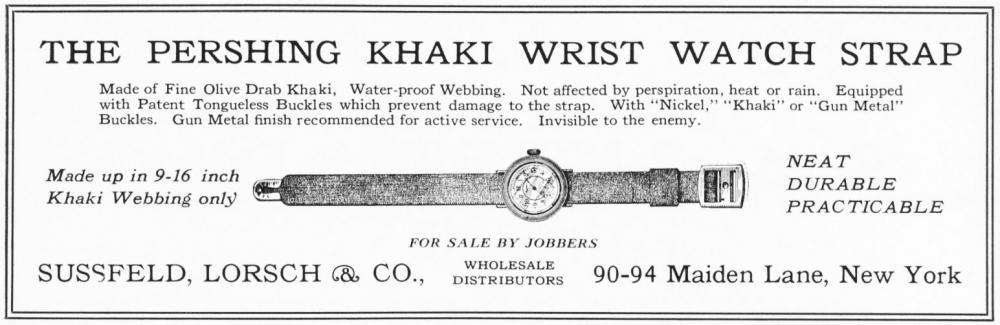
​But what kind of watch was best? A man crouching in a trench or exchanging gunfire with the enemy, simply couldn’t pull a watch from his pocket, open the case, and check the time. He needed a quicker solution. Thus, the wristwatch overcame its effeminate image and become a practical necessity. By 1916, a quarter of all soldiers wore wristwatches. In 1917, the British War Department began issuing wristwatches to all combatants.
Picture
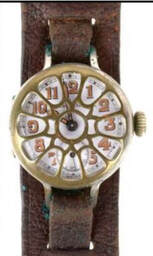
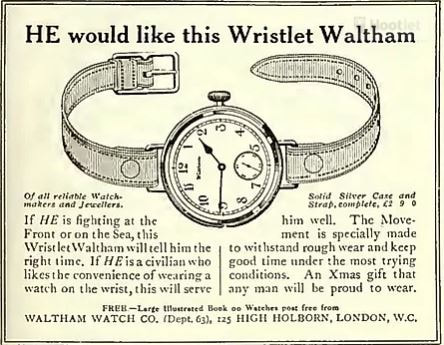
​The first trench watches, or "wristlets" as they were known, looked like pocket watches mounted on a leather bands. They quickly changed to meet the demands of trench warfare.

Hinged covers protected crystals on pocket watches. Trench watches often had hinged cages that didn’t obscure the numerals. These soon became fixed.  

​The creation of luminous dials helped soldiers see the time in dim light. 

Picture
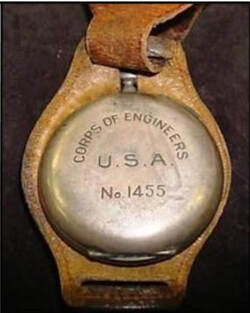
One thing that carried over from pocket watches was the engraving of names, titles, and places on the back cases of watches.  Although dog tags had been implemented during WWI, a personalized engraving could serve as a redundancy system for identification. Different branches of service issued their men different brands and makes of watches. Other watches were gifts from family or employers. Many of the World War 1 watches that are still on the market bear interesting engravings on the back. 

Picture
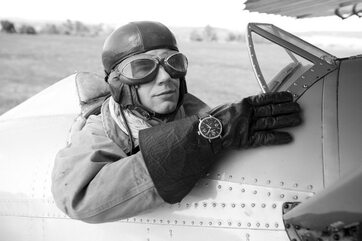
Roughly 1.8 million American soldiers served in France during WWI. Pictures of them in their handsome, trim uniforms, with their watches prominently displayed, helped the general public see wrist watches as symbols of masculinity and bravado, reflecting the spirit of a soldier. The fact that pilots, the most glamorous of all fighting men, started wearing using wristwatches gave wristwatches even more moxie with the American public. By 1930 the ratio of wrist watches to pocket watches was 50 to 1.

Picture
Was the rise of the wrist watch a blip in technological fashion? Smartwatches and cell phones have been taking market share from mechanical watches for a decade now. Could it be that the wrist watch will go the way of 8-track tapes? Or are wrist watches here to stay? Excuse the pun, but only time will tell.

Picture
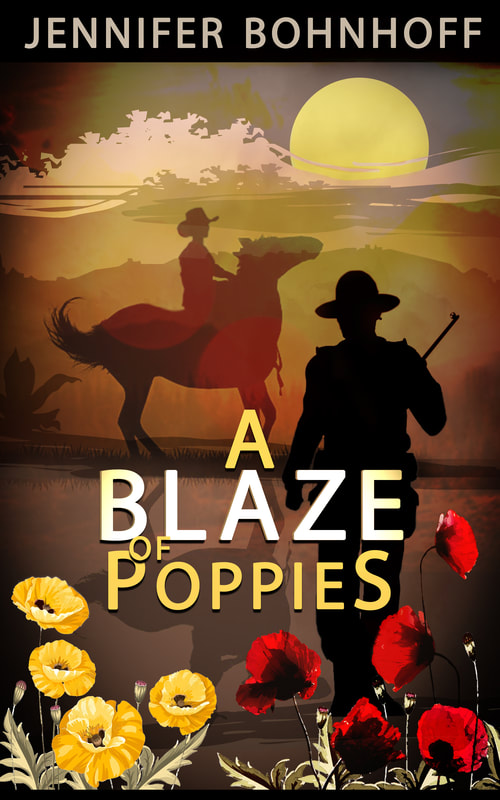
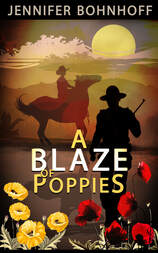
Jennifer Bohnhoff's novel about World War I, A Blaze of Poppies, comes out October 22, 2021. There's still time to preorder the ebook on Amazon

Wednesday, September 22, 2021

Two Fusiliers and Two Poets


PictureRobert Graves was born in Wimbledon in 1895, the third child of ten. His father was an Irish poet and his mother was the great-niece of a famous German historian. Graves learned to box because his half-German ancestry made him the target of bullies.

Graves published his first poems in 1911, when he was a student at The Charterhouse School. One of the young masters there was George Mallory, who introduced Graves to the works of George Bernard Shaw, Rupert Brooke, and John Edward Masefield, and took him climbing. Mallory was later to die on the 1924 Everest expedition.

In 1914, Graves was supposed to go to St John’s College, Oxford. Instead, he enlisted in the army joining the Royal Welch Fusiliers. He was posted to France in May 1915, and fought in the Battle of Loos in September that year. Two months later, he met the poet Siegfried Sassoon, a fellow-officer in the Royal Welch Fusiliers. “Two Fusiliers”, is a celebration of that friendship.

In July of 1916, Graves was wounded by a shell at High Wood, in the Somme. His colonel believed that Graves' injuries would result in his death, and wrote a condolence letter to Graves’s parents. The Times reported that Graves had died of his wounds in their August 4, 1916 edition. This “death” and “rebirth”, which occurred close to his 21st birthday, had a profound effect on Graves’s life and writing.

Graves' bestselling war memoir, Good-bye to All That, was published in 1929 and caused a rift between him and Sassoon and ultimately between himself and his country. He moved to DeiĆ  in Majorca, where he lived until his death in 1985 with the exception of two periods, during the Spanish Civil War and the Second World War, when he was evacuated.

Graves is not only known as a poet and mythologist, but as a novelist. His I, Claudius books were turned into a miniseries for PBS.

Two Fusiliers
BY ROBERT GRAVES

And have we done with War at last?
Well, we've been lucky devils both,
And there's no need of pledge or oath
To bind our lovely friendship fast,
By firmer stuff
Close bound enough.
 
By wire and wood and stake we're bound,
By Fricourt and by Festubert,
By whipping rain, by the sun's glare,
By all the misery and loud sound,
By a Spring day,
By Picard clay.
 
Show me the two so closely bound
As we, by the wet bond of blood,
By friendship blossoming from mud,
By Death: we faced him, and we found
Beauty in Death,
In dead men, breath.

Jennifer Bohnhoff's World War I historical novel A Blaze of Poppies will be published in October 2021 and is available for preorder on Amazon. 

Sunday, September 19, 2021

Funny Fragments from the Front


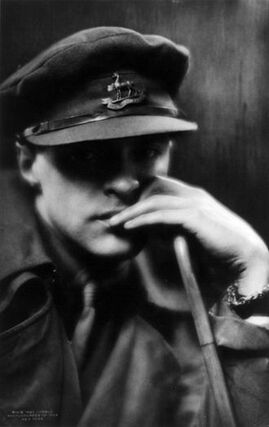
PictureBairnsfather in 1918
Most Americans are familiar with the art of Bill Mauldin, the cartoonist who captured the spirit of American GIs during the Second World War.

The British, First World War equivalent was a brilliant cartoonist named Charles Bruce Bairnsfather. 

Bairnsfather's cartoons were featured in a weekly "Fragments from France," serial published in The Bystander magazine. 

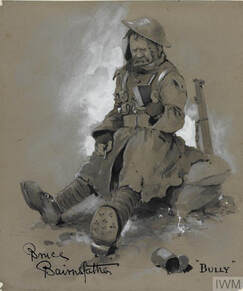
His best-known character, Old Bill, became the face of the British soldier stuck in the trenches. 

​Bairnsfather was born July 9, 1887 at Muree, in a part of British India that  is now in Pakistan. His father was a Major in the Indian Staff Corps, and both his parents were great-grandchildren of a Baronet. He was brought to England when he was 8 years old so that he could be educated. His plans for a career in the military were thwarted when he failed his entrance exams to Sandhurt and Woolwich Military Academies. After a brief stint in the Cheshire Regiment, he resigned to become an artist.
Picture
When war broke out in 1914, Bairnsfather joined the Royal Warwickshire Regiment as a second lieutenant. He served in a machine gun unit in France until 1915, when he was hospitalized with shellshock and hearing damage sustained during the Second Battle of Ypres.

He was then posted to the 34th Division headquarters on Salisbury Plan, in southern England. Here, he he developed his humorous series for the Bystander about life in the trenches.

Bairnsfather's most famous character was "Old Bill", an older, experienced soldier with an enormous moustache.

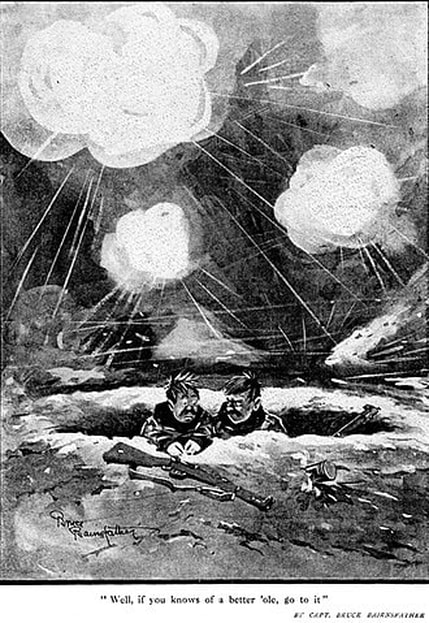
The best remembered of his cartoons shows Bill with another trooper in a muddy shell hole with shells whizzing all around. The other trooper is grumbling and Bill says, "Well, If you knows of a better 'ole, go to it." This cartoon is included in the collection Fragments From France, published in 1914. 

Bairnsfather's cartoon were immensely popular with the troops and created massive sales increases for the Bystander. However, the general public , initially  objected to the cartoons as "vulgar caricatures". As the war progressed and romantic notions of war faded, he became more popular. The cartoons did so much to raise morale that Bairnsfather got a promotion and an appointment to the War Office to draw similar cartoons for other Allies forces.
Picture
When the Second World War broke out, Bairnsfather became the official cartoonist to the American forces in Europe. He worked from England, contributing cartoons for Stars and Stripes and Yank. He even drew some nose art for aircraft on American bases in England. 

When Bairnsfather died of bladder cancer on September 29, 1959, his obituary in the Times noted that he was "fortunate in possessing a talent … which suited almost to the point of genius one particular moment and one particular set of circumstances; and he was unfortunate in that he was never able to adapt, at all happily, his talent to new times and new circumstances." He may never have been able to extend his talent beyond the Great War, but he gave voice and a face to those who fought in the trenches.

Jennifer Bohnhoff's World War I novel A Blaze of Poppies will be published on October 22, 2021 and is now available for preorder on Amazon

Thursday, September 16, 2021

A Rendezvous with Death


Picture
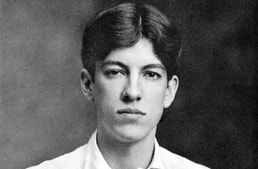
Alan Seeger was born in New York City, the son of a businessman with connections to Mexico's sugar refining industry. He and his two siblings grew up in a wealthy and cultured home in Staten Island. He attended the Staten Island Academy and then the Horace Mann School in Manhattan until the family moved to Mexico city when he was 12. Alan returned to New York in 1902 so that he could attend the Hackley School, in Tarrytown. He then went on to Harvard University, where he came under the influence of the Romantic poets. 

 After graduating in 1910., Seeger moved to  New York City's Greenwich Village, where he attempted to live a bohemian life, writing poetry and sleeping on the couch of his classmate, the revolutionary, John Reed. After two years, Seeger moved to Paris, France. When World War I began in 1914, Seeger enlisted in the French Foreign Legion.

Seeger's war-time letters talk of crowded quarters, filth, cold and misery. None of this made its way into his poetry, which demonstrates a romantic and fatalistic streak. 

Alan Seeger died of a shot to the stomach during the attack on Belloy-en-Santerreon on July 4th, 1916. The French military awarded him the Croix de Guerre and the MĆ©daille militaire posthumously. He was buried in a mass grave.

Seeger’s collected Poems were published in 1917 to mixed reviews. Critics often criticize his verses as impersonal, conventional, and idealized, but, like his English contemporary Rubert Brooke, Seeger hadn't matured as an artist. James Hart in the Dictionary of Literary Biography explained, “He needed more time to move from a stock and outmoded romanticism to a more distinctive and original style, from a style full of abstractions to one more concrete and personal.” Given more time, he might have become an American version of Wilfred Owen or Siegfried Sassoon.​

I Have a RENDEZVOUS with Death

​I have a rendezvous with Death
At some disputed barricade,
When Spring comes back with rustling shade
And apple-blossoms fill the air--
I have a rendezvous with Death
When Spring brings back blue days and fair.

It may be he shall take my hand
And lead me into his dark land
And close my eyes and quench my breath--
It may be I shall pass him still.
I have a rendezvous with Death
On some scarred slope of battered hill,
When Spring comes round again this year
And the first meadow-flowers appear.

God knows 'twere better to be deep
Pillowed in silk and scented down,
Where Love throbs out in blissful sleep,
Pulse nigh to pulse, and breath to breath,
Where hushed awakenings are dear ...
But I've a rendezvous with Death
At midnight in some flaming town,
When Spring trips north again this year,
And I to my pledged word am true,
I shall not fail that rendezvous.

Picture
Jennifer Bohnhoff is a former history teacher who now writes full time. Her next novel, A Blaze of Poppies: A Novel About New Mexico 

Sunday, September 12, 2021

September is Apple Time


Picture
Few people would recognize the name John Chapman. Most people would recognize him by his nickname: Johnny Appleseed.

Chapman was born sometime around 1774 in Leominster, Massachusetts. As a young man, he moved west, to Fort Duquesne (now Pittsburgh), Pennsylvania, where he bought a small farm and planted an orchard. A devout Swedenborgian Christian, Chapman provided free food and lodging for the pioneers who passed his farm on the was west to the Ohio Valley wilderness. As a parting gift, he pressed a small pouch into their hands before they resumed their journey.

The pouch contained apple seeds. Chapman collected the residue from local cider presses, then laboriously picked the seeds out of the sticky mash, dried them, and placed them in little deerskin bags that he had sewn. He felt that the pioneers in the wilderness needed orchards just as much as he did.


After many years, Johnny began to worry about the orchards in the wilderness. He gave his farm to a widow with a large, needy family, bought two canoes from the Natives and lashed them together, loaded them with apple seeds, then floated down the Ohio River. He traveled all over Ohio, planting new orchards and tending those that were planted before his arrival. He lived by trading seeds for food and for used clothing, and was known for wearing his one cooking pot as a hat as he walked from settlement to settlement. Native Americans regarded him as touched by the Great Spirit. Even hostile tribes left him alone. Myths began to rise up around him. One story is that, after noticing that mosquitoes flew into his fire, he doused it and said “God forbid that I should build a fire for my comfort, that should be the means of destroying any of His creatures." Another says he had a pet wolf that had started following him after he healed its injured leg. He reportedly could play with bear cubs while their mother looked on.

​As settlers continued west, so did Chapman. In the 1830s he left Ohio and began planting trees in Indiana. He moved on to Wisconsin, Michigan, Iowa and Illinois. He died in 1845, his body found lying in an orchard near Fort Wayne, Indiana. In his lifetime, the botanist/herb doctor/missionary had planted thousands of trees. endeared himself to pioneer families, and become an American legend. 

Picture
These cookies are crisp on the outside and tender on the inside, just like the apples that inspired them. Before I made these, I visited my mother, picked apples from her tree, and made up several quarts of applesauce. You can use bottled sauce from the store if you're not as lucky - or industrious - as I am. 

Applesauce Cookies

1 cup sugar
½ cup shortening
1 ¼ cup unsweetened applesauce
1 egg
2 ½ cups flour
1 tsp baking soda
1 tsp cinnamon
¼ tsp cloves
¼ tsp salt
1 cup raisins
½ cup chopped nuts
Heat oven to 375°. Spray cookie sheets with oil.
Beat sugar and shortening until light and fluffy. Add applesauce and egg and blend well. Stir in flour, baking soda. Cinnamon, cloves and salt and mix well. Sir in raisins and nuts. Drop by rounded tablespoonfuls 2 inches apart on greased cookie sheets. Bake at 375° for 15 minutes or until light golden. Immediately move from sheet to cooling rack. 


Picture
Jennifer Bohnhoff is a retired middle school language arts and history teacher. She now writes historical and contemporary fiction from her home in the mountains of central New Mexico. You can read more about her and her books on her blog

Thursday, September 9, 2021

On Somme by Ivor Gurney


Sunday, September 5, 2021

The Americans who Lie in Flanders Field


Wednesday, September 1, 2021

a Medic and a Poet


Picture
​During his fifty-year career, Robert Laurence Binyon  authored many poetry collections, plays, historical biographies, and art history books.  During World War I he served as an orderly in the Red Cross, working in a military hospital in France in 1915 and 1916. This experiences influenced his poetry. While this is not his most famous poem, this invokes a somber picture of what medics had to go through to retrieve the wounded. It is eerie and haunting. 

Fetching the Wounded

by Robert Laurence Binyon

At the road's end glimmer the station lights;
How small beneath the immense hollow of Night's
Lonely and living silence! Air that raced
And tingled on the eyelids as we faced
The long road stretched between the poplars flying
To the dark behind us, shuddering and sighing
With phantom foliage, lapses into hush.
Magical supersession! The loud rush
Swims into quiet: midnight reassumes
Its solitude; there's nothing but great glooms,
Blurred stars; whispering gusts; the hum of wires.
And swerving leftwards upon noiseless tires
We glide over the grass that smells of dew.
A wave of wonder bathes my body through!
For there in the headlamps' gloom--surrounded beam
Tall flowers spring before us, like a dream,
Each luminous little green leaf intimate
And motionless, distinct and delicate
With powdery white bloom fresh upon the stem,
As if that clear beam had created them
Out of the darkness. Never so intense
I felt the pang of beauty's innocence,
    Earthly and yet unearthly. A sudden call!
We leap to ground, and I forget it all.
Each hurries on his errand; lanterns swing;
Dark shapes cross and re--cross the rails; we bring
Stretchers, and pile and number them; and heap
The blankets ready. Then we wait and keep
A listening ear. Nothing comes yet; all's still.
Only soft gusts upon the wires blow shrill
Fitfully, with a gentle spot of rain.
Then, ere one knows it, the long gradual train
Creeps quietly in and slowly stops. No sound
But a few voices' interchange. Around
Is the immense night--stillness, the expanse
Of faint stars over all the wounds of France.

Now stale odour of blood mingles with keen
Pure smell of grass and dew. Now lantern--sheen
Falls on brown faces opening patient eyes
And lips of gentle answers, where each lies
Supine upon his stretcher, black of beard
Or with young cheeks; on caps and tunics smeared
And stained, white bandages round foot or head
Or arm, discoloured here and there with red.
Sons of all corners of wide France; from Lille,
Douay, the land beneath the invader's heel,
Champagne, Touraine, the fisher--villages
Of Brittany, the valleyed Pyrenees,
Blue coasts of the South, old Paris streets. Argonne
Of ever smouldering battle, that anon
Leaps furious, brothered them in arms. They fell
In the trenched forest scarred with reeking shell.
Now strange the sound comes round them in the night
Of English voices. By the wavering light
Quickly we have borne them, one by one, to the air,
And sweating in the dark lift up with care,
Tense--sinewed, each to his place. The cars at last
Complete their burden: slowly, and then fast
    We glide away. And the dim round of sky,
Infinite and silent, broods unseeingly
Over the shadowy uplands rolling black
Into far woods, and the long road we track
Bordered with apparitions, as we pass,
Of trembling poplars and lamp--whitened grass,
A brief procession flitting like a thought
Through a brain drowsing into slumber; nought
But we awake in the solitude immense!
But hurting the vague dumbness of my sense
Are fancies wandering the night: there steals
Into my heart, like something that one feels
In darkness, the still presence of far homes
Lost in deep country, and in little rooms
The vacant bed. I touch the world of pain
That is so silent. Then I see again
Only those infinitely patient faces
In the lantern beam, beneath the night's vast spaces,
Amid the shadows and the scented dew;
And those illumined flowers, springing anew
In freshness like a smile of secrecy
From the gloom--buried earth, return to me.
The village sleeps; blank walls, and windows barred.
But lights are moving in the hushed courtyard
As we glide up to the open door. The Chief
Gives every man his order, prompt and brief.
We carry up our wounded, one by one.
The first cock crows: the morrow is begun.

Jennifer Bohnhoff lives in the mountains of central New Mexico, where she writes historical fiction. Her next novel, A Blaze of Poppies, tells the story of two New Mexicans serving in World War I. 

Great Christmas Books for Middle Grade Readers

  Great Christmas Books for Middle Grade Readers   Everyone loves a good Christmas read. Here's a short list of some of the best for mid...