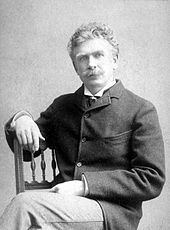
Ambrose Bierce was a prolific American writer and journalist, whose pioneering work in horror and in realistic war fiction inspired many, including H. P. Lovecraft, Stephen Crane, and Ernest Hemingway.
Bierce was born in a log cabin at Horse Cave Creek in Meigs County, Ohio, on June 24, 1842. He was the tenth of thirteen children, all of whom their father gave names beginning with the letter "A": Abigail, Amelia, Ann, Addison, Aurelius, Augustus, Almeda, Andrew, Albert, Ambrose, Arthur, Adelia, and Aurelia. Bierce’s parents impressed on him the importance of reading and writing, and when he was only 15 years old, he left home to become a writer at a small Ohio newspaper.
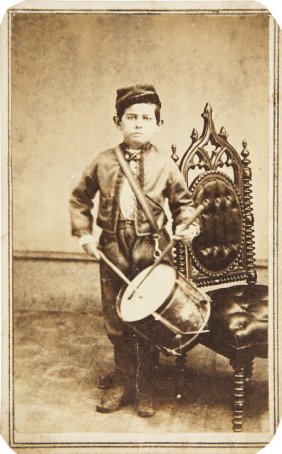
Ambrose enlisted in the Union Army's 9th Indiana Infantry when the Civil War began. His participation in the Battle of Shiloh became a source for several of his short stories and his memoir "What I Saw of Shiloh." In April 1863 he was commissioned a first lieutenant. He served on the staff of General William Babcock Hazen as a topographical engineer, making maps of likely battlefields. He was recommended for admission to West Point, but a traumatic brain injury he received at the Battle of Kennesaw Mountain stopped him from attending. He would suffer from complications, including fainting episodes and irritability attributable to traumatic brain injury, for the rest of his life.
After the war, Bierce joined an expedition to inspect military outposts across the Great Plains. He traveled by horseback and wagon from Omaha, Nebraska, arriving toward year's end in San Francisco, California, where he was awarded the rank of brevet major before resigning from the Army. He worked as an editor of a San Francisco newspaper for several years, then moved to England, where he wrote for a magazine. In 1875, Bierce moved back to San Francisco and resumed working as a journalist.
Bierce’s personal life was marked by tragedy. He married Mary Ellen "Mollie" Day on December 25, 1871. Two of their three children died young, his son Day by suicide after a romantic rejection and his son Leigh of pneumonia related to alcoholism. After discovering compromising letters to her from an admirer, Bierce and his wife separated. They divorced in 1904 and she died died the following year. His daughter Helen outlived them all.
In October 1913, when Bierce was 71, he went on a tour of his old Civil War battlefields. By December, his traveling had taken him into Mexico, where he became an observer in Pancho Villa's army. On December 26, 1913 he wrote a letter to Blanche Partington, a close friend, which he ended with the words "As to me, I leave here tomorrow for an unknown destination." Bierce was never heard from again. He vanished without a trace, one of the most famous disappearances in American literary history. His life, and especially the mystery of his death, have been the inspiration for countless novels and movies.
Bierce was inspired by Edgar Allen Poe. Some of his horror and gothic ghost tales went on to inspire H.P. Lovecraft. Click here to read one of his short stories that's perfect for the haunted, Halloween season:
Bierce was born in a log cabin at Horse Cave Creek in Meigs County, Ohio, on June 24, 1842. He was the tenth of thirteen children, all of whom their father gave names beginning with the letter "A": Abigail, Amelia, Ann, Addison, Aurelius, Augustus, Almeda, Andrew, Albert, Ambrose, Arthur, Adelia, and Aurelia. Bierce’s parents impressed on him the importance of reading and writing, and when he was only 15 years old, he left home to become a writer at a small Ohio newspaper.
Ambrose enlisted in the Union Army's 9th Indiana Infantry when the Civil War began. His participation in the Battle of Shiloh became a source for several of his short stories and his memoir "What I Saw of Shiloh." In April 1863 he was commissioned a first lieutenant. He served on the staff of General William Babcock Hazen as a topographical engineer, making maps of likely battlefields. He was recommended for admission to West Point, but a traumatic brain injury he received at the Battle of Kennesaw Mountain stopped him from attending. He would suffer from complications, including fainting episodes and irritability attributable to traumatic brain injury, for the rest of his life.
After the war, Bierce joined an expedition to inspect military outposts across the Great Plains. He traveled by horseback and wagon from Omaha, Nebraska, arriving toward year's end in San Francisco, California, where he was awarded the rank of brevet major before resigning from the Army. He worked as an editor of a San Francisco newspaper for several years, then moved to England, where he wrote for a magazine. In 1875, Bierce moved back to San Francisco and resumed working as a journalist.
Bierce’s personal life was marked by tragedy. He married Mary Ellen "Mollie" Day on December 25, 1871. Two of their three children died young, his son Day by suicide after a romantic rejection and his son Leigh of pneumonia related to alcoholism. After discovering compromising letters to her from an admirer, Bierce and his wife separated. They divorced in 1904 and she died died the following year. His daughter Helen outlived them all.
In October 1913, when Bierce was 71, he went on a tour of his old Civil War battlefields. By December, his traveling had taken him into Mexico, where he became an observer in Pancho Villa's army. On December 26, 1913 he wrote a letter to Blanche Partington, a close friend, which he ended with the words "As to me, I leave here tomorrow for an unknown destination." Bierce was never heard from again. He vanished without a trace, one of the most famous disappearances in American literary history. His life, and especially the mystery of his death, have been the inspiration for countless novels and movies.
Bierce was inspired by Edgar Allen Poe. Some of his horror and gothic ghost tales went on to inspire H.P. Lovecraft. Click here to read one of his short stories that's perfect for the haunted, Halloween season:
Jennifer Bohnhoff is a retired teacher who used Bierce's Occurrence at Owl Creek when teaching American Literature. She is now a full time, award-winning writer, mostly of historical fiction for middle grade readers.
0 Comments