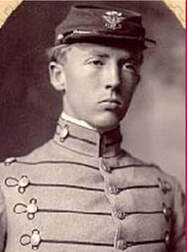
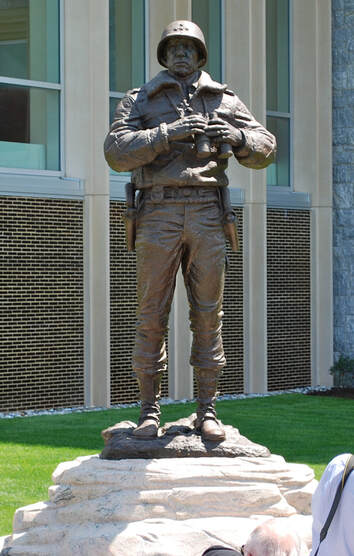
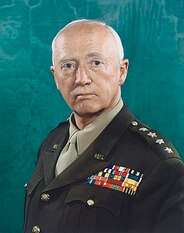
 General George Patton by Robert F. Cranston, 1945 color carbro print, from the National Portrait Gallery
George S. Patton is best known as the pugnacious general who guided the Third Army’s tanks through Europe in World War II. But he was also an inventor.
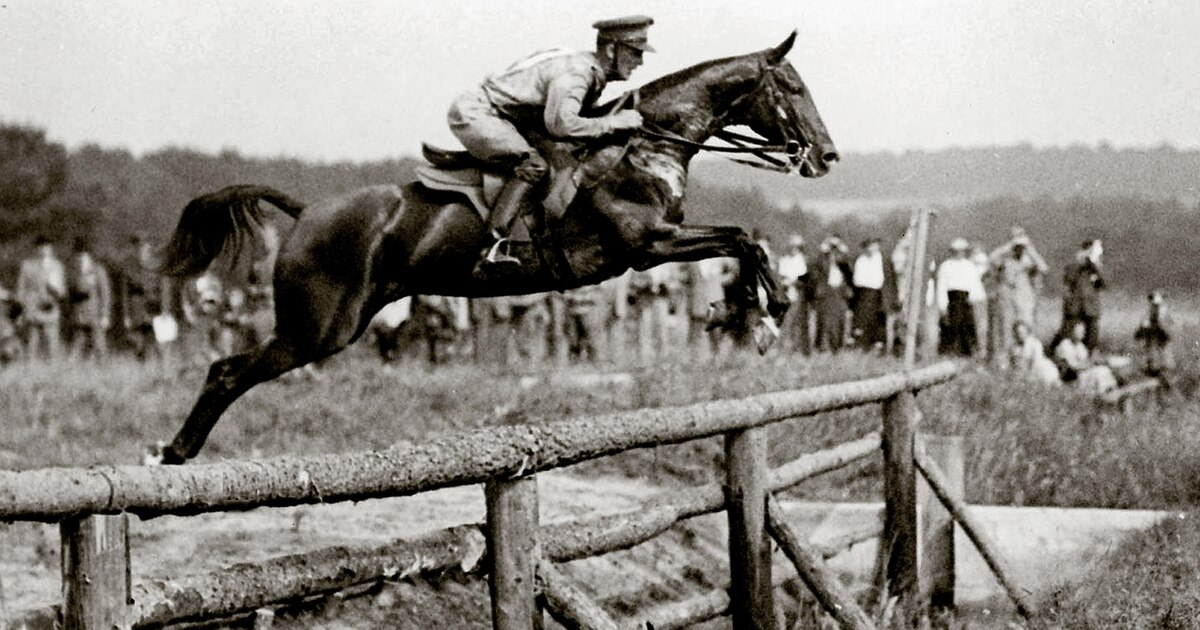
Patton’s first invention, a saber, grew out of his participation in the 1912 Olympic Games. The Army's entry in the first modern pentathlon, Patton was the only American among the 42 pentathletes in Stockholm, Sweden that year. Patton finished fifth overall in the competition that involved pistol firing, swimming, fencing, an equestrian competition, and a footrace. Following the Olympics, Patton traveled through Europe, seeking to learn more about swordsmanship.
Patton’s first invention, a saber, grew out of his participation in the 1912 Olympic Games. The Army's entry in the first modern pentathlon, Patton was the only American among the 42 pentathletes in Stockholm, Sweden that year. Patton finished fifth overall in the competition that involved pistol firing, swimming, fencing, an equestrian competition, and a footrace. Following the Olympics, Patton traveled through Europe, seeking to learn more about swordsmanship.
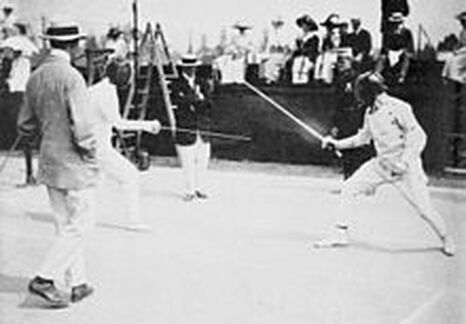
Patton, right, at the 1912 Olympics
Patton learned that different countries utilized their swords in different ways. In the Peninsular War, part of the Napoleonic Wars fought in the Iberian Peninsula from 1807–1814, Spain, Portugal, and the United Kingdom fought against the First French Empire. The English, he learned, nearly always used the sword for cutting, while the French dragoons used only the point of their long straight swords, inflicting more fatal wounds. The English protested that the French did not fight fair. Once, when the cavalry of the guard passed in review before Napoleon, he called to them, "Don't cut! The point! The point!"
When Patton returned to America, he wrote a report that was published in the March 1913 issue of the Army and Navy Journal. The next summer, while he was Master of the Sword at the Mounted Service School, Patton advised the Ordnance Department on sword redesign, contributing to the first significant changes in cavalry swords since the Model 1860 Light Cavalry Saber had been introduced. In 1914, Patton's system of swordsmanship was published by the War Department in a 1914 Saber Exercise manual. This manual emphasized the use of the point over the edge.
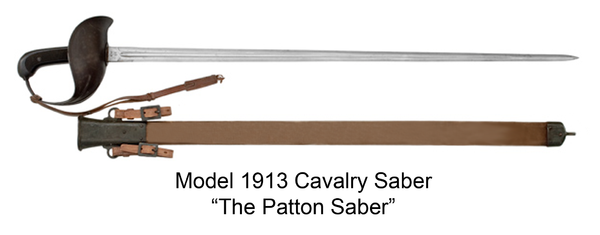
Patton’s saber ended up being ceremonial in use, since it was obsolete by the time it was created. Modern warfare made cavalry charges a thing of the past.
Patton did not rest on his obsolete laurels. During World War I, he became a leading voice in the use of tanks. Immediately after the war, he became involved in improvements in his beloved iron horses. The first, which he worked on between 1919 and 1921, was a new coaxial gun mount that allowed greater range of motion for a tank’s big gun.
Patton did not rest on his obsolete laurels. During World War I, he became a leading voice in the use of tanks. Immediately after the war, he became involved in improvements in his beloved iron horses. The first, which he worked on between 1919 and 1921, was a new coaxial gun mount that allowed greater range of motion for a tank’s big gun.
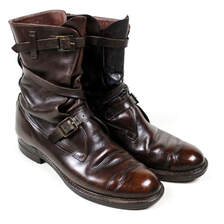 (Photo: 44thcollectorsavenue.com)
In 1937 the Dehner footwear company introduced a new type of boot for tank crews. Partially designed by then-Lieutenant Colonel George S. Patton, the all-leather boot had straps to secure it instead of bootlaces and metal eyelets. Laces could become entangled in a tank’s moving parts, dragging the wearer’s foot into the machinery. Leather would not melt like the nylon used in previous Army boots. This saved tankers from serious burns when their boots touched hot, ejected shell casings or when escaping from a burning vehicle. Finally, since tank crews often spent a lot of time sitting inside their vehicles, they needed boots that allowed better blood circulation and less ankle support than infantry. Tanker boots provided just that, and are still in use today.
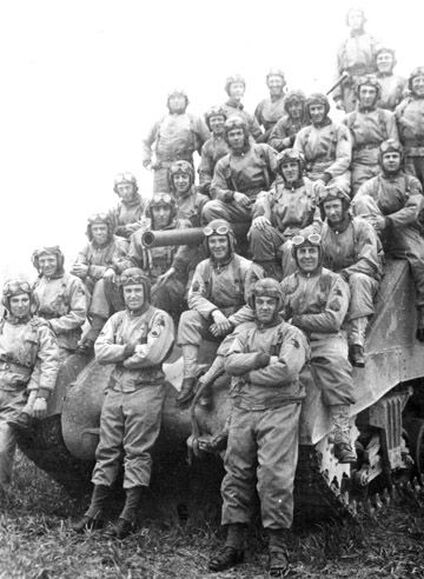
Soldiers wearing Dehner tank boots, WWII
Some people think George Patton was a genius. Others consider him a madman. It is clear from his inventions that he had a keen eye for detail and wanted to ensure that his soldiers were given every advantage possible.
Jennifer Bohnhoff writes historical fiction for middle grade through adult readers. You can read more about her and her books on her website.