
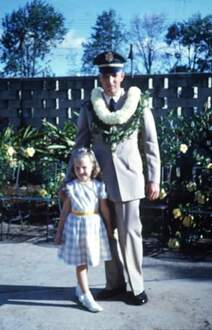
 The author and her Uncle, probably in 1965. I don't believe he served in Vietnam, but I don't really remember.
It’s stunning to me that the Vietnam War is ancient history for today’s middle schoolers. To old folks like me, who grew up while our soldiers were wading through rice paddies and jungles, it seems unbelievable that today’s kids wouldn’t know anything about the Vietnam War, or what it was like here on the home front during that tumultuous period. But then I got to analyzing how much time has passed, using real numbers (something I don’t often do!) and I realized that it’s perfectly understandable that today’s middle grade readers know so little.
I am just slightly too young to have much personal experience with the Vietnam War. The war ended when Saigon fell on the 30th of April 1975. I was in high school by then, but the war was old news that few people cared about. For many Americans, the war was over in December of 1972, when the last draft call was held, or in March of 1973, when the last of our ground troops left Vietnam. I was still in Junior High then. I had some friends whose older brothers were in the draft, and a few who went over and served, but most of the people I knew where involved in the war were a generation removed from me, and were fathers of friends, old enough to have command or desk jobs. My husband registered for the draft, but the draft had ceased before he could be called up.
I am just slightly too young to have much personal experience with the Vietnam War. The war ended when Saigon fell on the 30th of April 1975. I was in high school by then, but the war was old news that few people cared about. For many Americans, the war was over in December of 1972, when the last draft call was held, or in March of 1973, when the last of our ground troops left Vietnam. I was still in Junior High then. I had some friends whose older brothers were in the draft, and a few who went over and served, but most of the people I knew where involved in the war were a generation removed from me, and were fathers of friends, old enough to have command or desk jobs. My husband registered for the draft, but the draft had ceased before he could be called up.
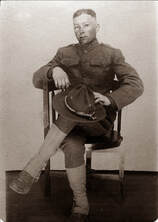
My grandfather served during World War I, which ended 41 years before I was born. I remember thinking that he was a very old man, and that the war he had served in much have been long, long ago. I assume that an average twelve-year-old, who would have been born thirty-five years after the end of the Vietnam feels the same. If they know anyone involved in Vietnam, it would be a grandparent or even a great grandparent. Ancient history.
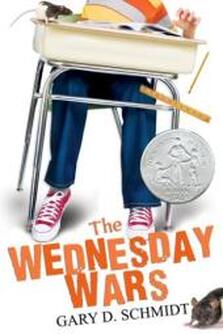
Maybe one of the reasons I loved Gary D. Schmidt’s The Wednesday Wars, a middle grade historical novel that won a Newberry Honor in 2008 is that Schmidt is two years older than I am, so his memories of the period would be much like my own. Reading this novel is much like a trip into my own reminiscences of the period. I remember arguments similar to the one between the protagonist’s conservative father and would-be flower child sister. I remember VW bugs with flower decals, and the horrific shock of the deaths of Martin Luther King and Robert F. Kennedy. The world felt like it was unraveling, and Walter Cronkite was there every evening to explain it all to us.
But The Wednesday Wars isn’t just a book about a particular point in time; it’s also a book about a boy at a particular point in his own development into manhood. Holling Hoodhood may be a seventh grader during the 1967–1968 school year, but many of the problems he faces are similar to those that seventh grade boys still encounter.
Holling’s father is a self-centered architect who is so busy becoming the Chamber of Commerce Businessman of the year that he can’t attend his son’s performance in The Tempest. The father sees every relationship as a potential business association and demands that he, his family, and their house all be above reproach and perfect at all times. It’s a tough standard to attain, particularly for a middle school boy who, as most boys his age, feels gawky and unsure of himself.
Holling finds an unlikely ally in Mrs. Baker, his no-nonsense teacher. On Wednesday afternoons, half of Holling's classmates leave school early for catechism class and the other half attends Hebrew school leaving Holling, the only Presbyterian, alone in the classroom. Holling thinks Mrs. Baker hates him because of this, but after an unexpected disaster involving cream puffs and chalk board erasers, Mrs. Baker introduces Holling to Shakespeare. The Bard becomes the lens through which Holling processes the world around him, including his relationship with his father, with Meryl Lee Kowalski, the daughter of a rival architect, his sister Heather, and even Mickey Mantle. I couldn’t help but love the awkward, fumbling Holling.
But The Wednesday Wars isn’t just a book about a particular point in time; it’s also a book about a boy at a particular point in his own development into manhood. Holling Hoodhood may be a seventh grader during the 1967–1968 school year, but many of the problems he faces are similar to those that seventh grade boys still encounter.
Holling’s father is a self-centered architect who is so busy becoming the Chamber of Commerce Businessman of the year that he can’t attend his son’s performance in The Tempest. The father sees every relationship as a potential business association and demands that he, his family, and their house all be above reproach and perfect at all times. It’s a tough standard to attain, particularly for a middle school boy who, as most boys his age, feels gawky and unsure of himself.
Holling finds an unlikely ally in Mrs. Baker, his no-nonsense teacher. On Wednesday afternoons, half of Holling's classmates leave school early for catechism class and the other half attends Hebrew school leaving Holling, the only Presbyterian, alone in the classroom. Holling thinks Mrs. Baker hates him because of this, but after an unexpected disaster involving cream puffs and chalk board erasers, Mrs. Baker introduces Holling to Shakespeare. The Bard becomes the lens through which Holling processes the world around him, including his relationship with his father, with Meryl Lee Kowalski, the daughter of a rival architect, his sister Heather, and even Mickey Mantle. I couldn’t help but love the awkward, fumbling Holling.

If you’d like to read a story set in the Vietnam War era that has a female protagonist, consider Shooting the Moon, by Frances O'Roark Dowell. Twelve-year-old Jamie Dexter is a military brat whose father is a colonel stationed in Texas. Jamie is proud and excited when her older brother enlists in the Army and is sent to Vietnam. She can't wait to get letters from the front lines describing the excitement of real-life combat, the sound of helicopters, the smell of gunpowder, the exhilaration of being right in the thick of it. But her brother doesn’t send letters. Instead, he sends roll after roll of undeveloped film that shows photos of the moon and gritty pictures that depict a side to war that she has never considered. While Jamie works in the base’s rec office, she begins to question everything she’s ever believed, and when her brother goes MIA and her father can do nothing, Jamie’s innocence is lost and she must grow up quickly.
Other books about the Vietnam War
Summer's End, by Audrey Couloumbis, is another book featuring a girl growing up during the Vietnam War. When her older brother is drafted but burns his draft card, thirteen-year-old Grace finds herself in the middle of a war raging within her own family.
Ellen Emerson White’s contribution to the Dear America series is Where Have All the Flowers Gone?: The Diary of Molly MacKenzie Flaherty, Boston, Massachusetts, 1968. The book is set up to be the diary entries of a brother who is a Marine stationed in Vietnam, and his sister, a peace activist back in the states.
Georgie's Moon, by Chris Woodworth tells the story of Georgie Collins, whose father gave her standing orders never to let anyone mess with her before he left for Vietnam. Despite "peacenik" classmates who think the war is wrong and being forced to visit old people in a nursing home, Georgie tries to survive seventh grade in Glendale, Indiana as she waits for her father’s return.
Elizabeth Partridge’s Dogtag Summer tells the story of twelve-year-old Tracy, who was once named Tuyet. Half Vietnamese and half American GI, Tracy has never felt she fit in with her adoptive California family. Finding a soldier's dog tag hidden among her father's things begins a set of events that promise to change everything.
Summer's End, by Audrey Couloumbis, is another book featuring a girl growing up during the Vietnam War. When her older brother is drafted but burns his draft card, thirteen-year-old Grace finds herself in the middle of a war raging within her own family.
Ellen Emerson White’s contribution to the Dear America series is Where Have All the Flowers Gone?: The Diary of Molly MacKenzie Flaherty, Boston, Massachusetts, 1968. The book is set up to be the diary entries of a brother who is a Marine stationed in Vietnam, and his sister, a peace activist back in the states.
Georgie's Moon, by Chris Woodworth tells the story of Georgie Collins, whose father gave her standing orders never to let anyone mess with her before he left for Vietnam. Despite "peacenik" classmates who think the war is wrong and being forced to visit old people in a nursing home, Georgie tries to survive seventh grade in Glendale, Indiana as she waits for her father’s return.
Elizabeth Partridge’s Dogtag Summer tells the story of twelve-year-old Tracy, who was once named Tuyet. Half Vietnamese and half American GI, Tracy has never felt she fit in with her adoptive California family. Finding a soldier's dog tag hidden among her father's things begins a set of events that promise to change everything.
Times change. Events happen, impress themselves on us, and then we move on. The Vietnam War no longer lives large in the American psyche. It has been replaced by 9/11, COVID, and a dozen other events. But being in the 7th grade and finding oneself on the teetering brink of adulthood remains an important time for individuals. I think it's important for today's middle grade readers to know that their parents, and their grandparents, and all the generations who came before that also struggled with what it meant to become oneself.
Jennifer Bohnhoff is a former high school and middle school English and history teacher who is now old enough to get to stay home and write. She lives in the mountains east of Albuquerque, New Mexico with her very patient and equally old husband, and a big, rambunctious black dog named Panzer. You can read more about her and her books on her blog.


