Sunday, January 10, 2021

George Washington Carver


Picture
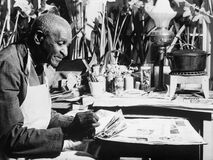
When many people hear the name George Washington Carver, they think of peanuts. But the American agricultural scientist and inventor’s greatest contributions may have been in soil conservation, environmentalism, and helping the poor.

Carver was born a slave sometime in January 1864 in rural western Missouri, and freed at the end of the Civil War. When he was in his 20s, he moved to Iowa and began attending Simpson College, then Iowa State Agricultural College (now Iowa State University), where he was their first African-American student. Iowa State Agricultural College was the country’s first land-grant university, and its mission was to teach the applied sciences, including agriculture. Carver studied botany.

When he graduated in 1896, Carver became the first black man in the U.S. to hold a degree in modern agricultural methods. He took those lessons south to Alabama, where Booker T. Washington, the first leader of the Tuskegee Institute, was opening an agricultural school. What he saw as he rode the train south broke his heart. Instead of the golden wheat fields and the tall green corn of Iowa, he “scraggly cotton, stunted cattle, boney mules, and fields and hill sides cracked and scarred with gullies.” Because of his training, Carver knew that the poor condition of the land was due to the overplanting of cotton, a lucrative crop that depletes the soil. Carver knew that something had to be done to make the soil rich again. One of his solutions was peanuts.
Picture
Because of a symbiotic relationship with the bacteria that live on their roots, peanuts produce their own nitrogen, fertilizing themselves and restoring nutrients to depleted soil. Additionally, their growing periods are different than cotton, so peanuts and cotton could be grown in the same fields on a rotating schedule. Finally, peanuts are high in protein and more nutritious than the “3M--meat, cornmeal and molasses” diet that was the foundation for most poor farmers’ diet.

Most black farmers in turn-of-the-century Alabama were so close to ruination that they weren’t willing to try something new. Carter encouraged them by coming up with literally hundreds of recipes and uses for peanuts, including peanut bread, peanut cookies, peanut sausage, peanut ice cream, and even peanut face cream, shampoo, dyes and paints.

But Carver was not just pushing peanuts; he was pushing a lifestyle that connected the farmer to his soil, enriching both. He encouraged farmers to grow other vegetables so they would spend less money on food. Rather than going into debt buying fertilizer, he encouraged composting. Well before the hippies and back to nature movements reached the mainstream, Carver pushed the interconnectedness between the health of the land and the health of the people who lived on it. 

"It has always been the one great ideal of my life to be of the greatest good to the greatest number of ‘my people’ possible and to this end I have been preparing myself these many years; feeling as I do that this line of education is the key to unlock the golden door of freedom to our people.”
When Carver died on January 5, 1943, President Franklin D. Roosevelt said that “The world of science has lost one of its most eminent figures.” 

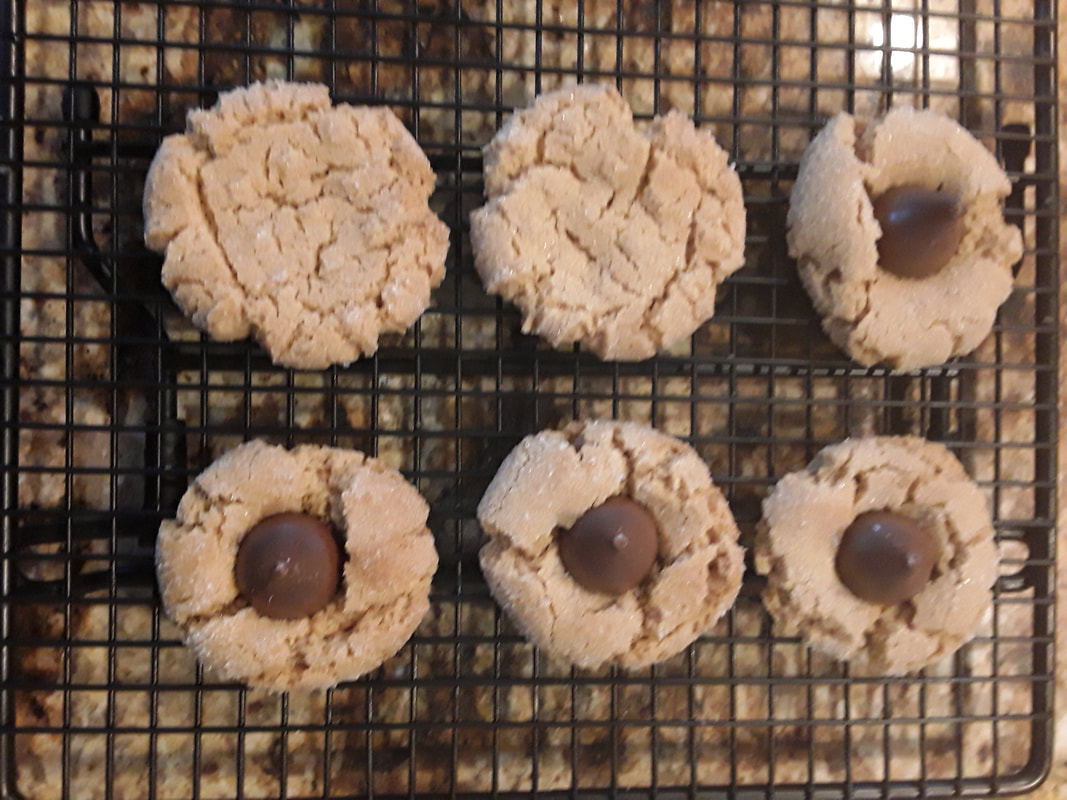
​Peanut Butter Cookies, two ways

Picture
Peanut Blossoms

George Washington Carver may have invented a recipe for peanut butter cookies, but it wasn’t this one. This cookie first appeared in 1957 as a prize winner in a Pillsbury Bake-Off contest.

1 ¾ cup flour
½ cup sugar
½ cup brown sugar, firmly packed
1 tsp. baking soda
½ tsp salt
½ cup shortening
½ cup peanut butter
2 TBS milk
1 tsp vanilla
1 egg
 
¼ cup sugar, set aside in a shallow bowl
About 48 milk chocolate candy kisses
 
Preheat oven to 375°
 
Combine flour, sugar, brown sugar, baking soda, salt, shortening, peanut butter, milk, vanilla, and egg at low speed until stiff dough forms.
 
Shape into 1” balls. Roll in the bowl of sugar.
Place 2” apart on a cookie sheet.
Bake at 375°for 10-12 minutes or until golden brown.
Remove from over and immediately press a candy kiss into the center of each.
Let cool 2 minutes before removing to a cooking rack.
                                                                                Makes about 4 dozen cookies.

Variation:

Peanut Butter Criss Cross Cookies
Make dough, shape into balls and roll in sugar as above.
Place 2” apart on a cookie sheet.
Flatten each cookie by pressing a fork dipped in sugar into it in a crisscross pattern.
Bake at 375°for 10-12 minutes or until golden brown.
Immediately remove to a cooking rack from cookie sheet.


Picture
Jennifer Bohnhoff is an educator and writer who lives in the mountains of central New Mexico. Her books are written for middle schoolers and adults, and are mostly works of historical fiction. 

This article is, she believes, the first installment in a monthly series on famous Americans and cookies inspired by their stories. She intends to compile all the stories and recipes into a cookbook to give out to my friends, family and fans at the end of 2021. 

Monday, January 4, 2021

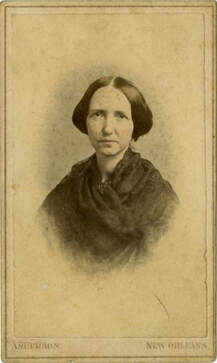
Louisa Hawkins Canby: The Angel of Santa Fe


Picture
Louisa Hawkins Canby earned the epithet Angel of Santa Fe by showing compassion to wounded Confederate soldiers during their 1862 occupation of Santa Fe, New Mexico. For this humanitarian act, some people have called her a traitor. They would do well to consider her a diplomat and a savvy negotiator, whose act of mercy saved the city and its inhabitants a lot of grief.

​Louisa Hawkins was only 19 years old when she met Edward Richard Sprigg Canby, a West Point cadet who had come home to Crawfordsville, Indiana on summer furlough. Edward, as he was called by most, and Louisa were both Kentucky natives, and seemed smitten with each other from the start. They married during the summer of 1839 after both had graduated: he from West Point and she from Georgetown Female College in Georgetown, Kentucky. Louisa then followed her husband through his many posts in California, New York, Wyoming and Utah. They had one child, a daughter they named Mary, but she died while still very young. By 1860, Canby was commander of Fort Defiance. He procured a large house in Santa Fe for Louisa to use during his many campaigns. 


At the beginning of the Civil War, the one armed William Wing Loring was the Commander of the Department of
New Mexico, an area that covers what is now the states of Arizona, New Mexico and the southern tip of Nevada. Loring resigned his commission to join the Confederacy, and the post was given to H.H. Sibley, who also left to join the South. Edward R.S. Canby then received the post and a promotion to Colonel.

​Concerned of a Confederate invasion from Texas in the south, he stationed himself at Fort Craig a fort that protected the northern edge of the Jornada del Muerto, a dry section of the Camino Real. He left Louisa in the relative safety of Santa Fe, far to the north.

Picture
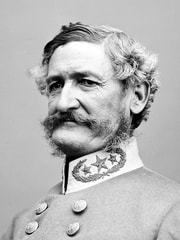
Canby’s concerns proved real when a Confederate force led by Brigadier General Henry H. Sibley began moving up the Rio Grande River valley in late 1861. Finding Fort Craig heavily fortified, the Confederates bypassed Canby. The two armies engaged each other several miles upstream of the fort, at a place called Valverde Ford. The battle ended when the Union troops returned to Fort Craig and the Confederates continued north. Canby then commanded all troops in the northern part of the state to pull back and converge on Fort Union. The troops were to destroy or hide weapons, ammunition, food, equipment, and blankets prior to their retreat.

Instead of leaving with the army, Louisa Canby and several other officers’ wives chose to stay in Santa Fe. When the Confederates marched into town on March 10, these women formed a delegation to meet them. Mrs. Canby asked that the city not be sacked, and that its citizens not be molested. In return she promised to aid the Confederate army’s sick and wounded and worked with Archbishop Lamy to provide shelter for the men. 

After a brief respite in the city, the Confederate Army continued its journey north, towards Fort Union, but when they heard distant cannon fire, the people of Santa Fe knew that a battle was taking place in Glorieta Pass, the narrow passage through the Sangre de Cristo mountains that held the Santa Fe trail. Soon, wounded Confederates were limping back into the capitol city.

When Louisa Canby heard that some soldiers were unable to return due to extreme hunger, exhaustion or loss of blood, she drove her carriage along the route, delivering food, water and blankets. Mrs. Canby then hired several farm wagons, which she rigged with tent cloth hammocks to transport the wounded more comfortably. Her home became a hospital; her dining room an operating room where Confederate surgeons dressed wounds and performed amputations on shattered limbs while she herself served as nurse.

She also showed the Confederates where stores of blankets and food had been hidden, greatly alleviating their suffering.

On either April 1 or 2, General Sibley rode up from Albuquerque and thanked Mrs. Canby for caring for his men. It is likely he also reminisced about their earlier encounters when he and her husband had been on the same side. Canby and Sibley had graduated from West Point within a year of each other and had served together in several different posts before the war divided them. Soon after, the rebel troops began retreating southward. The 100 critically wounded left behind remained under the care of Mrs. Canby and the other officer’s wives until the Union army returned and took them in as prisoners of war. It was not a moment too soon: by then, the food stores in Santa Fe had been seriously depleted.

When some citizens objected to aiding the enemy, Mrs. Canby argued “Whether friend or foe, the wounded must be cared for. They are the sons of some dear mother.” What those citizens, and later detractors would fail to acknowledge was that, by providing aid to the wounded, Mrs. Canby and her group of women prevented the sack of Santa Fe. Its buildings and its people were left unharmed by the Confederate occupation because of her act of mercy. 

“Whether friend or foe, the wounded must be cared for. They are the sons of some dear mother.” 


After the war, Louisa Canby continued to follow her husband to posts in Washington D.C, Louisiana, Delaware, Maryland, Texas, North and South Carolina. and finally, Portland, Oregon, where she continued to work in her community. When he was killed by a Modoc leader named Captain Jack on April 11, she refused to leave her bed for a week. The people of Portland were so grateful and devoted to her that they raised $5,000 as a gift to help supplement her modest widow’s pension. Louisa devoted the last sixteen years of her life to promoting the memory of her husband and his many achievements. When she died, on June 27, 1889 at the age of 70, she was buried beside her husband in Indiana. Her will returned the full $5,000 to the people of Portland. 


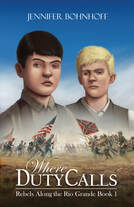
Louisa Hawkins Canby is but one of many historical figures that appears in The Famished Country, the third book in Rebels Along the Rio Grande, Jennifer Bohnhoff's trilogy about the Civil War in New Mexico. Books 1 and 2, Where Duty Calls and The Worst Enemy, are also available in paperback and ebook. 

Wednesday, November 11, 2020

November 11: Birthday of a Famous Soldier


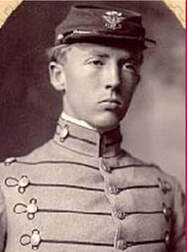
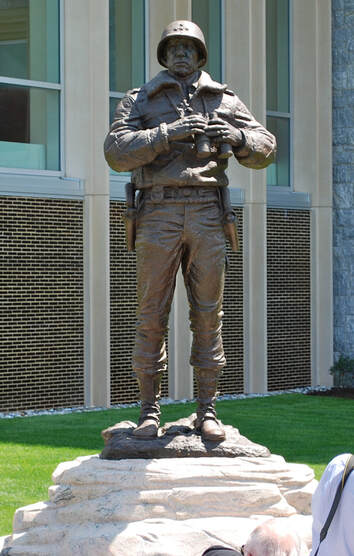
PicturePatton at VMI
​I’m sure you all know that Veteran’s Day used to be called Armistice Day, and is set on the anniversary of the end of WWI. What you may not know, since it’s entirely coincidental if still appropriate, is that it’s also George S. Patton’s birthday. It seems fitting that we honor all veterans on the birthday of a man who devoted his life to military service.

George Smith Patton Jr. was born into a life of privilege on November 11, 1885. His father was the district attorney for Los Angeles County and his mother was the daughter of Los Angeles’ first elected mayor. He went to VMI for one year before transferring to the U.S. Military Academy at West Point, where he proved himself to be a mediocre student but a brilliant athlete. It’s ironic, and I’m sure not coincidental that Patton’s statue at West Point is placed with his back towards the library. 

Picture
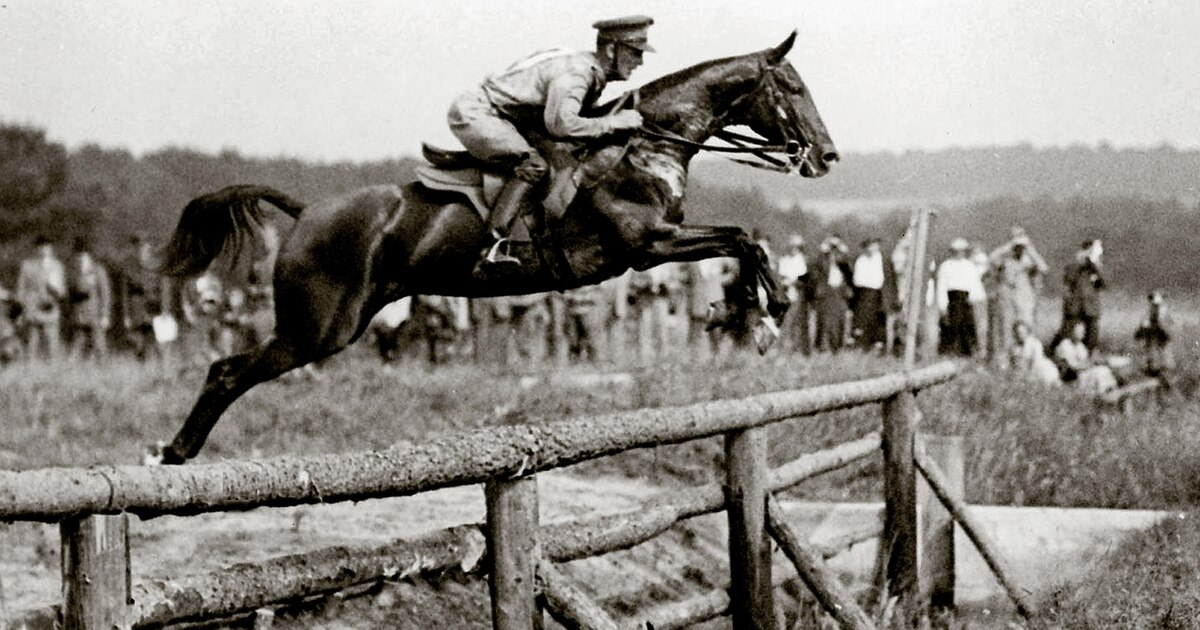
Did you that he was also an Olympian? Patton was the first American to compete in the Modern Pentathlon, a new event at the time of the 1912 Olympics held in Stockholm, Sweden. Inspired by the pentathlon of ancient Greece, in which a soldier carried a message over a long distance, riding horseback, swimming a river, and running, the event was only open to military personnel in 1912. Patton, a first lieutenant stationed at Fort Myer, Virginia, was chosen based on his track and field, fencing, sharpshooting performances at West Point. He placed twenty-first in the shooting, seventh in the swim, fourth in fencing, sixth in riding and third in running; not a good enough showing to earn a medal or much attention from the press.
 
 
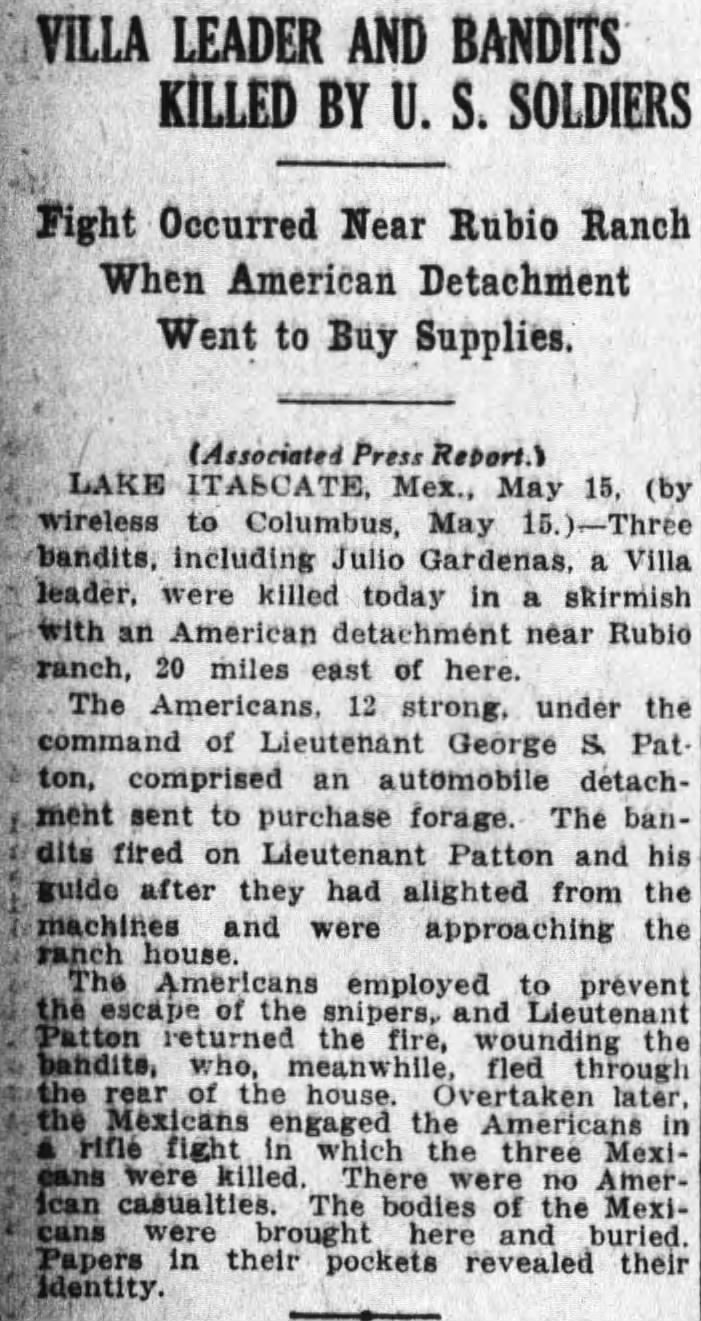
Patton did receive a lot of press for something that happened in 1916, when he was in Mexico during the Punitive Expedition against Pancho Villa. Patton was leading a foraging expedition to buy food for the American soldiers when one of his interpreters identified a man at one of the stops as a bandit. Patton began a search of nearby farms. He ended up in a gun battle with three men, one of whom was Julio Gardenas, a senior leader of Pancho Villa’s gang. All three of the Mexicans were killed. Patton had their bodies strapped the bodies to the hoods of Dodge Touring Cars they were driving, then returned to camp. It was probably the first time that an American used motor-vehicles in a military attack.
Picture
Patton, of course, went on to fame with larger vehicles than touring cars, and he continued to act audaciously, commanding attention from the press. Few veterans command attention like Patton did, but all deserve our attention and our appreciation.

Monday, November 2, 2020

Cranberry Orange Muffins


Picture
By November fall is definitely here. In New Mexico, October sees the glories of the Balloon Fiesta and the aspens and maples in the state change color. Even the cottonwoods in the bosque down near the Rio Grande have one glorious, golden season. But by November all that glory is usually over.

These muffins will bring a little brightness back into your morning. The orange juice enlivens the batter and the cranberries give the muffins a nice burst of tartness.


Cranberry Orange Muffins
Mix together
2 eggs
1 1/2 tsp. vanilla
1/2 cup water
1/2 cup orange juice
1/2 cup oil
 
2 3/4 cups manic muffin mix
1 tbs orange peel
1/2 cup chopped pecans
1/2 cup dried cranberries
Preheat oven to 350. Line 18 muffin tins with paper muffin cups. 
Mix the wet ingredients, then add the dry ingredients and stir until there are not dry areas left. 

Fill muffin cups 3/4 of the way full. Bake for 25 minutes, until the tops of the muffins are browned a bit.
Picture
Jennifer Bohnhoff is a writer and educator who lives in rural New Mexico. She is currently working on an historical novel set in New Mexico during the Civil War, and another one that takes place during World War 1.

Are you on her friends and family email list? Those who are got an ebook that compiles a year's worth of muffin recipes as a Christmas gift in 2019. If you'd like to join, fill out the form here.

Monday, October 26, 2020

The Ghosts of Valverde


A short story by Jennifer Bohnhoff, 
based on the characters in 
Where Duty Calls, book 1 of the 
Rebels Along the Rio Grande Trilogy
Picture

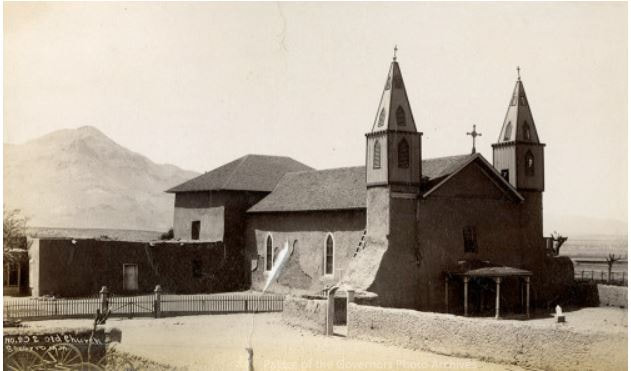
Raul waited until heard the servant slip the timber into the braces, blocking the door. One couldn’t be too careful these days. The Confederates who’d been too sick or injured to head north after the Battle of Valverde had been in Socorro nearly two months, long enough to heal and wander the town looking for a little whiskey, a fight to pick, or a girl. Willing or unwilling didn’t matter. Anything to relieve their boredom. Mama was still young enough, and beautiful enough, to attract attention.

He looked up and down the dusty street. Finding it empty, he hitched the basket into the crook of his arm and headed toward San Miguel church, where he turned into the graveyard. Raul set the basket atop a sandy mound that had already begun to cement itself together again, healing like the girl beneath it never would. An image of Lupe stretched on her bed flashed into Raul’s mind. He moved the basket, horrified he might have placed it on her chest.  He straightened and scanned the road. He hadn’t been followed.

“Mama told me to give this to you. She misses you. So do I.” Raul stuck his hand into the basket and pulled out a tortilla. He folded it in quarters and set it on the grave. Raul sat back on his heels and stared at the bit of bread. Lupe was beyond eating anything, ever again. Still, there was comfort in sharing with her. She had died at such a difficult time that none of the usual observances had happened; quickly buried, with no velorios, no neighbors bringing food, nothing to attract the attention of the Confederates. It had been a hard and lonely time for Mama, made harder by her husband and brother’s absence. There was not much that the two men agreed on, but they had appeared to be of one accord in hiding of the flock and stock from the Confederates. Raul tilted his head back, scanning high in the hills. Was either Papa or Tio watching him? Which one he should he be watching himself? They were so different from one another; he could not follow both.

A little whirlwind rose up, scoured from the earth by the afternoon heat. At the first sting of sand on his face, Raul closed his eyes and waited for it to pass. When he opened them again, the tortilla was covered with a fine dusting of grit. Raul stood up and dusted his trousers. The mice, or racoons, or whatever it was that ate the ofrendas left for the dead wouldn’t mind a little dirt with their meal.
He crossed to the low adobe wall at the back of the graveyard and looked around once more to be sure that no one watched before he sat atop it and swung his legs over. From the back of the church, he climbed into the hills, checking over his shoulder several times to see if he was being followed. The town seemed asleep, dazed by the heat of the day. Raul pulled the neckerchief from around his neck and mopped his face as another whirlwind rose into a swirling column of dirt, struck a gravestone, and collapsed on itself, dying almost before it had begun. It was only April, but already afternoons had become oppressive enough to create dust devils, diablos de polvo.

Raul dropped over a ridge and the village disappeared from sight. He scrambled up a sandy arroyo as it wound up into the hills. Gasping for breath, he switched the basket to his other arm.

“Mi’jo, you sound like an entire troop of soldiers,” a voice said from somewhere above him. Raul twisted his head back and saw his father, Cresenio, silhouetted against the sky.

“It’s this loose rock. It crunches and rolls under your feet.” Raul gestured down, and his father snorted.

“That, and you’re gasping like the bellows in the blacksmith’s shop. You don’t get out enough. You’re getting soft, like your uncle. Pretty soon, you’ll be good for nothing but balancing account books and arguing in court.”

Cresenio leaped down from the boulder and led the way up the arroyo. Raul slipped and slid as he struggled to keep up. His short legs could not match his father’s long strides, but he didn’t dare ask his father to slow down.  Crescenio snapped his head to one side so that his words carried over his shoulder. “It’s a good thing it’s me who heard you coming, not some Apache. You would have looked like a porcupine by now.”

“You seen any Apaches?” Raul shaded his eyes and scanned the hills, which shimmered in the heat, making it almost impossible to pick out movement. He stumbled, nearly dropping the basket.

“I seen nothing.” Crescenio spit contemptuously, his voice tinged with bitterness. “No Indians. No soldiers, Union or Confederate. We’re wasting our time up here. But your uncle, he is too afraid of the Confederates.”

“Not much to be afraid of, at least for us men,” Raul said as he panted for breath. “Most are just limping, hollow-eyed skeletons. The rest are buried outside of town. Father Sanchez wouldn’t let them be buried in the churchyard.”

“They’re not the ones Tio’s afraid of.” Crescenio jerked his chin north, indicating the thin, green line delineating the bosque that flanked the Rio Grande. Somewhere down there, a defeated Confederate Army was limping its way back towards Texas. Raul had heard the rumors. Everyone in town had, and all eyes scanned the northern horizon for a return of the dust cloud that hung over an army on the move.


Picture
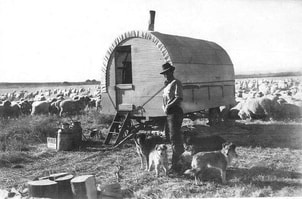
The arroyo made a sudden turn and entered a deep bowl hidden by steep walls. Zorro and Torro, the two blue-eyed sheepdogs, appeared out of the grass and growled. Crescenio snarled a command, so they circled and dropped back into the grass, content they had fulfilled their guard duties. Cattle and sheep ranged throughout the bowl, mowing the spring grass. Raul noted a couple of Tio’s shepherds perched on rocks high in the walls, rifles across their knees, their broadbrimmed hats tipped forward so that he couldn’t tell whether they were awake or asleep. At the back of the valley, where two cottonwoods kept watch over a small, spring-fed pond, Tio Pedro sat on the stairs of the little, round-topped wagon that the herders now shared with their employer and his brother-in-law-bodyguard. It was surely a tight fit.

“Ah! You’ve captured a spy,” Tio Pedro said playfully. He set down the book that had been cradled in his lap and held out his hand. “I say we confiscate his basket and see what’s in it. How is that sister of mine?”


 “She is lonely and bored, and still very sad,” Raul answered.


“But safe? And well? And Arsenio?” Crescenio demanded.


“Mama is safe. And well. And Arsenio is recovering.” Raul saw the slight tic of relief that his father didn’t want him to see. Crescenio wanted everyone to think he was steely and strong, but underneath the sharp exterior lay a man who loved his bubbly, vivacious wife, grieved for the daughter he had lost, and worried still for the son who had nearly accompanied his sister in death.


“We should be with her.” Crescenio gave his brother-in-law a sharp, sidewise glance.


“Not until those Texicans have passed through.” Tio responded, in an equally sharp tone. Clearly, that this was an argument they had often.


“What? You don’t want to sell to them as they pass through town? From what I hear, they are desperate for food.” Crescenio asked mockingly.


“If they had any money, I might consider it. But their paper money is no better than their word, and their coin long gone. And desperate men are dangerous men. Better to stay here.” Tio Pedro pulled back the cloth that covered the basket and chuckled with satisfaction. He pulled out a tortilla and ate it. When it was gone, he handed one each to Crescenio and Raul, then tossed a couple to the sheepherders, who had silently drifted down from their rock perches and were hovering nearby. Raul rolled his tortilla and nibbled on the end, his eyes darting between his uncle and his father as he appraised them both.


Tio Baca was one of the richest men in town, and his thoughts always centered on his money and how he could make more. He worried less about whether the Union or the Confederates could hold the little town of Socorro than he did about which side could pay the most for his goods.  Raul’s father, on the other hand, had come from poor stock, and prized his pride more than money. He hated both the Northerners and the Southerners, and wanted both out of New Mexico. Raul sat between the two men, pulled first towards the argument of one and then the other.


The wind picked up at the opening of the box canyon, ruffling Zorro and Torro’s coats. Raul watched it swirl into a column of grass bits and dust. The hair on the back of his head rose. A tingle ran up his spine.


“It’s been a strange year. Extra cold this winter, but little snow. And now, 
diablos de polvo, this early,” Tio said. “Know what the Navajo call them? Chiindii. Spirits.”

Crescenio shivered and crossed himself. “Don’t go talking about spirits. Not with all the deaths we’ve had.”


Tio Baca laughed. “Surely you don’t believe in ghosts! They went the way of the Inquisition, and witches. We’re living in the age of science, now!”


“There are plenty of things left that your Galilleos can’t explain,” Crescenio said with a snarl.


Raul set his tortilla aside, unnerved by the argument. He didn’t want to think about ghosts, not with the faces of so many dead men haunting his dreams at night. Ever since the battle at Valverde Ford, he had found himself jerking up from his sleeping mat, gasping for breath like a drowning man, his heart pounding, his body soaked with sweat. The faces, blood smeared and broken, hovered over him long after he awakened, and he would find himself outside, staring at the stars as he tried to calm himself.  But stars reminded him of the thousand Confederate fires he had seen while standing on the parapet at Fort Craig, and that memory would start his heart pounding once again.


Raul felt his heart pounding now as he got to his feet and left the argument behind him. Maybe his father was right, and the world of the dead existed here, beside his own. Maybe his uncle was right, and there were no such things as ghosts. The dead were just dead. He would have to side with one man or the other on this, as he would have to decide which was right on the question of foreigners in his land, and how he was to live his life. He loved and honored both men. How could he choose between them?


Zorro and Torro raised their heads and watched him pass between them with suspicious and hopeful eyes. When he was beyond the protection of the canyon, Raul sat on a boulder and stared at the immense land spread before him, the parallel lines of mountains and bosque snaking northward towards a distant horizon. The wind picked up again, whistling through the rocks and forming another dust devil. This one seemed to hover in front of him, shimmering and shifting until it almost coalesced into a figure of a young girl.


“Lupe?” His sister’s name slipped from his lips, half gasp and half prayer. Though barely audible, it seemed to have the strength to make the wind collapse on itself, dissolving into nothingness. Raul stared at the place where the shape had been, and saw, far in the distance, flashes of metal like a thousand falling stars amid a faint cloud of drifting dust. The time for indecisiveness was over.


Picture
Thank you for reading my short story. If it intrigues you, please join my friends, fans and family newsletter list or visit my blog so that you can learn more about my work. You can buy Where Duty Calls here

Monday, October 5, 2020

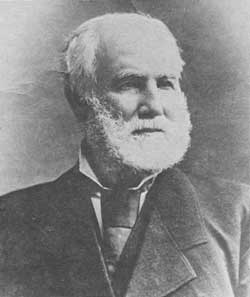
Isaac Lynde: The Wrong Man for the Job


Picture
If there was ever a man who suffered by being placed in the wrong place at the wrong time, it was Isaac Lynde.

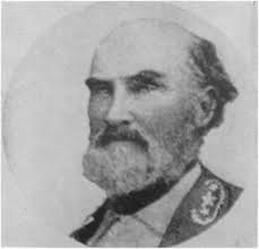
Lynde was born July 27, 1804, in Williamstown, Vermont. He must have been a promising lad, for in 1822 he secured an appointment to the U.S. Military Academy at West Point. The Academy’s records describe him as "an intelligent, sprightly lad," handsome, and well educated,” and he graduated four years later, thirty-second in a class of thirty-eight.

Lynde’s early career was typical for the time. He served in a number of frontier posts in the Northwest and the far plains, and took part in the Mexican-American War. Unlike many of his time, though Lynde’s record includes no battles or distinction of any kind, and in thirty-four years of service he had risen only three full grades, to Major. All of his promotions were routine, and based on time of service, his appointments to posts that were out of the way and relatively underutilized. Why this was the case cannot be said with any certainty. Perhaps he was not as promising as his youth had indicated, or perhaps his problem was that he was an infantry man in an Army that was giving all its plum assignments to the cavalry. At any case, by the time the Civil War was brewing, Lynde was at the end of his career and looking forward to retiring on a pension and settling into obscurity.

Circumstances, however, were not going to allow Lynde to retire quietly. In June 1861, the Union Army in New Mexico Territory faced a huge dilemma. Many officers and soldiers, including William Loring, the Commander of the Department of New Mexico, had resigned their posts and joined the Confederate Army. This left such a serious shortage of troops that E.R.S. Canby, Loring’s replacement, was forced to close forts created primarily to protect settlers from Indian attack and concentrate men in those forts most likely to lie along the path an invading Confederate army might take. Canby ordered Major Isaac Lynde then in command of the 7th Infantry, to abandon Fort McLane, south of Silver City, and take command of Fort Fillmore, six miles from the town of Mesilla. Canby warned Lynde that his new post was endangered not only by a possible invasion from Texas, but because the civilian population of Mesilla Valley sympathized strongly with the Southern cause. It was a crucial post to hold because it controlled the stage road on which U.S. troops would use to withdraw from Arizona. It was also the last Union holding that officers leaving New Mexico to join the Confederacy passed through, and the first objective for a Confederate advance into New Mexico. Lynde was given full responsibility for the area, including the right to decide whether to attack or ignore El Paso’s Fort Bliss, forty miles to the south and in secessionist hands. 


Picture
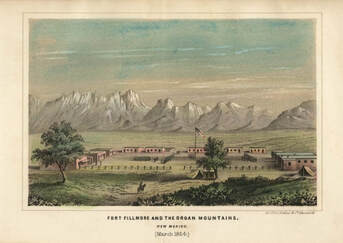
When Major Lynde arrived at his new post in the first week of July, he found it woefully inadequate. Lynde noted that Fort Fillmore was located in a basin surrounded by sand hills, so that artillery could fire down into it.  The hills were covered by dense growth that would allow a thousand men to approach undetected to within 500 yards.  Next to the fort, a sweep of level land was ideal for attacking cavalry. Furthermore, the fort had no walls or ramparts. Shaped like a U, its open end faced the river and the road from El Paso. Because water had to be carried up from the river, a mile and a half to west, the fort could not stand a siege. He wrote to Canby that he thought the fort was poorly situated for defense, and it was not worth the exertion it would take to hold it.

Picture
On July 25, Lynde was forced into action when Confederate Lieutenant Colonel John Baylor brought his 2nd Texas Mounted Rifles to Mesilla. Lynde left one company of infantry and the band to hold the fort. He crossed the Rio Grande with a force of three hundred and eighty men and four howitzers.  He lined his men up in a cornfield, then sent his aide forward with a white flag to demand that the Confederates surrender. The Confederates replied that if Lynde wanted Mesilla, he was to come and get it. Lynde then fired his howitzers, whose shells burst short in the air. The Mayor of Mesilla came out and reminded Lynde that killing the women and children who sheltered in the town would look very bad and would not win Lynde any allies among the people. After a few exchanges of musket fire, and a small number of casualties on both sides, Lynde withdrew to the fort as evening fell. 

That night, Lynde decided that the only hope of saving his troops from capture was in abandoning the fort and reaching another military post. He ordered the evacuation, set the fort on fire to stop it and its supplies from falling into enemy hands, and at one in the morning began the march up and over the Organ Mountains to Fort Stanton.  Lynde had never taken this road, but he believed that San Augustine was only twenty miles away, just over a pass in the mountains. The march went well until the sun rose on a hot July day. Then the distance proved to be much longer and the water much scarcer than Lynde had believed. As Baylor’s men followed along, they found the road lined with guns, cartridge boxes, and men who were almost dying from fatigue and thirst. The memoirs of Hank Smith, a private soldier on the Confederate side, suggest that many of the men were drunk, and suggests that, unwilling to abandon their supply of whisky, the soldiers filled their canteens with it before the march. Since no other accounts mention this, it’s unlikely that it’s true.

When Baylor finally caught up with Lynde at San Augustine Springs, Lynde surrendered his entire command without firing a shot. Twenty-six Union soldiers joined the Confederates, and sixteen chose military imprisonment, becoming prisoners of war. The rest, 410 men, were paroled out of the war. Baylor gave them enough rifles and food to travel through Indian country to Canby's headquarters at Santa Fe, where Lynde's command broke up. Many of the men were sent to New York and spent the war as harbor guards or performed other non-belligerent duties.

Lynde himself also journeyed east, to Washington where he was expected to explain his actions. Despite conflicting testimony, he was dismissed from the Army, a scapegoat for Union failure in the southwest during the early days of the war. Lynde spent the next five years fighting this decision, which was finally reversed. He was reinstated to his rank in September 1866. 

It remains unclear why Lynde surrendered the fort and his command without putting up much of a fight. Perhaps Lynde really harbored sympathies with the Confederates, as some people suggested. Or it could be that Lynde was truly incompetent and indecisive. But perhaps Lynde just lacked the experience and training to make the decisions that his situation required. Whatever the reasons, the old soldier, who was within sight of honorable, pensioned retirement after a long and uneventful career saw his plans go up in smoke in the smoldering ruins of Fort Fillmore. Like the road to San Augustine Springs, his road to retirement was longer and harder than he had expected.

Picture
Jennifer Bohnhoff is an educator and author who lives in the mountains of central New Mexico. Her novel Where Duty Calls takes place at the time of Lynde’s abandonment of Fort Fillmore. If you would like to read more about the Battle of Mesilla, click here and here. For more about Lynde and his court marshal, go here and here. If you would like to know more about Ms. Bohnhoff and her books, go to her blog. 

History Lessons from a Walk in the Maine Woods

  I recently got back from a wonderful month in Maine. My husband and I rented a house right on a lake, and we spent a good portion of our t...