Monday, April 12, 2021

Fimbulwinter and The Promise of Spring


Picture
Spring is so full of promise. The emergence of the first, green shoots and the twitter of nesting birds inspires hope in our hearts. But what if, one spring, that didn't happen? How would it affect us? 
Picture
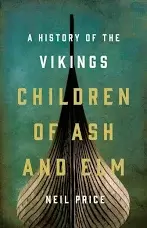
In Children of Ash and Elm, Neil Price suggests that the Viking's concept of Ragnarok, the cataclysmic final battle at the end of the world, might have been formed when volcanic eruptions threw so much ash into the atmosphere that spring seemed not to come. In 536, 539, and 547, major volcanic eruptions, probably in El Salvador at what is now Lake Ilopango, caused world wide ecological consequences that are documented in written sources as far divergent as China, India, the Mediterranean, and the Goths of central Europe.

Fimbulwinter, or Mighty Winter of Scandinavian lore may have been inspired by this. Snorri, in his Edda, says that when Fimbulwinter comes, "there will be great frosts and keen winds. The sun will do no good. There will be three of these winters together, and no summer between."

​Dendrochronological records from this period show that trees withered, their growth rings stunted. The failed harvests created riots and famine. In Scandinavia, tens of thousands starved to death, and the population suffered losses of an estimated 50%. Price says that this devastation led to a dissolution of  the sociopolitical structures in Scandinavia, and the beginning of what is called the Viking age. What they feared to be the end of civilization proved to be the beginning of a new era.

The Vikings were in no way responsible for the destruction of the ecology in the 6th century. Those volcanic eruptions were a natural occurrence. And while natural disasters continue to happen, it seems that many others are not natural at all, but human made. 
Picture
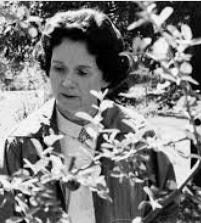
In her 1962 book Silent Spring, biologist Rachel Carson warned that the heightened use of DDT and other pesticides after World War II was going to lead to a human-created Fimbulwinter.  In our attempt to choose what species were to live and what were to die because we had deemed them pests, humans were going to destroy the food chain, leading to the death of far more species than we intended. As birds' shells became thinner, their chicks would die. The springtime sound of birds would be no more. Fortunately for us, politicians listened and the crisis was averted. Out of her warnings, a new ecological consciousness developed and a new era of environmentalism was born. 

The jury is still out on whether COVID-19 was a man made or natural disaster. We still don't know whether this virus developed on its own or in a lab. But for many, the year-long quarantine has felt like fimbulwinter. Once again, society has had to react to imminent disaster. It will be interesting to see how this, too, will lead to a new era. 

Bird Nest Cookies

Celebrate the promise of spring with these not too sweet cookies. 

Picture
1/2 cup brown sugar
1 cup softened butter
2 eggs, separated (you will need 2 yolks and 1 egg white for this recipe)
1 tsp vanilla
2 1/4 cup flour
1/2 tsp salt
1/2 cup unsweetened shredded coconut
1/3 cup finely chopped pecans
candy coated chocolate eggs or small jelly beans

Heat oven to 350. Line cookie sheets with parchment. 

In large bowl, beat brown sugar and butter until light and fluffy.
Add egg yoks and vanilla and blend well. 
Add flour and salt and blend well. 

Shape dough into 1 inch balls.

In small bowl, slightly beat 1 egg white (use the other egg white for another purpose)

In another small bowl, mix coconut and pecans. 

Dip the tops of cookie dough balls into the egg white, then into the coconut and nut mixture. Set on the parchment-lined cookie sheet, coconut side up, 1" apart. 
Use your thumb to make an indentation in the center of each cookie. 

Bake at 350 for 8-10 minutes, or until lightly browned. As soon as they are out of the oven press a chocolate egg or jelly bean into the dent in the dent in the middle of each cookie before moving to a cooling rack. 

Sunday, March 21, 2021

Buffalo Soldiers


Picture
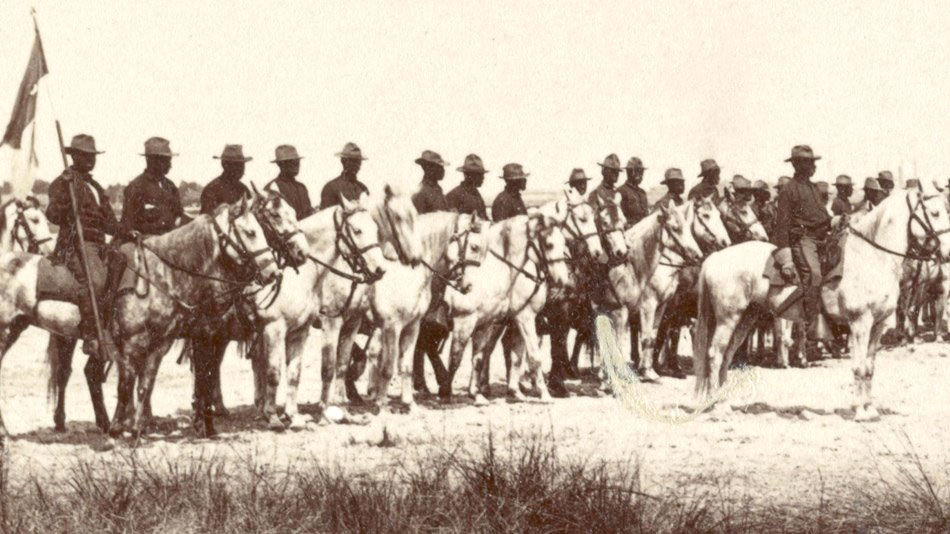
In 1866, right after the close of the Civil War, Congress created six (later consolidated to four) regiments of African-American soldiers. These units, the 9th and 10th Cavalry, and the 24th and 25th Infantry, quickly became known as “The Buffalo Soldiers.”

Picture
There are at least three different stories concerning how these units came by their nickname.

The most plausible in my mind is that the Plains Indians, who fought the Buffalo Soldiers, thought that their dark skin and black curly hair looked much like the coloring and fur of the buffalo.

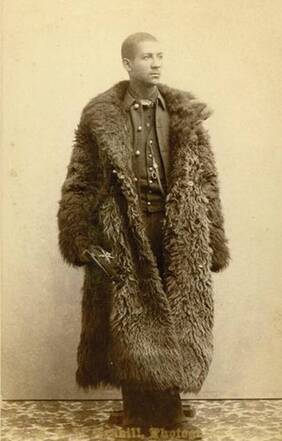
A second theory is that they were named after the thick buffalo-hide coats the troops wore during the winter.

​A third theory is that they were awarded the name because of the ferocity and bravery of their actions. 

Picture
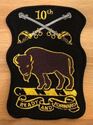
Regardless of how the name came to be, the soldiers themselves were proud of it and considered it high praise since buffalo were deeply respected by the Native peoples of the Great Plains. Eventually, the buffalo became the image on the 10th Cavalry's regimental crest.

At first, regiments of Buffalo Soldiers faced a lot of racial prejudice. Because many whites didn't want to see armed black soldiers in or near their communities, the Buffalo Soldiers were assigned to forts west of the Mississippi River, where they supported the nation's westward expansion by protecting settlers, building roads and other infrastructure, and guarding the U.S. mail. They were also involved in many of the military campaigns of the Indian Wars. They served with distinction, earning an impressive 18 Medals of Honor during this period.
Picture
​ Since there were no African American officers, the units were commanded by whites. Some officers, like George Armstrong Custer, were so opposed to allowing blacks into the Army that they refused to command black regiments even when it cost them promotions. Others, like John Pershing, accepted the command but were branded for it. Pershing got the nickname “Black Jack” for his time commanding the 10th Cavalry. At first, it was given to him derisively, but he managed to turn it into a badge of honor.

George Jordan, of  K Troop, 9th Cavalry Regiment, earned his prestigious medal for repulsing a force of more than 100 Indians while he and his detachment of 25 men were stationed at Fort Tularosa, N. M., and then for holding his ground in an exposed position so that a larger force of Indians could not surround his command in Carrizo Canyon.

Picture
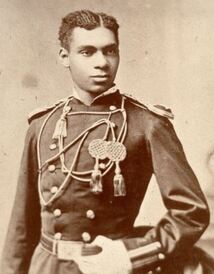
Eventually, the exceptional performance of the Buffalo soldiers led to their advancement into positions of authority. The first black officer to command soldiers in the regular U.S. Army, Henry O. Flipper, was born a slave in Georgia but graduated from West Point Military Academy in 1877, commissioned as a second lieutenant, and was assigned to the 10th Cavalry Regiment. He faced intense resentment from some white officers and became the target of a smear campaign that culminated in a court martial and his dismissal from the Army in 1882. He was posthumously pardoned by President Clinton in 1999.

Buffalo Soldiers continued to serve their country, both in the west and abroad. They helped in the 1892 Johnson County War in Wyoming, which pitted small farmers against wealthy ranchers and a band of hired gunmen. They also fought in the Spanish-American and Philippine-American Wars, and served along the U.S.-Mexico border and in the Expedition to find Pancho Villa.  However, they continued to suffer racism.  Woodrow Wilson excluded black regiments from the American Expeditionary Force and placed them under French command. During World War II, most of the 9th and 10th Cavalry Regiments were moved into service roles. The two exceptions were the 92nd Infantry Division, which saw combat during the invasion of Italy, and the 25th Infantry Regiment, which fought in the Pacific. During the Korean War, the last of the segregated U.S. Army regiments were disbanded and their troops integrated into other units.

Sunday, March 14, 2021

Important Irish-American Women


America has welcomed people from all over the world. During the nineteenth century, a large proportion of these people were from Ireland. In the 1840s, when the Potato Famine was ravaging the Emerald Isle, nearly half of the immigrants to America were Irish, and half of those Irish immigrants were single women.
Many of those newcomers to America entered domestic professions, where working as a maid, cook, nanny, or housekeeper helped them assimilate into American culture. A generation later, Irish women were entering professions at higher rates than any other immigrant group. They became teachers, bookkeepers, typists, journalists, social workers, and nurses. Irish American women represented the majority of public elementary school teachers in Providence, Boston, New York, Chicago, and San Francisco by 1910.
According to the U.S. Census Bureau. about 32 million Americans, or 9.7% of the total population, identifies as being Irish.  In honor of Women’s History Month and St. Patrick’s Day, here are four Irish American Women who have made significant contributions, plus a recipe for cookies that will put you into the spirit of the day..

Mother Jones, Labor Agitator

Picture
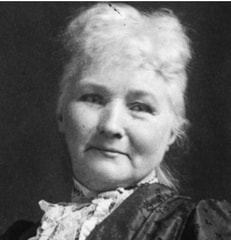
Mother Jones, whose real name was Mary Harris Jones, was a tireless advocate for worker’s rights, the end of child labor, and for improved working conditions for miners. She was born in Cork, Ireland in 1837, but was still a child when the Harris family emigrated first to Canada and then to the United States.
Mary Harris married an iron molder named George E Jones in 1861. Six years later, he and all four of their children died in a yellow-fever epidemic. The trade union he had belonged to helped the new widow, leaving a lasting impression on her.
When the great Chicago fire of 1871 destroyed her home and all of her belongings, Mrs. Jones left behind her job as a dressmaker to enter political activism. She joined the Knights of Labor and the Socialist Labor Party and became a full-time union organizer, travelling constantly around Pennsylvania, Ohio, Illinois, Indiana, West Virginia and Colorado as she organized marches, made speeches in the plain language of the working man, and deploying “broom and mop” brigades of workers’ wives to wage war against scabs and strike breakers.
 
Interestingly, although she believed in racial equality, she did not believe in equality of the sexes and opposed female suffrage. She believed in the traditional family, with a breadwinner husband and a wife who supported him.
 
Jones cultivated a grandmotherly persona, even lying about her age to appear older than she was. She made a lot of enemies.  One district attorney called her the most dangerous woman in the United States. The writer Upton Sinclair called the left-wing firebrand the walking wrath of God. But while she angered many people, she secured valuable nationwide press attention for the causes she championed.


Kay McNulty, Computer Programmer

Picture
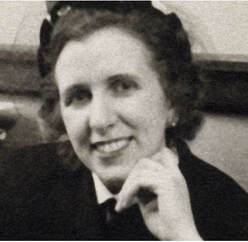
On February 12, 1921, important events happened to the McNultys of Donegal County, Ireland: Their daughter Kay was born, and the father was arrested for IRA membership. Two years later, when he was finally released from prison, the family left their farm and emigrated to Pennsylvania. The move turned out to be lifechanging for Kay, whose mother encouraged her to do her best “to prove that Irish immigrants could be as good, if not better, than anybody.” While only 37% of girls in Ireland were enrolled in school in 1929, Kay was able earn a scholarship while in High School that allowed her to attend Chestnut Hill College for Women. She graduated with a mathematics degree.
 
When World War II began, the US Army hired Kay as a “computer”, calculating missile trajectories. In 1945, she and five other women were moved to Aberdeen military base in Maryland to developing the processor for a top-secret 30-ton machine called the Electronic Numerical Integrator and Computer (ENIAC). Later, she worked at another programming job, which she only discovered later was testing the feasibility of the H-bomb.
 
In 1948 Kay married a computer developer named John Mauchly. As was usual at the time, she stopped her career. But throughout the time when she raised seven children,
Kay continued, unpaid and unnoticed, to program the new computers that her husband was developing.
 
It wasn’t until decades later, in 1997, that McNulty and the other five ENIAC women were inducted into the Women in Technology International Hall of Fame.


Ella Fitzgerald, Singer

Picture
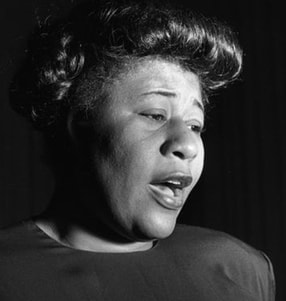
Ella Fitzgerald may not look Irish, but when she acknowledged her heritage, the people of Ireland were happy to have her. The First Lady of Song was born to a woman who was African American/Cherokee Indian. Her father, who was Irish enough to have a family crest, never married her mother, and abandoned the family when Ella was quite young. During a singing tour of Ireland in the 1960s, Fitzgerald told reporters that she had the family crest in her home, and the authorities used a special stamp on her passport to acknowledge her heritage.
 
Fitzgerald has a voice that continues to amaze and entertain listeners years after her death. She remains famous for her scat singing and her associations with other jazz greats such as Louie Armstrong and Duke Ellington. Her musical career spanned six decades and several genres, though she remained a jazz singer at heart.
 
Ella could be considered a symbol of the mixing of cultures that is distinctly American


Eileen Marie Collins, AstronauT

Picture
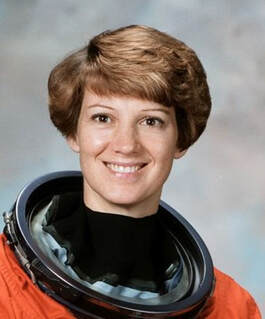
Eileen Marie Collins was the daughter of Irish immigrants. She became interested in space flight at a young age. She began to pursue her dream by joining the air force and becoming a test pilot. In 1990, she was selected for astronaut training. Collins was able to pilot several space shuttle missions and was the first woman to serve as a commander on a space shuttle mission. She reached the rank of colonel in the United States Air Force. 


Irish American women have come a long way since their days of domestic service. Some, like Collins are reaching for the stars. Others, like Fitzgerald, are stars. Some continue Mother Jones’ fight for the rights of the downtrodden, giving voice and hope to millions, and many are involved in STEM careers that they do not have to pursue in privacy in their own homes. These and many others have proven McNulty’s mother right in her assertion that Irish immigrants could be as good, if not better, than anybody.

Picture

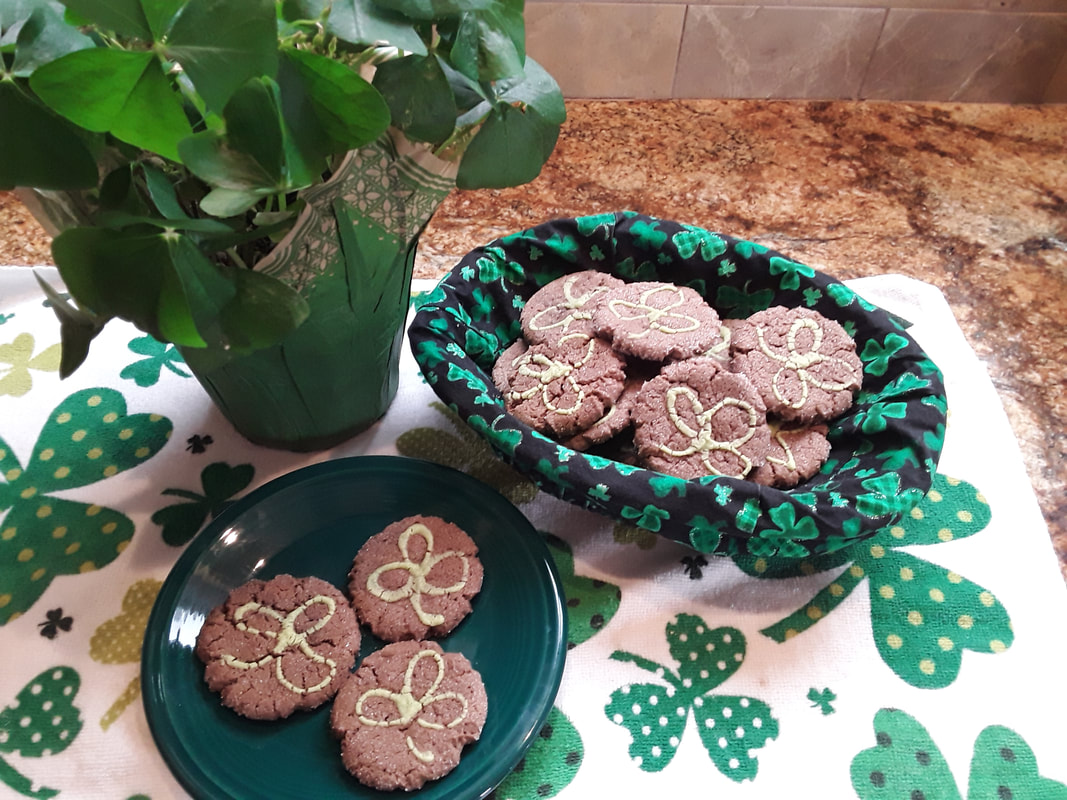
Chocolate Mint Shamrock Cookies

These festive cookies can be adapted to different holidays. Change the color of the topping, pipe it out in a different shape, and vary the flavor of the extract to serve any time of year.
1 cup sugar
2/3 cup shortening
½ tsp. mint extract
3 TBS cocoa powder
2 eggs
1 ¾ cup flour
¾ tsp baking soda
½ tsp salt
 
Sugar to roll cookies in
 
Topping
¼ cup flour
¼ cup butter, softened
1-1 ½ tsp warm water
2 drops green food coloring
 
Preheat oven to 375°
In large bowl, beat 1 cup sugar and shortening until light and fluffy. Add extract, cocoa and eggs and blend well. Stir in flour, baking soda and salt.
Shape into 1” balls and roll in sugar. Place 2” apart on a cookie sheet. Flatten with the bottom of a glass. If the glass sticks to the cookies, dip it in sugar.
To make topping, combine flour and butter until smooth. Add warm water until the paste is soft enough to extrude easily from a pastry bag with a small round tip. (If you don’t have a pastry bag, put mixture in a zip lock sandwich bag and snip a small hole in one corner.) Pipe shamrock design on top of each cookie.
Bake at 375° for 8-10 minutes or until set. Makes 6 dozen cookies.

Monday, March 1, 2021

Starvation Peak


Picture
A few weeks ago I got an email from a woman whose father had read my Civil War Novels Where Duty Calls and The Worst Enemy and was anxious to know when The Famished Country, the third and final book in the series, would be out. 

I had to admit to her that teaching was taking up far too much of my time these days, and that my work has stalled. I have written through Chapter 8, and outlined the rest of the novel, but it’s not going to be finished until the end of summer at the earliest.  

She then asked me if I knew of any other stories set in the Starvation Peak area, or near Bernal. I was flummoxed. Although I knew where Bernal was, I’d never heard of Starvation Peak. The name intrigued me, and I began digging for answers. 


The village of Bernal is one of many created after Governor Juan Bautista Anza forced marauding Comanches to sign the Comanche Peace Treaty in 1786. Prior to this, the area around Pecos Pueblo had been too vulnerable, a reason the inhabitants of Pecos Pueblo abandoned their home in the 1830s to live with their cousins in Jemez.
 
In November 1794, Lorenzo Marquez asked Spanish Governor Fernando Chacón to make a land grant for him and 51 other families from Santa Fe. Marquez said in the petition that the families were large, but had only small parcels of land in Santa Fe, and not enough water.

He noted that thirteen of the fifty-two petitioners were Indians, probably from the Pecos Pueblo.  Since most of the outlying grants were given, according to Fray Angélico Chávez, to “Spanish military personnel and the genízaro colony of Santa Fe [1] , it is likely that most of the other families in the group were either Genízaros or mestizos. Historians speculate that Marquez had been a presidio soldier stationed around Pecos Pueblo and was therefore familiar with the area.

Genízaros are Indigenous people who had assimilated into Spanish culture. They included Puebloans from Pecos, San José and San Miguel, plus converts from the Comanche and other Plains tribes. More than fourteen percent of the population of Santa Fe was made up of Genízaros.
 
The 315,000-acre grant, which became known as San Miguel del Vado Land Grant, was approved. Soon a number of new communities, including Bernal, were established in the Pecos River Valley.
 
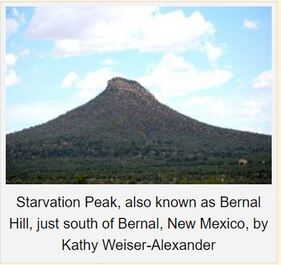
Towering over the village of Bernal is a 7,031-foot flat-topped butte that is named Starvation Peak. The legend is that, during the Pueblo Revolt of 1680, 36 Spanish colonists took shelter at the top of this mesa. Some accounts say they eventually tried to leave and were slaughtered and buried at the foot of the mesa. Other accounts say the colonists died of thirst and starvation while still atop. The story is documented in an 1884 edition of the Detroit Free Press, but has grown.  the years.  When writers from the Works Progress Administration were documenting the region in 1939, they recorded 120 colonists had died.  

Starvation Peak became a way-finder point along the Santa Fe Trail when it opened in 1821. It was distinctive enough to help guide travelers. Major William Anderson Thornton, a member of an 1855 military expedition that passed through reposted that General Kearny had wanted to place a flag atop the peak when he marched through the area during the Mexican American war, but after walking around its base, declared the task impossible.  

At the base of the peak lies Bernal Springs, which became a campsite and stage stop along the trail. There is little doubt that Bernal profited from trading with travelers. When the Atchison, Topeka and Santa Fe Railroad laid its tracks through the Pecos Valley in the early 1880s, it bypassed the town, which has become a sleepy little village set in a spectacularly beautiful land. 

[1] Fray Angelico Chavez, Archives of the Archdiocese of Santa Fe, 1678-1900 (Academy of American Franciscan History: Washington D.C., 1951), 205.
 
https://www.legendsofahttps://newmexicohistory.org/2012/06/29/san-miguel-del-bado-grant/merica.com/bernal-new-mexico/
https://www.newspapers.com/clip/8213241/pretty-good-starvation-peak/

Picture
Jennifer Bohnhoff teaches New Mexico History in a rural New Mexico Middle School. She is the author of Rebels Along the Rio Grande, a trilogy of novels about the Civil War battles in New Mexico. You can read more about Mrs. Bohnhoff and her books at her website, where you can also sign up to receive emails about her work and upcoming sales and giveaways.

Monday, February 22, 2021

Two Famous McAdams


Picture
Last week I wrote about American Presidents of Scots descent. This week, I’ll share some information on two more Scotsmen. One had a tenuous tie with the United States, the other had no connection to America, but they’re both interesting men, whose name has lived beyond them.

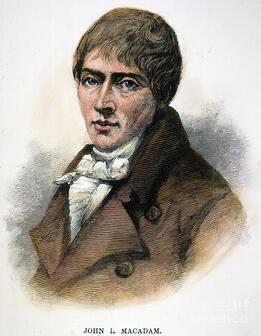
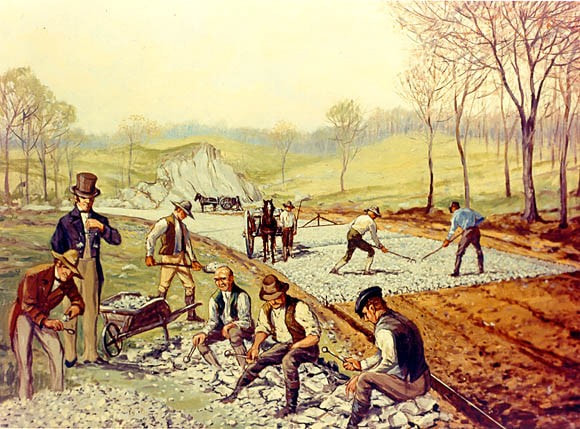
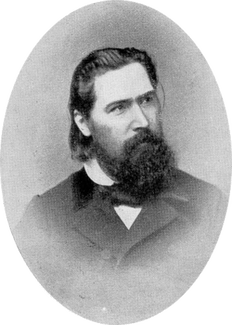
John Loudon McAdam was the inventor of “macadamisation,” an effective and economical method of constructing roads. Born in Ayr, Scotland in 1756, McAdam made his fortune working in his Uncle’s counting house in New York during the American Revolution. When he returned home in 1783, he bought an estate and began operating a colliery, some kilns, and an ironworks. These businesses gave him the technical knowledge to suggest that roads should be raised above the surrounding ground and constructed of systematically layered rocks and gravel. He wrote his conclusions in two treatises, Remarks on the Present System of Roadmaking (1816) and Practical Essay on the Scientific Repair and Preservation of Roads (1819). 

PictureBy Peetlesnumber1 - Own work, CC BY-SA 3.0, https://commons.wikimedia.org/w/index.php?curid=21076588
In time, road builders began adding hot tar to bond the rocks and gravel together. This is what I’ve always called asphalt but depending on where you live it can be called macadam, blacktop, or tarmac, a mixture of the words tar and “macadam.
 
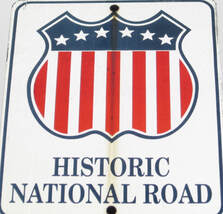
The first macadam road in North America was the National Road, also known as the Cumberland Road. Construction began in 1811, in Cumberland, Maryland, on the Potomac River. The road stretches 620 miles and connects the Potomac to the Ohio River. It was macadamized in the 1830s and became the main road for thousands of settlers moving west. The road ended in Vandalia, Illinois, 63 miles east of St. Louis, It would have gone further had not an 1837 financial panic led Congress to cut off funding.

Picture
Picture
The other McAdam whose name has outlived him is Dr. John Macadam, who was born outside of Glasgow, Scotland in 1827. He taught university-level chemistry, first in Glasgow and then in Melbourne, Australia. He was also a medical doctor, a health official for the city of Melbourne and a member of the agricultural board. As a politician, he fought to make parliament enact food purity laws.  The macadamia nut, a native plant of Australia, was named in his honor by the botanist Ferdinand von Mueller.
Here’s one of my favorite uses for macadamia nuts. I think Dr. John would have enjoyed them, and I hope you do, too. 


​Chocolate Macadamia Cookies

Picture
¾ cup firmly packed brown sugar
½ cup sugar
1 cup softened butter
1 tsp almond extract
1 egg
2 cups flour
¼ cup cocoa
1 tsp baking soda
½ tsp salt
1 cup white chocolate chips
½ cup macadamia nuts, coarsely chopped
 
Preheat oven to 375°.
Beat sugars and butter until light and fluffy.
Add extract and egg and blend well.
Stir in flour, cocoa, baking soda and salt and mix well.
Stir in chips and nuts.
Drop by rounded tablespoonfuls, 2” apart on ungreased cookie sheets.
Bake at 375° for 8-12 minutes, or until set.
Cool 1 minute before removing from sheet to cooling rack.
Makes 2 ½ cookies.


Monday, February 15, 2021

Shortbread and Scots-American Presidents


Picture
Since February has Presidents Day, I'd intended to write a piece on George Washington and include a recipe that had something to do with him. Martha Washington was a famous cook in her day; surely I could find a recipe for cookies that she made for her husband

But as I began planning, I remembered this shortbread pan that I've had a long time. (It might have been a wedding gift, but as I've been married over 40 years, I can't remember.)


Although I usually make shortbread at Christmas, the lovely hearts on the pan make it very appropriate for Valentines Day, and that led me on a search to find a connection between shortbread and February. Turns out I didn't have to search very hard at all, and my search led me right back to George Washington. 

George Washington may have been our first president with ties to Scotland, but he wasn't our last. 
​ Scotland.org states that 34 of our 44 presidents have been of either Scottish or Ulster-Scots descent. This includes George Washington, James Polk, Theodore Roosevelt, Gerald Ford, Ronald Regan, and Bill Clinton. 
 
 
Even Barack Obama, our first African-American president, has some Scots blood. Genealogists have found that his ancestry can be traced back to William the Lion who ruled Scotland from 1165 to 1214.

So this President's Day, enjoy a bit of shortbread and think about what Scotland has contributed to the United States. 

My recipe for shortbread has a secret added ingredient: corn starch. While it is unusual, I've found that it leads to a tighter crumb. These cookies won't shatter when you bite down on them, but they are still rich and not too sweet. 

Shortbread
Picture
1/2 lb.(2 sticks)  butter

1/2 cup sugar
2 cups flour
1/2 cup corn starch

Preheat oven to 325  If you have a shortbread pan, place it in the over and let it preheat.

Melt butter. 

Mix sugar, flour and cornstarch together. Pour melted butter over and blend together. Pat into preheated mold. 

Back at 325 for 40 minutes. Reduce heat to 300 and bake another 20 minutes, or until edges are slightly brown. Turn out shortbread onto a plate as soon as they come out of the oven. Use a large knife to slice the wedges apart when the shortbread is still warm. 

Variations
If you don't own a shortbread pan, you can use any of these four variations. 

Wedges: pat into two 8" circles. Cut into 8-12 wedges, but don't separate them. Back at 325 for 30 minutes. Recut while warm 

Thumbprints: roll into 1: balls, Place 2" apart on a cookie sheet and press thumb into the center of each to make a deep indentation. Back at 325 for 18 minutes. Immediately after removing from over, fill each indentation with 1/2 tsp preserves. Cool before removing from cookie sheet. 

Pecan spice: Substitute brown sugar for white and add 1 tsp of pumpkin spice to the original recipe. Pat into a 9x13" pan. Cut into 1x1/12" rectangles. Place a pecan half on each rectangle. Bake at 325 for 25 minutes. Recut while warm and let cook in the pan before sprinkling with powdered sugar. 

Shortbread triangles:  Substitute brown sugar for white and add 1 tsp of pumpkin spice to the original recipe. Pat into a 9x13" pan. Sprinkle dough with 1/4 cup chopped pecans; press them into the dough. Cut into 16 squares, then divide each square crosswise to make triangles. Bake at 325 for 25 minutes. Recut while warm. When cool, drizzle with vanilla icing. 

Vanilla icing: 1/2 cup powdered sugar, 1/4 tsp vanilla, 2-3 tsp milk, stirred until smooth. 

Jennifer Bohnhoff is an educator and writer who lives in central New Mexico. You can learn more about her books here

Tuesday, February 2, 2021

Early Africans in New Mexico


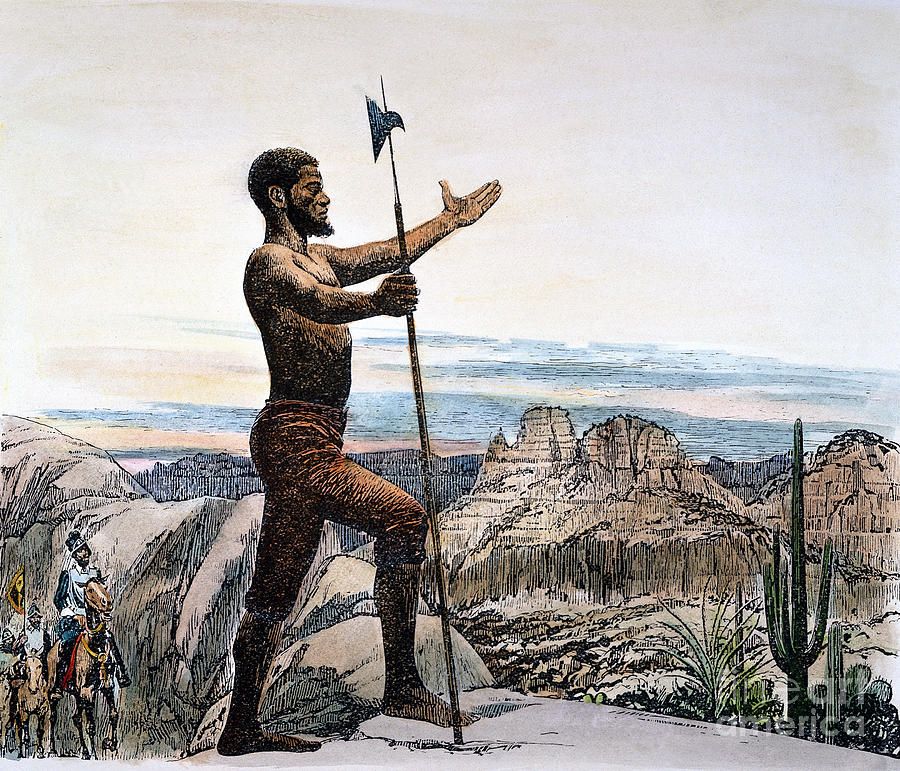
PicturePainting, Estavanico by Granger. Image available on the Internet and included in accordance with Title 17 U.S.C. Section 107.
New Mexico is often referred to as a land of three cultures, meaning the Native Americans, who’ve lived here for at least 11,000 years, the Hispanics who moved into the state beginning in the 1500s, and Anglo-Americans who moved in along the Santa Fe trail beginning in the 1800s. That description is misleading and makes the state look far less diverse and culturally rich than it is.

One of the first “outsiders” who set foot in New Mexico was neither Hispanic nor Anglo. In fact, he wasn’t even European. Mustafa Azemmouri, was a man of many names. History books usually call him by his slave name: Esteban, sometimes spelled Estevan. He’s also referred to as Estevanico, Esteban de Dorantes or Esteban the Moor. Estevan was born in the port city of Azemmour, Morocco, sometime around 1503. In 1513 he was captured by the Portuguese and became a slave. Sometime around 1521 he was purchased by Andres de Dorantes of Bejar del Castanar, who joined an expedition to explore Florida in 1527. After the expedition went badly, the survivors made crude boats and rafts and tried to sail to Mexico, floundering on the Texas coast near present day Galveston. Only 80 of the original party of nearly 500 made it this far; after five years of enslavement by the local Indians, the number was down to four.

In 1534, these four men escaped their captors and began the long walk back to Mexico. They moved from tribe to tribe, acting as medicine men as they went. Estevan proved to be gifted in languages, and became fluent in several Indian dialects. He carried a medicine rattle, a feathered, beaded gourd given to him by a chief, as his good luck symbol and trademark. The men followed the Rio Grande, entering Mexico near El Paso. They finally arrived in Mexico City in July of 1536, where the Viceroy, enchanted by their tales of a golden city, organized an expedition to Arizona and New Mexico. Estevan guided the group, which was led by a Franciscan priest named Fray Marcos de Niza.

When Estevan arrived in at Hawikuh, a Zuni pueblo in Northwest New Mexico, the inhabitants saw that his medicine gourd was trimmed with owl feathers, a bird that symbolized death to the Zuni. Thinking him evil, they killed him.

Estevan was only the first of many Africans who came to New Mexico as slaves or servants. Many of the Spanish brought their slaves with them to the new world. Another is Sebastian Rodriguez, who was born sometime around 1642 in Angola, Africa and came to New Mexico in 1692. Records indicate that Governor Diego de Vargas, the man charged with resettling New Mexico after the Pueblo Revolt of 1680, brought Rodriguez with him as he traveled north. Rodrigues had been the drummer and town crier for the garrison in El Paso. He continued to serve in that capacity once Santa Fe returned to Spanish control. Rodriguez was able to both marry and acquire property. Records show he purchased land in Santa Fe in 1697. One of his sons continued in his father's positions as Santa Fe’s town crier and drummer in Santa Fe. Another son became one of the first settlers of the northern village of Las Trampas.

Rodriguez wasn’t the only African to enter the state with the reconquest. Among the over eight hundred persons that Vargas brought into the area were twenty-seven families listed in the records as Negro or Mestizo. Many of these families were given grants in the mountain communities north of Santa Fe. They married and mixed with their neighbors, both Spanish and Native, their cultures melding into something unique to Northern New Mexico. 

Maple Pecan Pie

I'm in Maine right now, enjoying a summer vacation in a lake-side cottage, with lots of time for bobbing about with the grandkids. My hu...