Wednesday, August 11, 2021

A Poem for a Horse


​A Soldier’s Kiss

Picture
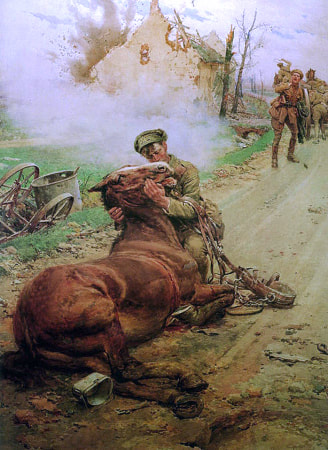
'Goodbye, Old Man,' by Fortunino Matania
Only a dying horse! pull off the gear,
And slip the needless bit from frothing jaws,
Drag it aside there, leaving the road way clear,
The battery thunders on with scarce a pause.

Prone by the shell-swept highway there it lies
With quivering limbs, as fast the life-tide fails,
Dark films are closing o'er the faithful eyes
That mutely plead for aid where none avails.

Onward the battery rolls, but one there speeds
Heedlessly of comrades voice or bursting shell,
Back to the wounded friend who lonely bleeds
Beside the stony highway where he fell.

Only a dying horse! he swiftly kneels,
Lifts the limp head and hears the shivering sigh
Kisses his friend, while down his cheek there steals
Sweet pity's tear, "Goodbye old man, Goodbye".

No honours wait him, medal, badge or star,
Though scarce could war a kindlier deed unfold;
He bears within his breast, more precious far
Beyond the gift of kings, a heart of gold.

by Henry Chappell

Known as the Railway Porter Poet because he worked at Bath Railway Station, Henry Chappell (1874 - 1937) is most known for a WWI poem entitled "The Day."  A collection of his poems is available as a free download here

Fortunio Matania (1881–1963) was an Italian artist noted for his realistic portrayal of World War I trench warfare and other historical scenes.

Jennifer Bohnhoff is a writer who lives in the mountains of central New Mexico. Her historical novel about World War I, A Blaze of Poppies, will be released this fall and is available for preorder. 

Sunday, August 8, 2021

Back to School: Cookies and Teachers


Picture
It’s August, which should mean high summer.

For many of us, though, school is starting. Here in the mountains of New Mexico, the sunflowers start to bloom about the same time the school bells start to ring, and the smell of chili roasting wafts on the air. All of these are signs that summer is on the wane and fall is coming.

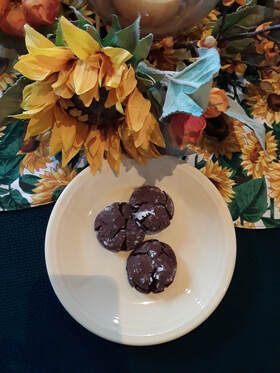
These cookies really have a bit of a fall feel to them. The molasses gives them an earthy, satisfying taste that calls me home. Time to settle in and enjoy the last of the season before fall, with all its activities, starts again. 


​Molasses Chocolate Crinkles

½ cup (1 stick) butter, softened
½ cup molasses
½ cup cocoa
¼ cup sugar
1 tsp baking soda
1 tsp cinnamon
1 tsp vanilla
¼ tsp salt
1 ½ cups flour
 
Topping: ¼ cup powdered sugar
Heat oven to 350
Beat all ingredients except flour until mixed.
Add flout just until blended
Form into 1: balls and roll in sugar
Place 1” apart on cookie sheet
Bake 9-10 minutes until puffed and cracked.
Cool 1 minute before removing from cookie sheet. 


Picture
Over the years, there have been many outstanding teachers in the history of the USA. They worked to make the world a better place by improving the educational system and teaching practices. Their contribution changed the whole perception of education and shaped our society. Here are famous educators who have made a difference in the world.

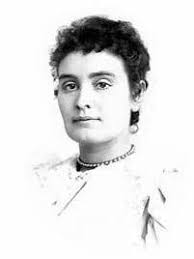
Anne Sullivan
Anne Sullivan reimagined special education, using her experience and natural pedagogical talent. She is famous for being a teacher of Helen Keller, a deaf and blind girl. Anne became her educator and eventually a friend. Being visually impaired herself, Sullivan knew what the girl was experiencing. It allowed her to choose special teaching techniques to help Hellen communicate with the world. Anne would take her hand and spell each word on the girl’s palm. This creative method proved to be effective, and soon, Hellen learned more and more words. With Anne’s help, Helen Keller became a well-known author, political activist, and the first blind-deaf person to earn a bachelor’s degree.


Picture

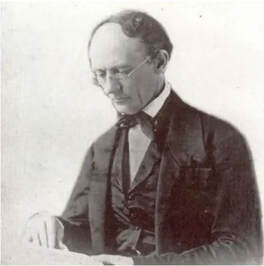
William McGuffey
William McGuffey was born in 1800 and was such a precocious child that he began to teaching classes at age 14. While teaching in Ohio and Kentucky, McGuffey saw that there was no standard method to teach students how to read; often, the Bible was the only book available.
 
McGuffey paused his teaching career to attend college himself. By age 26, he was Professor of Languages at Miami University in Oxford, Ohio. In 1835, his friend Harriet Beecher Stowe asked him to write a series of readers for the publisher Truman and Smith. McGuffey Readers, a series of books for elementary school students, was used in American schools for the next 70 years. 

Picture
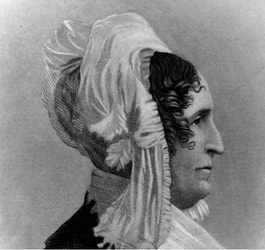
Emma Willard
Emma Willard made education accessible for women. She founded 
the first higher education institution for females in America, the Troy Female Seminary. The school still exists as  the Emma Willard School. Emma Willard made the promotion of education her life-long aim. She fought for women’s rights to achieve higher education of the same quality as men could get. In her institution, female students studied science, mathematics, philosophy, and other subjects that were not previously available to them. Willard’s progressive outlook prioritized equality changed the perspective people had on education.

Vivian Paley
Vivian Paley was a preschool teacher and the author of numerous books. She emphasized the importance of storytelling and play for the development of children. Paley believed that teachers who promoted fantasy and make-believe evoked the most interest in their students. She made her lessons memorable for students and encouraged them to express feelings and ideas in the classroom. Vivian Paley received numerous awards acknowledging her contribution to preschool teaching.
 
Sal Khan
Sal Khan tried to make education more accessible to people around the world. This American educator founded the Khan Academy, and online platform that granted people access to educational topics. It covers many 
different school subjects, including math, computing, history, and the arts. His use of technologies revolutionized education. 

Picture
Jennifer Bohnhoff taught English, Social Studies and History at the middle school and high school level. She is now retired so that she can devote her time to writing historical novels.

Wednesday, August 4, 2021

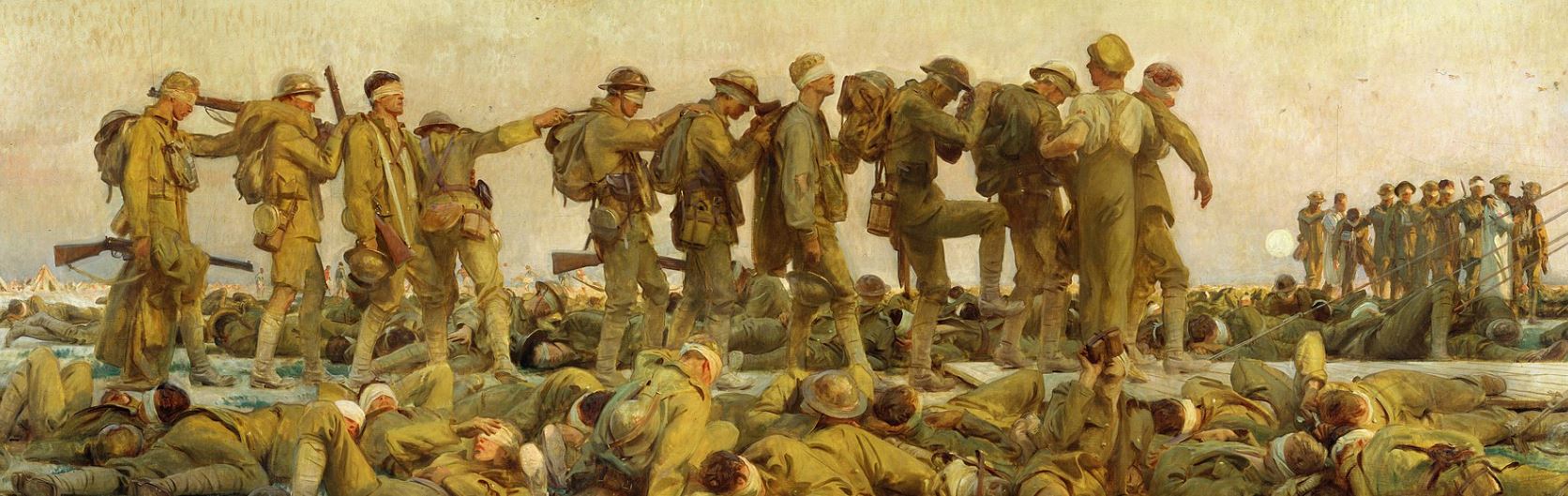
DULCE ET DECORUM EST


Picture
Gassed, by John Singer Sergeant
Bent double, like old beggars under sacks,
Knock-kneed, coughing like hags, we cursed through sludge,
Till on the haunting flares we turned our backs,
And towards our distant rest began to trudge.
Men marched asleep. Many had lost their boots,
But limped on, blood-shod. All went lame; all blind;
Drunk with fatigue; deaf even to the hoots
Of gas-shells dropping softly behind.

Gas! GAS! Quick, boys!—An ecstasy of fumbling
Fitting the clumsy helmets just in time,
But someone still was yelling out and stumbling
And flound’ring like a man in fire or lime.--
Dim through the misty panes and thick green light,
As under a green sea, I saw him drowning.

In all my dreams before my helpless sight,
He plunges at me, guttering, choking, drowning.

If in some smothering dreams, you too could pace
Behind the wagon that we flung him in,
And watch the white eyes writhing in his face,
His hanging face, like a devil’s sick of sin;
If you could hear, at every jolt, the blood
Come gargling from the froth-corrupted lungs,
Obscene as cancer, bitter as the cud
Of vile, incurable sores on innocent tongues,--
My friend, you would not tell with such high zest
To children ardent for some desperate glory,
The old Lie: Dulce et decorum est
Pro patria mori.
Picture
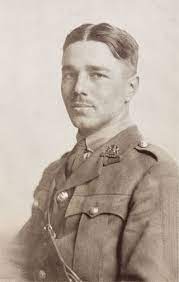
Wilfred Owen was a sensitive young man who considered joining the clergy. He volunteered to help the poor and sick in his parish until the tepid response of the Church of England to the sufferings of the underprivileged and dispossessed  disillusioned him. He then taught in France for two years, returning to England and joining the army after the war began. Owen's first few letters home to his mother in the early winter of 1916 indicate that he was enamored with the glamor and excitement of war, but in less than a month reality had taken hold and he had seen enough. The events depicted in "Dulce et Decorum Est" occurred on January 12, 1917. By then, he was ready to deny Horace's Latin admonition to the Romans that it was sweet and good to die for one's country.  Owen died on November 4, 1918, just days before the war ended. 

Picture
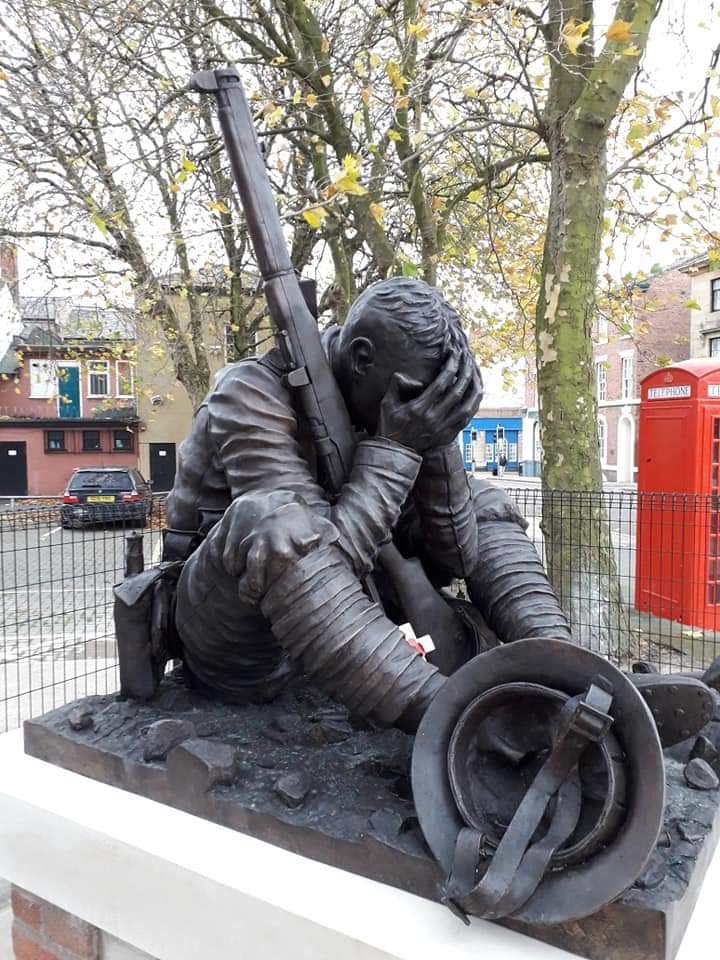
The memorial in front of where Wilfred's old school, Birkenhead Institute, once stood. 88 of its students, including Wilfred, died in WWI.

Jennifer Bohnhoff's World War I novel, A Blaze of Poppies, will be published in October 2021. It can be preordered here

Sunday, August 1, 2021

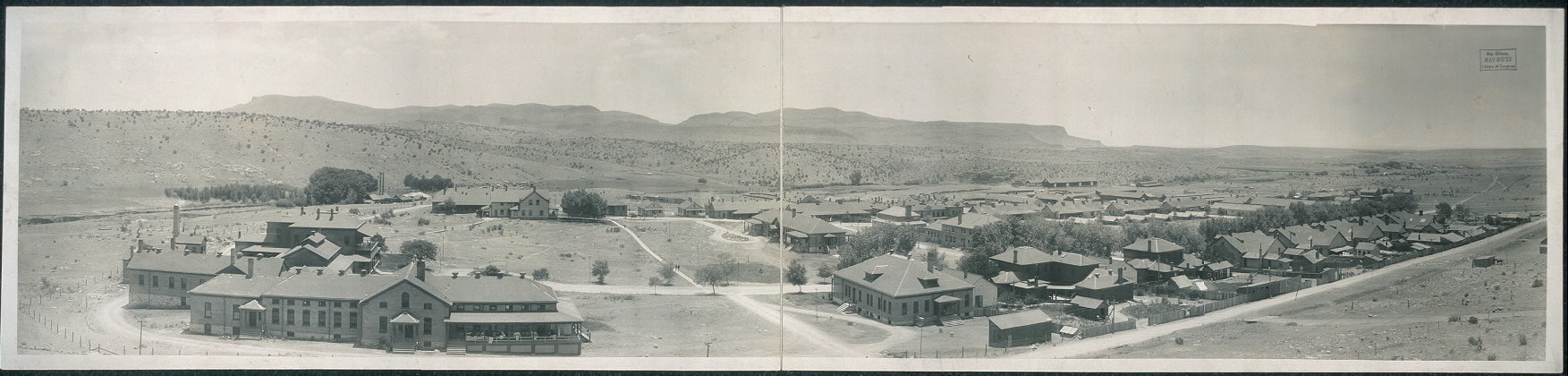
Fort Bayard: Southern New Mexico Site


Picture
I've written about Fort Bayard's history before. You can read all about it here

Fort Bayard has been on my mind a lot lately. I had intended to go down and revisit it during spring break this year. Travel restrictions surrounding the COVID-19 pandemic put a stop to that. So, instead, I did as much research as I could online. I found some good information, but nothing is as good as actually being in a place. 

Fort Bayard ceased to be a military post when the last detachment of the 9th U.S. Cavalry departed on January 12, 1900. That doesn't mean that the site was abandoned. The War Department had already issued an order issued  on August 28, 1899 that authorized the Surgeon General to establish the first military sanatorium dedicated to the treatment of Army officers and enlisted men suffering from pulmonary tuberculosis. Major Daniel M. Appel, an Army surgeon, arrived at Fort Bayard on October 3, 1899 to organize the hospital. 

Fort Stanton had undergone a similar conversion, becoming a sanatorium for tubercular merchant seamen in April 1899. Fort Stanton was transferred to the Department of Interior in 1896, and then to the U.S. Marine Hospital Service, a bureau within the Treasury Department, in 1899, Fort Bayard remained within the Army under the auspices of the Army Medical Department. 

. The Spanish-American War. drove the need for sanatorium for the Army's soldiers and veterans. In the humid, tropics of Cuba, more soldiers succumbed to disease than enemy fire. Many soldiers serving in the Philippines returned with pulmonary disease. At 6,100 ft. and with a dry, sunny climate, Fort Bayard seemed a perfect place to restore health to diseased lungs. Fresh air and sunshine was considered so important to healing that patients who were ambulatory stayed outdoors at least eight hours daily throughout the entire year,  and dormitory windows remained open. By March 1902, over 600 patients had been treated at the sanatorium.

World War I created another upsurge in the need for a hospital dedicated specifically to injuries and illnesses of the lungs. The cold, damp trenches of Northern France were breeding grounds for pneumonia, and gas warfare damaged thousands of dough boy lungs. The Great Influenza of 1918-19,  often referred to as the Spanish Flu, also contributed to pulmonary disease. 

By 1920,  the Army involvement with medicine for veterans was changing. In May the War Department closed the sanatorium and transferred most of its corpsmen, physicians and patients to other facilities in an effort to consolidate services. Most patients were moved to Denver. 


Picture
Jennifer Bohnhoff lives in the mountains of central New Mexico and writes historical fiction. Her novel, A Blaze of Poppies, is  set in Southern New Mexico and France during the 1910s. Some of the action takes place at Fort Bayard. Available October 2021, you can preorder this book now.

Wednesday, July 28, 2021

In Flanders Fields


Sunday, July 25, 2021

Americans buried in the Somme


Picture
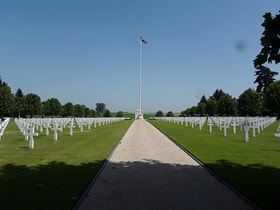
The Somme district is a part of Picardie, in Northern France. It is a beautiful area of green, gently rolling hills and little stands of woods. The American Somme Cemetery is there not because of the area’s beauty, but because it was the scene of some of the bloodiest fighting in World War I.  

Picture
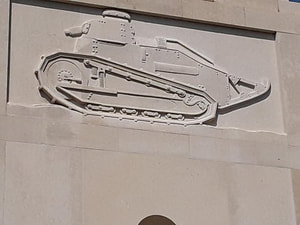
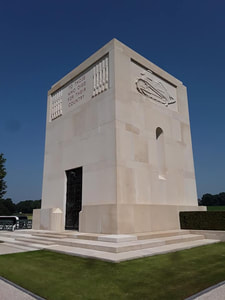
​The cemetery’s chapel boasts a massive bronze door surmounted by an American eagle. Its outer walls are carved with military equipment. Inside a cross-shaped crystal window illuminates walls which bear the names of 333 men missing in action.
 
Outside, rows of crosses and stars of David mark the graves of 1,844 American men and women who fell trying to break the Hindenburg line, which bisected the area, in a push known as the The Hundred Days Offensive. 

Picture
Most buried there served in American units attached to the British Fourth Army under the overall command of General Sir Henry Rawlinson.  Others buried there died in operations near Cantigny.
 
The largest one-day American regimental loss of the entire war occurred here on September 29, 1918 when the 107th Infantry Regiment suffered nearly 1,000 casualties during the first day’s attack in the Battle of St Quentin Canal.
 
Three Medal of Honor recipients are buried here.  The Gold Star Mothers became organized because of two brothers, James and Harmon Vedder, who are buried side by side. 


Not all buried here were fighters. Nurse Helen Fairchild was serving in a casualty clearing station in Dozinghem during July and August, while the Third Battle of Ypres-Passchendaele was happening nearby The station was repeatedly exposed to mustard gas and heavy shelling, and she reportedly loaned her gas mask to a wounded soldier during one such attack. After being evacuated in August, she developed gastric ulcers, for which she underwent surgery on January 13, 1918. She lapsed into a coma and died five days later. It remains unsure whether Helen Fairchild died of complications from chloroform used during surgery or from effects of mustard gasses, which mimic the effects chloroform has on the stomach.
 
 
Jennifer Bohnhoff toured this cemetery in June 2019 as part of a tour of World War I battlefields. A Blaze of Poppies, her novel based on her experiences will come out in October and is now available for preorder. 
For more information on Mrs. Bohnhoff and her writing, visit her website

Friday, July 23, 2021

All American Breakfast


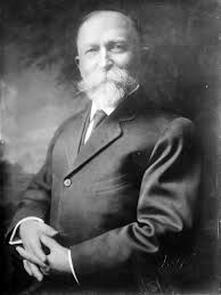
PictureDr. John Harvey Kellogg
Breakfast in America in the mid-1800s was not all that different from other meals. Middle- and upper-class Americans ate eggs, pastries, and pancakes like we do today, but oysters, boiled chicken, beefsteaks and leftovers were also on the menu. It wasn’t until the invention of ready-to-eat cereal that breakfast became a meal with distinct foods that weren’t usually served at other times of day.

The men behind this transformation have names that are still recognized today. Dr. John Harvey Kellogg and C.W. Post began a transformation in what Americans eat that is still controversial today.

During the nineteenth century, the most common American digestive complaint was dyspepsia, a term for what we now call indigestion. Dr. Kellogg and other nutritionists and reformers attributed this complaint to eating a diet too heavy in meat and spices and to too little exercise. They recommended what Kellogg called “biologic living,” a vegetarian lifestyle with more exercise, simple, unspiced foods, and whole grains. One dietary reformer, Sylvester Graham, invented the graham cracker in 1827. In 1863, another reformer named James Caleb Jackson invented a cereal that he named “granula” and his critics called “wheat rocks.” Kellogg invented his corn flakes in 1894. 

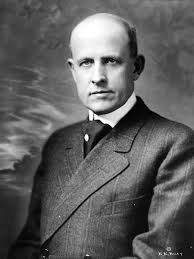
PictureC.W. Post
The public responded favorably to these new dietary theories. During its first year in production, more than 50 tons of corn flakes were sold. By 1903, over 100 cereal companies had begun producing breakfast cereals in Kellogg’s home town of Battle Creek, Michigan.

One of Kellogg’s biggest competitors was C.W. Post, who formed his own cereal company in 1895. Post became a convert to Kellogg’s theories after being under Kellogg’s care following a nervous breakdown in 1890. Less a reformer than an entrepreneur, his first product, Postum, was a grain-based coffee substitute similar to one Kellogg served his patients.  The next year he began manufacturing Grape-Nuts, based on another Kellogg recipe.

Today, the bloom has come off the cereal rose. Americans are more obese than ever before. Tums and other antacid medications show that we still suffer from indigestion. The dietary pendulum has swung to the other extreme, as evidenced by advocates of Keto, paleo and other diets that are meat-centered. Yet, cereal continues to make billions of dollars each year, and it’s not just for breakfast anymore. 


I’ve been posting a cookie recipe every month, with the ultimate plan of putting together a cookie recipe book for my friends, fans and family at the end of the year.

It’s too hot to bake, though. Here we are, in the middle of summer, and I find the idea of turning on the oven repugnant. Good thing there is such a thing as the no-bake cookie.

If you’ve known me longer than two months, you know that my husband loves cookies and he loves peanut butter. This recipe seems to be one of my go-tos for the indolent days of summer. 

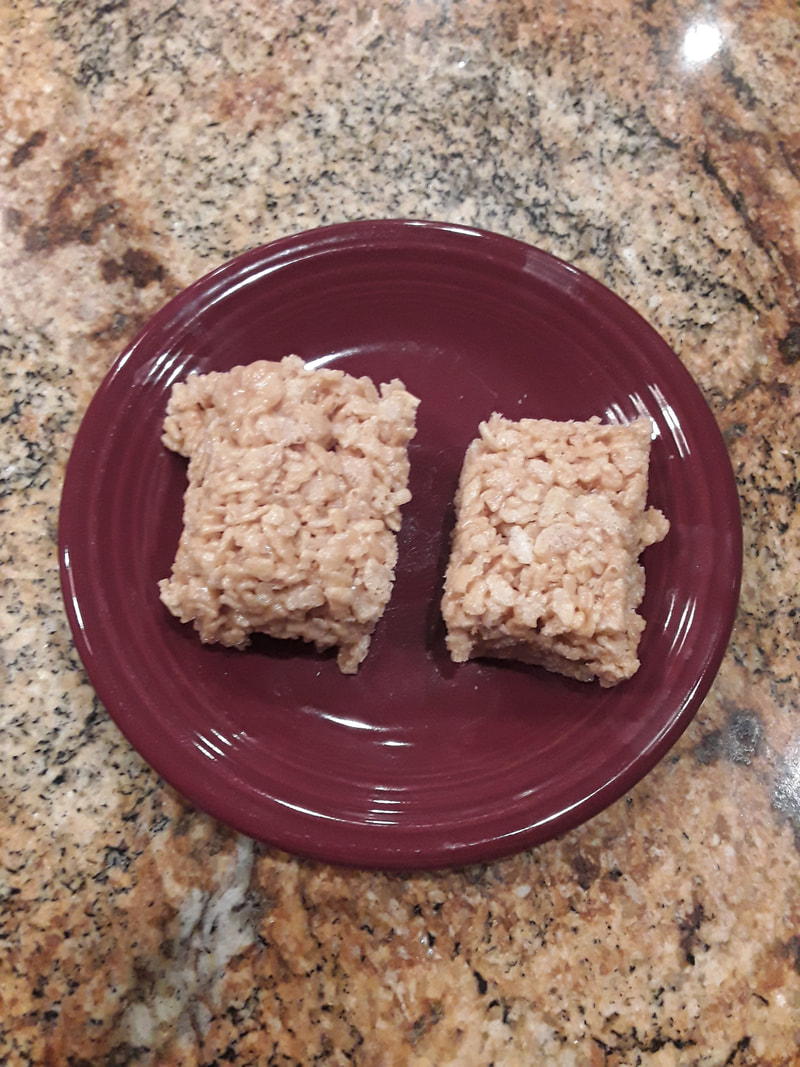
​Peanut Butter Cereal Treats

Picture
Line a 9” square pan with plastic wrap

In a sauce pan, combine ½ cup sugar and ½ cup corn syrup.
Boil 1 minute over medium heat, stirring occasionally. Sugar will melt into the corn syrup and mixture will be clear.

Remove from heat and stir in ½ cup smooth peanut butter

Mix in 4 cups rice krispies cereal

Press into pan. Let cool 15 minutes, then invert on cutting board, remove plastic wrap and cut into squares.

For an extra treat, you can melt ¾ cup semi sweet chocolate chips (I do this in the microwave by putting them in a glass measuring cup and microwaving 30 seconds at a time, stirring between sessions, until melted and smooth) and spreading over the treats when they are still in the pan. If you do this, put the pan in the refrigerator until set solid before turning out and cutting.)

Keeping Time with the Romans

  Modern societies rely on precise and standardized timing. Our schedules are synchronized to prevent chaos, ensure safety, and keep complex...