Thursday, February 2, 2023

A Sweet Book for Valentines Day


Picture
Although Saint Valentine's Day is not a public holiday in any country, it is a significant cultural and commercial celebration of romance and love. Observed on February 14, it generates millions of dollars in chocolate, flower, and card sales.

Originally, Saint Valentine’s Day recognized the martyrdom of a third century Roman priest who was executed in 269. One legend says that he was killed for performing weddings for Christian soldiers who were forbidden to marry. Another is that, while being jailed for his faith, he restored the sight of the jailer’s blind daughter, to whom he wrote a letter which he signed "Your Valentine" before he was executed.

Regardless of why and how it started, Valentine’s is a day that causes a lot of stress. This is especially true for middle grade students, who feel they are too old for the silliness of elementary school Valentines Parties, yet aren’t confident in matters of the heart.

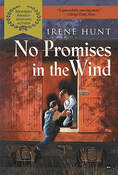
Hector “Hec” Anderson is a good example of a middle grader blundering his way through first love. An awkward, geeky sixth grade boy, Hec finds himself speechless when a new girl, Sandy Richardson, enrolls in his school. Sandy is beautiful and kind and Hec is instantly smitten with her. Unfortunately, so is the tall, handsome and popular captain of the basketball team, who sics his goons on Hec in an attempt to intimidate him.

The Valentine’s Day Dance is coming up. Hec tries to get Sandy’s with flowers and candy, but everything he does turns into a disaster. Does he dare ask her to dance with him – and earn a chance to win her heart?  

Tweet Sarts, the Valentines-themed middle grade novel in the Anderson Chronicles series, is for middle grade readers and older readers who remember the difficulties of young love. 



Picture
Jennifer Bohnhoff taught middle school for years. She is now a full time writer of books for middle grade through adult readers. 

Tweet Sarts is onsale to download onto an ereader from Amazon from February 2-9 for only .99.  Rather have a signed copy sent direct from the author? You can do that here. 


Thursday, January 26, 2023

Sweets for the Sweet


Sunday, January 22, 2023

New Mexico Strange: The PHOENICIAN Stone


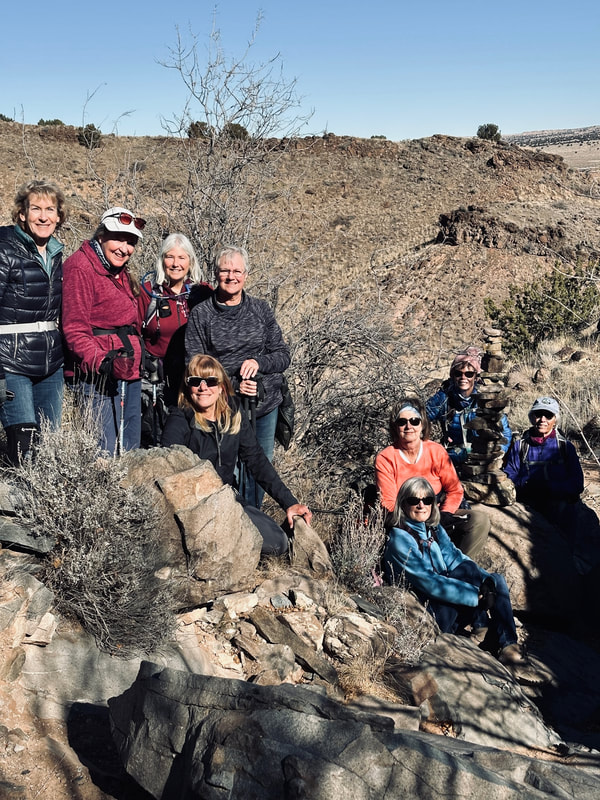
I am blessed to be in a women's hiking group. We meet once a week and go a lot of interesting places. Since we all live in the greater Albuquerque area, most of or hikes are in or around the Sandia Mountains, the mountains that are in the background of this blog's header. Right now, most of our favorite trails are under a foot or more of snow. While we do use snowshoes on occasion, often we use the snowy season to go other places. 
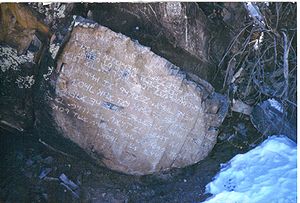
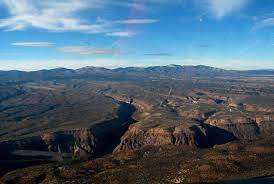
One of the places we hiked this month was to see the Phoenician Stone, which is sometimes called the Decalogue Stone. Located at the base of a basalt- covered uplift about 35 miles southwest of Albuquerque and 15 miles west of Los Lunas, it is off the beaten track but well worth seeing if you are into curiosities and strange stories. 
Picture
The Decalogue Stone was first mentioned by Frank Hibben (1910-2002), who was then an archaeology professor at the University of New Mexico. Hibben claimed that he was taken to the site in 1933, guided by a man who said he'd seen the stone as a boy back in the 1880s. Hibben was convinced that the inscription was ancient, and thus authentic. Some scholars have said that the writing is ancient Hebrew and is of the ten commandments, which is why it is sometimes called the Decalogue Stone. Others have announced that the writing is Phoenician and is an account of a shipwrecked sailor wandering in the desert. It's also been called Mystery Rock and the Los Lunas Inscription Stone. Some believe that it is a forgery created by members of the Mormon Battalion, who came through New Mexico  during the  Mexican–American War of 1846–1848. Others believe that Hibben or a couple of his graduate assistants created the stone. And, like most strange things in New Mexico, others suppose it is a record of aliens from outer space. 

Picture
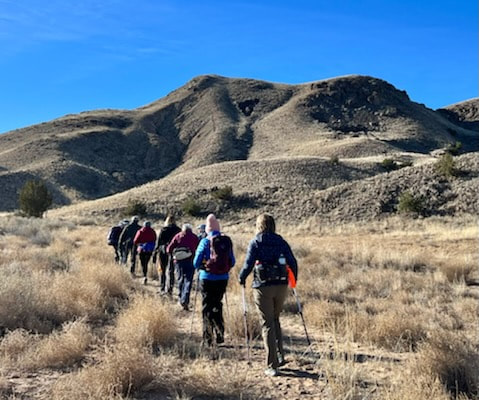
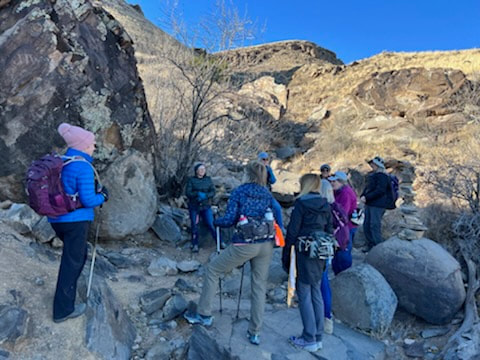
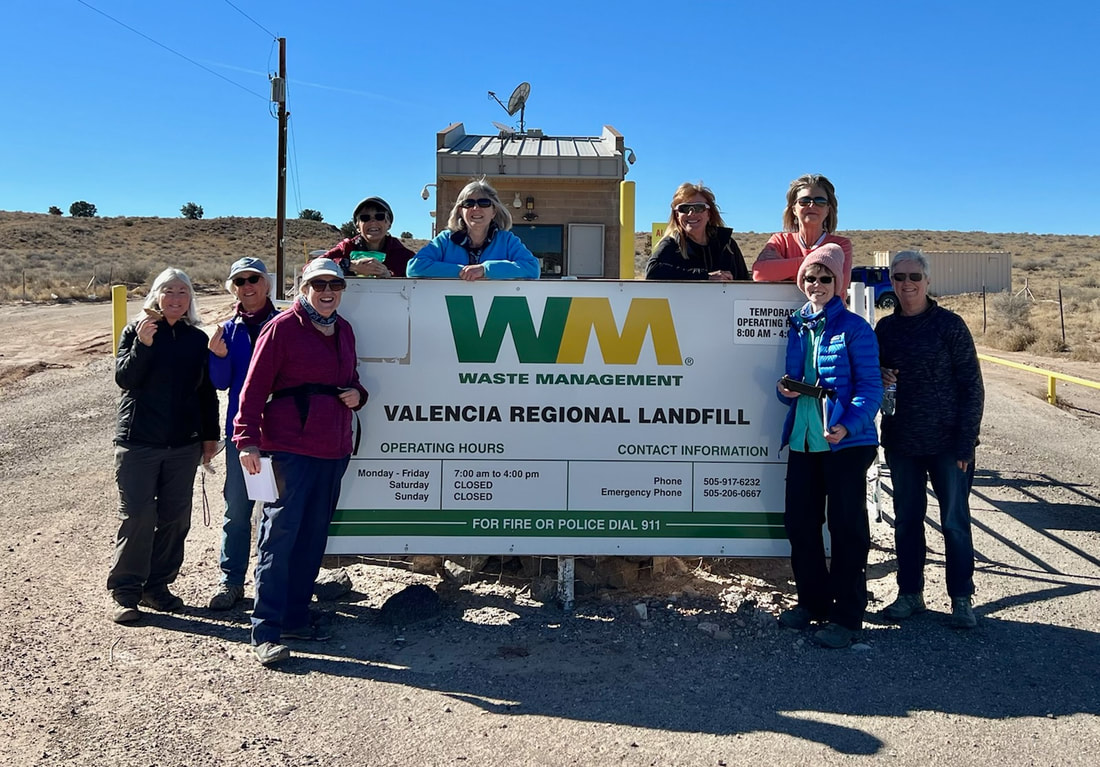
Whatever its provenance, going to see it was a great thing to do on a cold, January day! We left our cars outside the Valencia County Landfill and hiked in over a dirt ranch road until we got to the base of Hidden Mountain, where we turned and walked up a ravine until we got to the stone. In the picture below, the stone is on the left, right in front of the woman on the far left. 
Picture
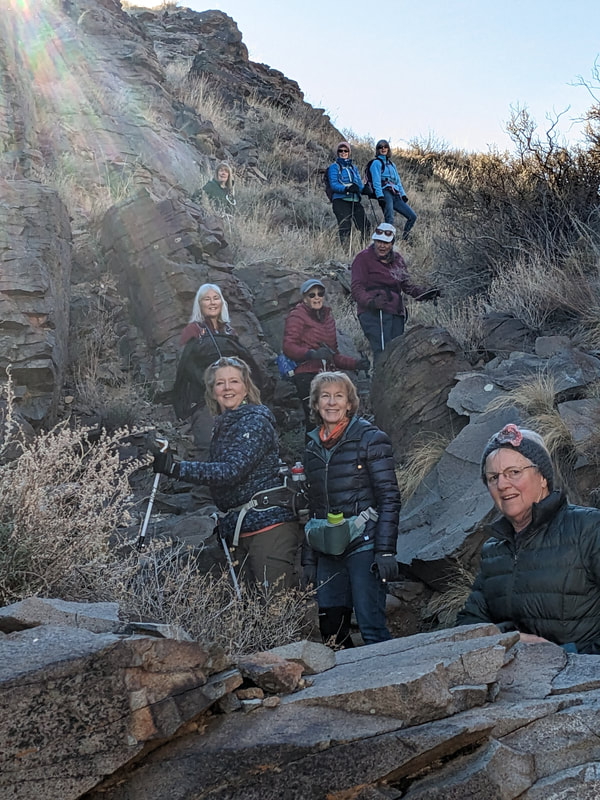
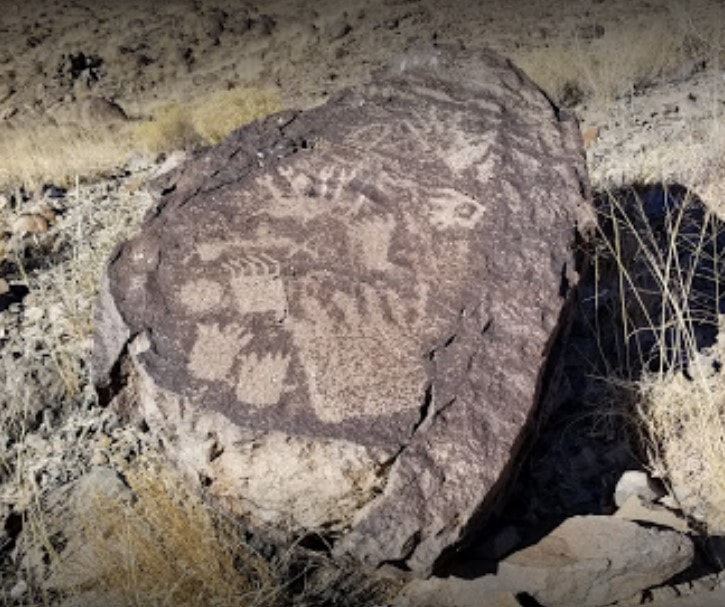
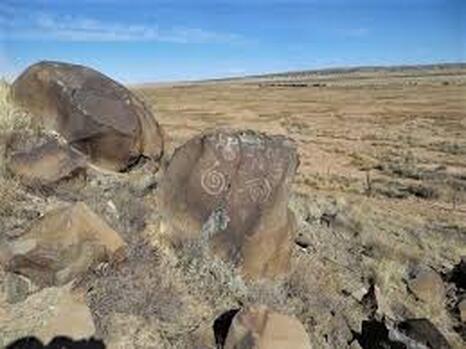
The stone may be a hoax, but what's on the top of Hidden Mountain isn't. After a scramble up a ravine, we arrived on top, where we found a lot of petroglyphs and the ruins of an ancient settlement that might have been part of a string of look-out and way stations along an ancient trail from the Rio Grande to Acoma Pueblo. Also in the area is the Franklin Pottery Mound, where a large diversity of ancient pottery has been unearthed. Both the mound and the ruins are believed to be from between 1350 and 1500. It's pretty obvious why this site would be chosen as a look-out. The views were spectacular in all four directions. We even saw a small herd of deer (although some of us thought they were pronghorns) down below. 
Picture
Picture
Picture
Picture
There's something wonderful and a bit eerie about being in a place that was occupied hundreds of years ago. It makes me wonder what life might have been like back then. What did the people who lived there feel as they stood on the edge and looked out over the vastness?

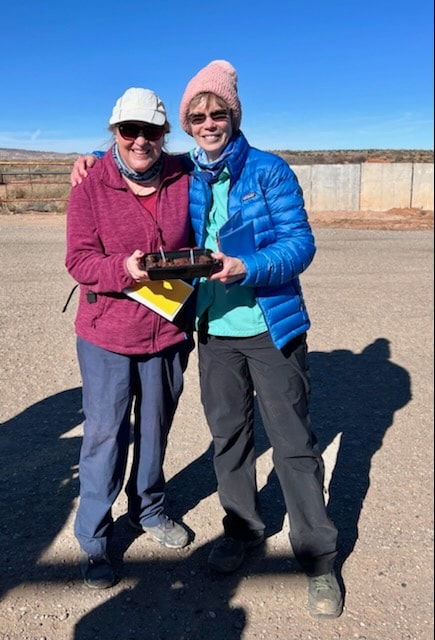
​After we'd walked the whole upper portion, we went back down the ravine and had a little celebration. Two of us (including yours truly) had birthdays to celebrate. 
Picture
Picture
It's not often one gets to celebrate her birthday at a landfill! My friends take me to the best places! No kidding, I can truly say that it was a wonderful experience. 

Will this ever work itself into one of my books? Probably not. But it was a wonderful experience anyway.


Jennifer Bohnhoff lives in the mountains of central New Mexico. She has written a number of novels for middle grade through adult readers and has two titles that will be published in 2023. Click here to join her email list and receive information about her books.  

Thursday, January 19, 2023

WildFires in New Mexico


Picture
On the Parjarito Plateau, a volcanic plateau in the Jemez Mountains of north central New Mexico, large fires used to occur about every twenty years, following a natural climate cycle. Years of heavy rains and deep snows would lead to luxuriant growth of new trees and undergrowth, which would become natural fuel during drought years. Lately, the frequency and intensity of fires has increased, and so have their damage. Some of these fires have begun naturally, most frequently from lightning strikes. Others have been started by irresponsible people who've thrown a cigarette butt out the window of a moving car or left a campfire smoldering. The latest and most destructive have begun as controlled burns that overstepped their bounds. Here are some of the most notable of the past eighty years. 

The first time a fire led to the evacuation of Los Alamos laboratories was in 1954. The Water Canyon Fire began as a trash and construction debris burn on June 5, 1954. High winds, including gusts up to 45 mph pushed the fire north. It burned out of control for several days before 1,000 firefighters and a drop in wind speed slowed it down. Between 3,000 and 6,000 acres of forest were lost. 
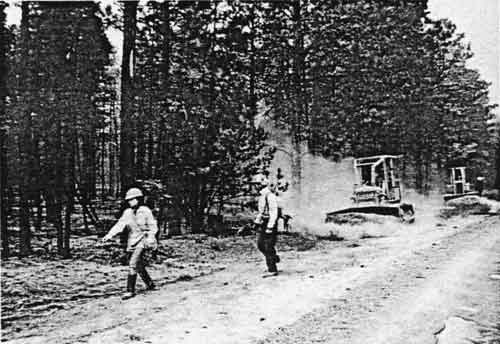
PictureArchaeologists walk in front of bulldozers in an attempt to preserve and protect indigenous and early sites during the La Mesa fire.
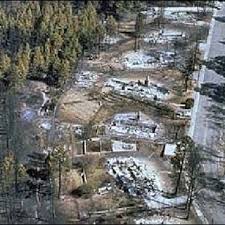
On June 16 1977, the La Mesa fire began. It took a week and over 1,300 personnel to contain the fire that investigators believe began with a spark from a motorcycle. The fire reached K-site and S-site, two facilities in Los Alamos National Laboratory used to fabricate and test chemical explosives, and burned 15,444 acres of Bandelier National Monument.  Approximately 60% of the drainage basin of Rio de Los Frijoles, a tributary of the Rio Grande, was burned, leading to severe erosion when the monsoons began later that summer. 

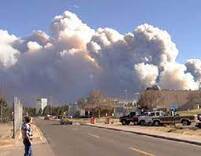
PictureThe Dome Fire, seen from Los Alamos
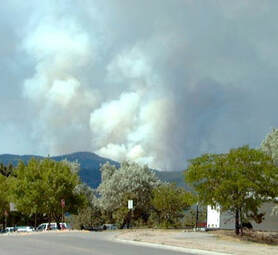
In 1996, the Dome Fire began on April 26, when two campers left a campfire burning. By the time it was controlled, it had burned over 16,500 acres and threatened the southern section of Los Alamos National Laboratory. Large areas of Capulin Canyon and the Dome Wilderness were charred. The fire sent flames hundreds of feet into the air and developed a spectacular plume that could be seen for miles. Over 800 firefighters fought this blaze. 

Picture
Two years after that, the Cerro Grande Fire began in May 2000 as a controlled burn that was supposed to reduce fire danger in Bandelier National Monument.  High winds and dry conditions led the fire to jump its bounds. The fire destroyed over 400 homes in Los Alamos and damaged or destroyed several structures at Los Alamos National Laboratory. Over 43,000-acres were charred.  

Picture
Two years later, the Oso Complex Fire was intentionally started by a man as a protest against government officials whom he claimed were using environmental laws to displace the poor, Hispanic population. Begun on June 20, 1998, the fire burned 5,185 acres of National Forest, including over 1,200 acres owned by Santa Clara Pueblo. It came within 8 miles of Los Alamos before rains and over 800 fire fighters, many of whom were Native Americans, were able to stop it. The arsonist pled guilty and was given a seven-year sentence in federal prison.

Picture
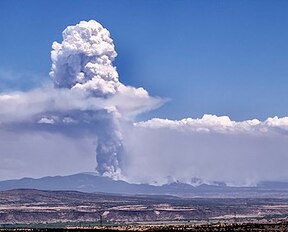
When it happened in 2011, the Las Conchas Fire was the largest wildfire the state of New Mexico had ever seen. It began on June 26, 2011 when an old, dead aspen tree blew into  a power line. Driven by strong and unpredictable winds, the fire burned more than 150,000 acres of Pajarito Plateau and threatened the Pajarito Mountain Ski Area, the town of Cochiti, Los Alamos, and Santa Clara Pueblo. It was surpassed in 2012 by the much larger Whitewater-Baldy Complex Fire and in 2022 by the Calf Canyon/Hermits Peak Fire and the Black Fire. 

The 2022 Calf Canyon/Hermits Peak Fire burned 341,471 acres and blazed from early April to late June. This fire, was in the southern Sangre de Cristo Mountains, and not on Parjarito Plateau. Part of  the record-breaking 2022 wildfire season, it was the largest wildfire of 2022 in the contiguous United States and destroyed or damaged nearly a thousand structures, including several hundred homes. The fire began as two separate wildfires, both of which were U.S. Forest Service prescribed burns. It was not fully contained until August 21.
However they are started, wildfires in New Mexico cause terrible damage and stress to its residents, who live in fear both for their property and their lives. As climate change dries out the forests, we must all be even more vigilant.


Picture
Jennifer Bohnhoff is a former English and history teacher who lives in a remote spot in the mountains of central New Mexico.The local fire department has told her that her own house is unlikely to be saved in a wildfire. 

Her next novel, Summer of the Bombers, will be released in April 2023. Set in the fictitious town of Alamitos, it tells the story of a young woman whose life becomes chaotic after a controlled burn goes rogue and destroys her house. It is based loosely on the Cerro Grande fire of 2000.

You can read more about her and her books here.
Thursday, December 29, 2022

Books about the Great Depression for Middle Grade Readers


Monday, December 19, 2022

Christmas Nuts in Bastogne


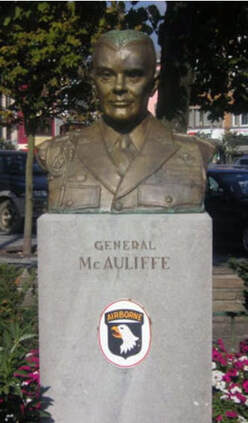
Nuts, Bastogne, and Christmas. Say these three words, and most World War II trivia fans will connect them to Brigadier General Anthony McAuliffe and the Battle of the Bulge. But truth can be stranger than fiction, and the connection goes much farther back than most people know.

Since the 18th century, the Belgian city of Bastogne has had a Nuts Fair during December. Farmhands, cowherds and shepherds in the region used to be employed by landowners for one-year periods that ended eight days before Christmas. Hoping to get contracts for the coming year, these workers came to Bastogne to attend the last market of the year.  If they were hired or rehired, they’d buy sugary breads and nuts to celebrate the fact that their livelihood was ensured for another year.
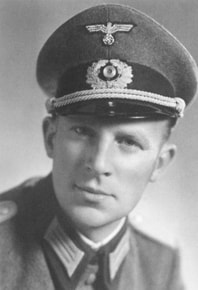
PictureLieutenant Hellmuth Henke
Nuts and Bastogne became even more connected because of a comment made by an American commander during the Battle of the Bulge, which began on December 16, 1944. The massive counterattack in the heavily wooded, snowed-covered Ardennes was Nazi Germany’s last attempt to dislodge the advancing Allied forces. The Belgian town of Bastogne became the center of intense fighting because the seven highways that coursed through it made it strategically important. By December 21, the city was surrounded by German forces.

On the morning of December 22nd, four German soldiers waving a white flag approached the lines to the south of town. The two officers,  Major Wagner of the 47th Panzer Corps and Lieutenant Hellmuth Henke of the elite Panzer Lehr Division, wore long overcoats and shiny boots.  Henke carried a briefcase under his arm, and declared in English that he had a written message for the American commander in Bastogne were carrying blindfolds that they were willing to put on in order to be brought into headquarters. The two enlisted German soldiers who’d accompanied Wagner and Henke were left behind with American soldiers, while Wagner and Henke were brought forward.

Since the 101st “Screaming Eagles” Airborne Division was defending the town of Bastogne, Wagner and Henke’s message should have gone to their commander, Major General Maxwell D. Taylor. However, Taylor was at a staff conference in the United States when the Battle of the Bulge began, and Brigadier General Anthony McAuliffe, normally only in charge of the division’s artillery, had taken his place. McAuliffe was sleeping in his quarters right next to the headquarters when a Lieutenant Colonel woke him.

“The Germans have sent some people forward to take our surrender” said, Lieutenant Colonel Ned Moore.
McAuliffe muttered “Aw, nuts!” 

The written message that Henke handed over consisted of two typewritten sheets, one in German, the other an English translation. The diacritical marks above certain German vowels were missing and written in by hand, showing that the Germans had used an English typewriter. It read:

"December 22nd 1944
To the U.S.A. Commander of the encircled town of Bastogne.
The fortune of war is changing. This time the U.S.A. forces in and near Bastogne have been encircled by strong German armored units. More German armored units have crossed the river Ourthe near Ortheuville, have taken Marche and reached St. Hubert by passing through Hompre-Sibret-Tillet.
Libramont is in German hands.
There is only one possibility to save the encircled
U.S.A troops from total annihilation: that is the honorable
surrender of the encircled town. In order to think it over
a term of two hours will be granted beginning with the
presentation of this note.
If this proposal should be rejected one German Artillery Corps and six heavy A. A. Battalions are ready
to annihilate the U.S.A. troops in and near Bastogne. The order for firing will be given immediately after this two hours' term.
All the serious civilian losses caused by this artillery fire would not correspond with the wellknown American humanity.
The German Commander."

They want to surrender?” McAuliffe, who was still groggy from sleep, asked.  When he was told that the Germans were demanding that the Americans surrender, McAuliffe threw the paper on the floor and said "Us surrender, aw nuts!" Wagner and Henke, who were still waiting in blindfolds nearby, demanded a formal written response to their message. The one they received said: 
"December 22, 1944
To the German Commander,
N U T S !
The American Commander"

Picture
At first, the Germans did not understand what the message meant. When they finally did understand, they stormed off.

“Nuts!” became the rallying cry for the beleaguered defenders. It raised their morale and gave them hope. Luckily for Bastogne, the German Corps Commander General Heinrich von Lüttwitz decided to circumnavigate Bastogne, and concentrate his forces on Bayerlein.  

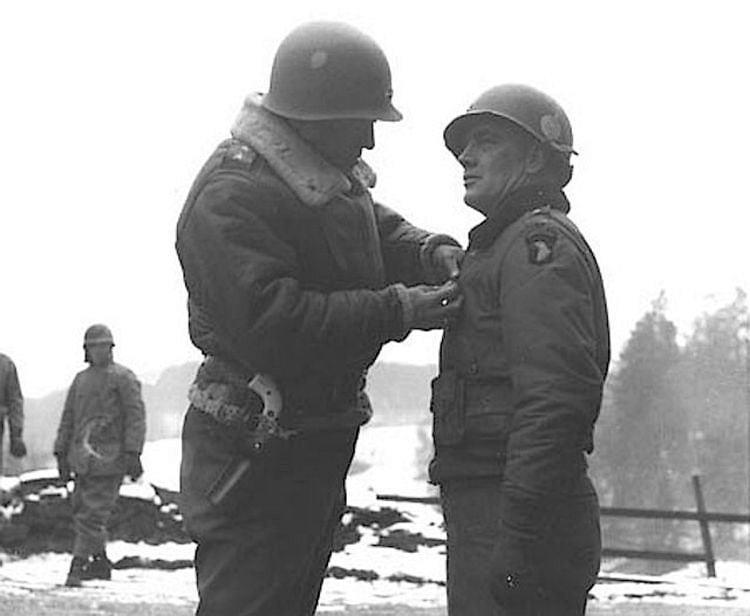
For his actions, McAuliffe received the Distinguished Service Cross from General George S. Patton. Today, there is a statue of him in the town square, and every year a nut-throwing ceremony celebrates the city’s rescue. 

Picture
Patton decorating McAuliffe with the Distinguished Service Cross (Photo: U.S. Army)

Picture
Jennifer Bohnhoff is an author of historical fiction and a former history teacher. Her novel Code: Elephants on the Moon is the story of a young French girl who discovers that nothing in her little town in Normandy is what she'd believed it to be. As D-Day approaches, she must make some decisions that could mean life or death for many.  This YA novel is suitable for older children and adults. 

Friday, December 9, 2022

Away in the Manger with Cowboys and Soldiers


Picture
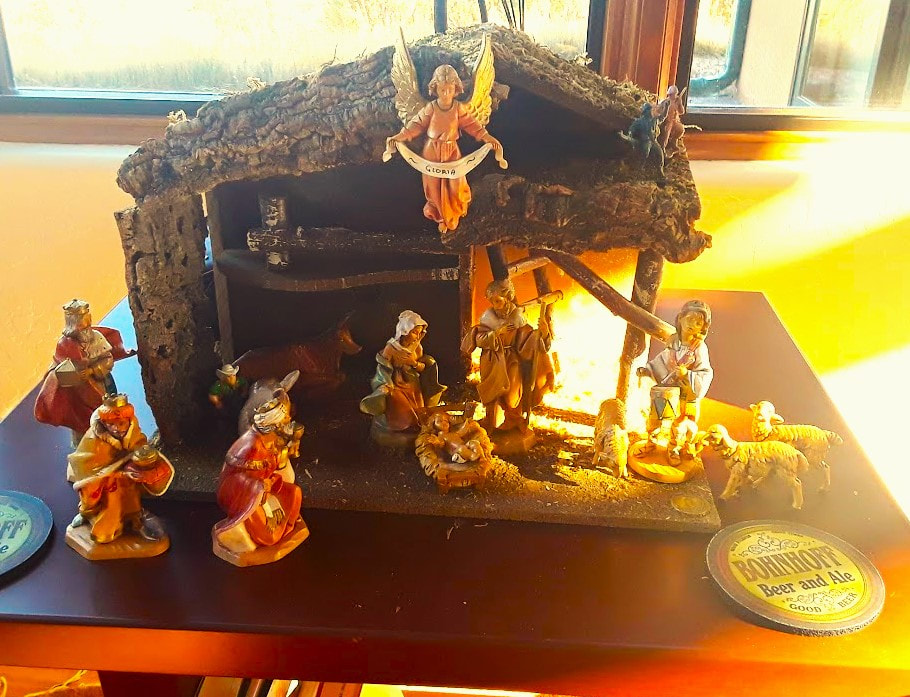
Years ago, I bought a manger scene at an after Christmas sale. It was one of the best purchases I ever made. 
The figures in my nativity set are made out of a rubbery plastic, which means that my three sons, and now my grandchildren have been able to play with them over the years. This has given me the chance to tell and retell the Christmas story to them. They know the story of the three kings, and he herald angel (not Harold the Angel, as one used to think.) and of the shepherds watching their flocks by night. But over the years, our little scene has attracted a few extra players.
Picture
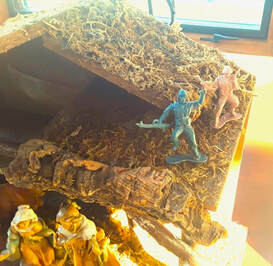
Many depictions of Christ's birth have an angel or two who watches over the newborn. Having three sons, one who was interested in the military, my nativity scene had a more earthly guard. For years, a little green army man sniper lay face down on the roof, watching the distance for approaching danger. Sometime in the past decade, he went off duty and was replaced first by one green army man, who seemed to be signaling everyone to come and see the Christ child, then by a second khaki colored one. 

Picture
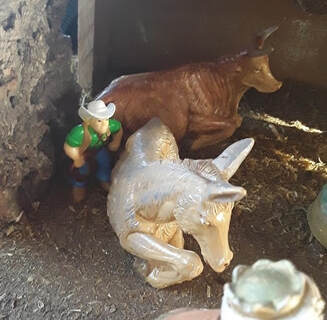
Sometime after I moved from the city, another character joined the scene. For the past five years or so, we've had a cowboy to watch after the cow and donkey in the manger. He is a good natured chap, with a smile always on his face. I think he does a good job of mucking out the stalls, for I've never smelled anything coming from them.

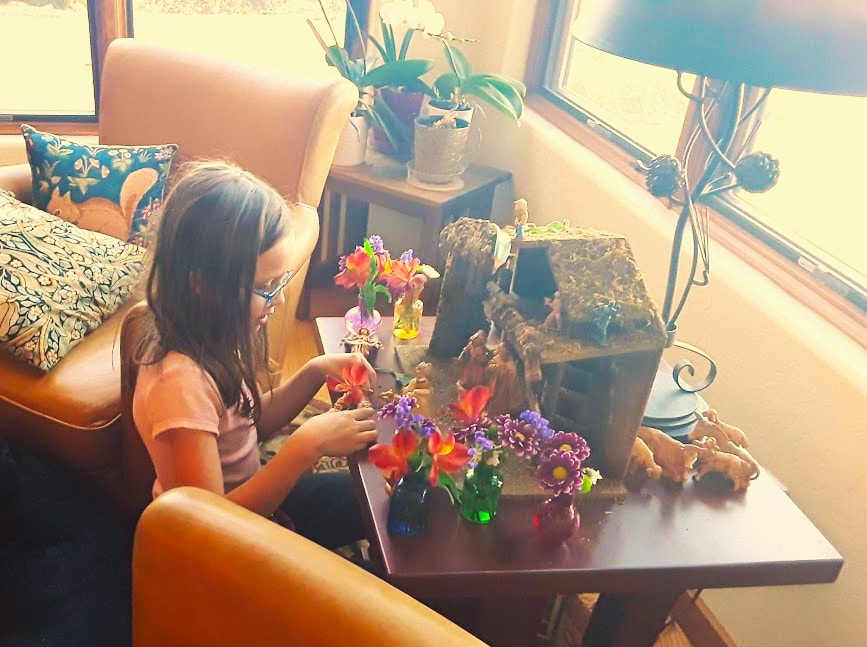
Now that I have granddaughters, Jesus sometimes finds that his humble manger has been transported to the tropics and is surrounded by flowers. You'll note that the sheep were banished to the back forty so they wouldn't eat the greenery.
Picture
How about your house? Do you have a nativity scene that comes out this time of year? I'd love to see it!

Jennifer Bohnhoff is the author of several novels for adults and children. You can read more about her and her books at her website.

History Lessons from a Walk in the Maine Woods

  I recently got back from a wonderful month in Maine. My husband and I rented a house right on a lake, and we spent a good portion of our t...