Thursday, April 13, 2023

Kozlowski's Ranch: Important Site in the Battle of Glorieta


Picture
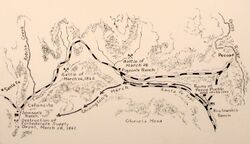
The decisive battle in the Confederacy's attempt to take New Mexico during the Civil War took place on March 26-28, 1862. Called the Battle of Glorieta, or the Battle of Glorieta Pass, it ranged through a narrow mountain pass that was the last leg of the Old Santa Fe Trail before it reached Santa Fe. Three ranches, owned by three very different characters, were settings for this battle. 
Picture
Martin Kozlowski came to the area by a circuitous route. He was born in Warsaw, Poland in 1827 and fought in the 1848 revolution against the  Prussians. He was a refugee for two years in England, during which time he met and married an Irish woman named Ellene. The two immigrated to American in 1853, and Martin enlisted in the First Dragoons, who were fighting Apaches in the Southwest.

Martin must have fallen in  love with New Mexico during his Army years. In 1858 he mustered out and used his 160-acre government bounty land warrant to purchase the land on 
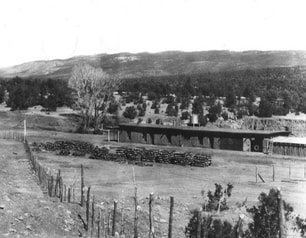
the far eastern edge of Glorieta Pass. Here, the Pecos River meets Glorieta Stream in a wide, flat area that is well watered and has fertile soil. Kozlowski's 600 acre spread included 50 improved acres, which consisted of a home for the family, a trading post, a tavern, and rooms for travelers. It had a spring for fresh water, and lots of forage for horses and mules. The 1860 agriculture census shows that Kozlowski grew corn and raised livestock, but a lot of his livelihood came from accommodating for travelers on the Santa Fe trail.
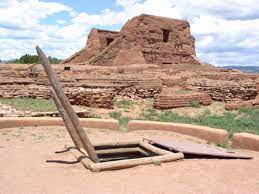
PictureThe Spanish mission church at Pecos Pueblo. The entrance to a kiva is in the foreground
This area had been settled long before the Santa Fe Trail opened. Perhaps the first settlers in the area were the people who founded Pecos Pueblo sometime around AD 1100. Historically known as Cicuye (sometimes spelled Ciquique), which mean the "village of 500 warriors," the Pueblo was visited by the Spanish explorer  Francisco Vásquez de Coronado in 1540. The Spanish mission church was built in 1619 and the kiva in 1680, after a revolt that caused the Spanish to abandon the area. In 1838, attacks by Comanches compelled the inhabitants to abandon the area and move in with their relatives at the Walatowa Pueblo in Jemez. Twenty years later, Kozlowski moved to the area and used some of the timbers and bricks from the abandoned pueblo to build his buildings.
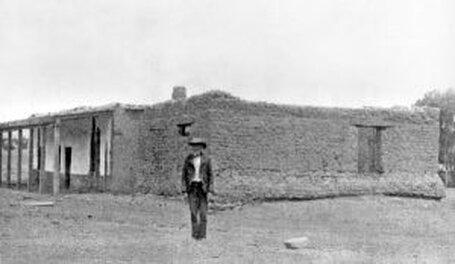
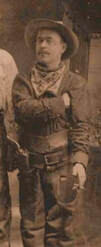
PictureMartin Kozlowski in front of his trading post.


Picture
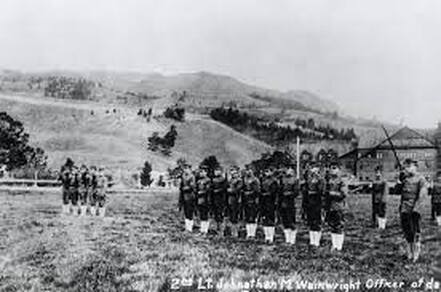
Kozlowski's ranch became site of Camp Lewis, the headquarters for the Union Army during the Battle of Glorieta. The troops were mostly men from Colorado, who had come from Camp Wells in Denver, through Raton Pass, and stopped in Fort Union. Their leader, John Slough, intended to engage the Confederates in Santa Fe and was surprised to encounter Confederate troops in the pass. 

The Union Army continued to maintain a hospital in Kozlowski's tavern for another two months after the battle was over.

After the war, Kozlowski complimented them, saying “When they camped on my place, they never robbed me of anything, not even a chicken.” Perhaps their good behavior was because Kozlowski was former military himself.

The early 1870s appear to be the high point for the Kozlowski family's enterprises. In 1873, U.S. Attorney T.B. Catron sued him for violating a federal law that prevented non-Indians from settling on pueblo land grants. The case went all the way to the Supreme Court, but ultimately Martin paid  $1,000 and was able to keep his land. In 1880 the Atchison, Topeka, and Santa Fe Railroad ran its line through the canyon, effectively ending the lucrative Santa Fe Trail traffic. Soon thereafter, Kozlowski moved to Albuquerque, where he died in 1905. 
Picture
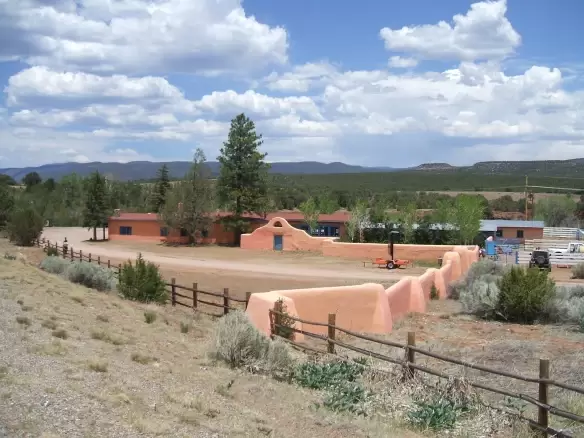
Kozlowski's ranch traded hands several times after he left it. Sometimes, it was a working ranch. At other times, It became a dude ranch where tourists could live like pampered cowboys. In 1939, a Texas oilman and rancher named  Buddy Fogelson bought the property and renamed it The Forked Lightning Ranch. Fogelson's widow, the actress Greer Garson, donated the ranch to the National Park Service in 1991. It is now part of Pecos National Park.  

Picture
Kozlowski's Ranch is one of the major settings for The Worst Enemy, which will be published  August 15, 2023 and is available for preorder at Bookshop.org.

The Worst Enemy is book 2 of Rebels Along the Rio Grande, a trilogy of middle grade historical novels about New Mexico during the Civil War.

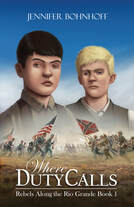
​Book 1: Where Duty Calls, is available in ebook and paperback.  It was a finalist for both the NM Women's Press Zia award and the Western Writer's of America spur award in 2023.

Wednesday, April 5, 2023

Horse Theft: not just in the Old West


Picture
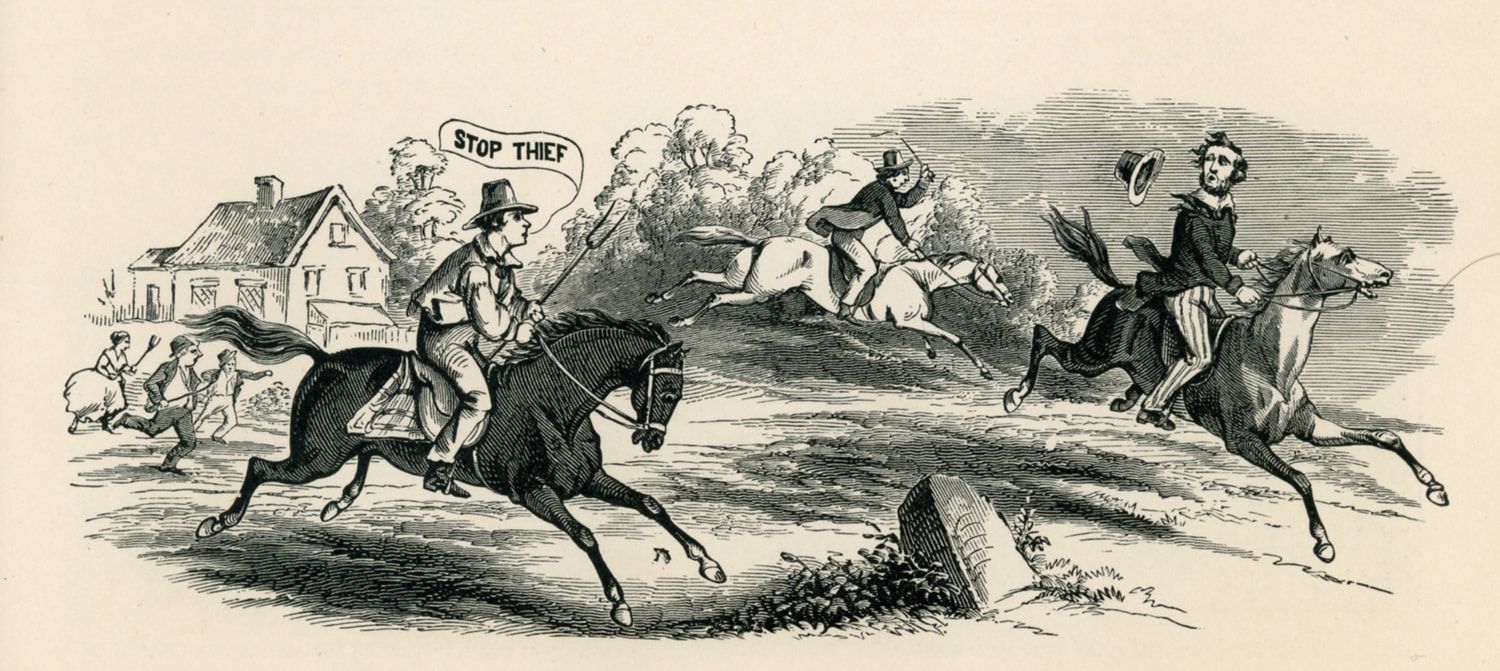
This drawing appears on all membership certificates of the Society in Dedham (Massachusetts) for Apprehending Horse Thieves.
No one likes a horse thief. The term ‘horse thief’ is used not only for people who literally steal horses, but as an insult, implying that the person has no moral decency whatsoever. This may have come about because horses were central to life in the west during the 19th century. Without a horse, travel, farming, and ranching were virtually impossible. A person who stole a horse left his victim unable to support himself and unable to move on. In the Old West, the saying was that if you stole a man's horse, you had condemned him to death.

Horse theft was such a problem that organizations were founded just to address the issue. The Anti Horse Thief Association, first organized in Missouri in 1854, grew to over 40,000 members spread across nine central and western US states. Between 1899 and 1909, they recovered $83,000 worth of livestock and saw the conviction of over 250 thieves in Oklahoma alone.  

Because horse theft was such a serious crime, the punishments were also serious. In 1780,  Pennsylvania passed "An Act to Increase the Punishments of Horse Stealing," which had a tiered system for dealing with offenders.  First time offenders were given 39 lashes, then had their ears cut off and nailed to the pillory, where they had to stand for an hour. A second offense added branding of the forehead with an ‘H” and a ‘T.” This law was repealed in 1860. Horse theft was a hanging offense in many western states and territories. Often, the aggrieved would take justice into their own hands. These days, while punishments are not so severe, they can still be stiff. In 2011, one Arkansas woman was sentenced to 60 years in prison for stealing five horses and their equipment. 
Picture
While horses are no longer as important to life and well being as they once were, their theft is still relatively common. Horse Illustrated Magazine estimates that approximately 55,000 horses a year are taken from their lawful owners by strangers or opponents in civil or legal disputes. Organized groups of thieves often work one area or state, moving on when the law becomes aware of them. Other thieves move into areas that have suffered natural disasters such as wildfires and hurricanes, stealing animals that have escaped during the chaos and preying on vulnerable victims. Some stolen horses are killed for their meat. Others become the focus of ransom attempts. Many are resold with false papers at auction, or end up as riding mounts.

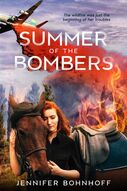
In my novel Summer of the Bombers, it is a wildfire that leads to the theft of a girl's horse. Punkin Davis has to ride her horse into the fictional town of Alamitos when a Forest Service Controlled burn jumps its lines because of high winds. In the parking lot of the high school that is organizing assistance for those affected by the fire, Punkin meets a woman who says she is from the Equine Assistance League, and will keep her horse in a safe place. Unfortunately, there is no Equine Assistance League, and woman and horse disappear. It takes Punkin quite a bit of time to get on her feet and figure out what she needs to do to get her horse back, but she finally gets the help she needs from Stolen Horse Internaational..

Picture
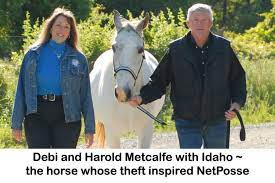
While Summer of the Bombers might be a work of fiction, Stolen Horse International is not. The organization works diligently to recover stolen horses. Also known as NetPosse or SHI, it has been assisting horse owners with recovering their horses for over twenty-five years. It was founded by Debi and Harold Metcalfe after their own horse, Idaho, was stolen on September 26, 1997. Idaho was recovered after almost a year of searching. The non-profit organization relies on thousands of volunteers, who distribute fliers, usually by e-mail. In addition for helping in the search and recovery of horses, the organization works closely with law enforcement personnel to aid in the apprehension of the thieves.   

Picture
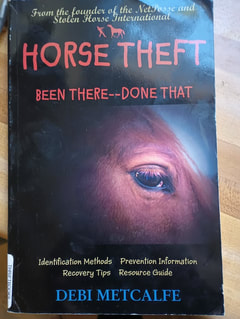
Debi Metcalfe's book, Horse Theft. Been There—Done That, explains how horse owners can protect their horses from theft, and what can be done to recover stolen horses. There are chapters on identification methods and prevention information that can stop theft from ever happening, and lots of resources to help if it does. 

This book was a fantastic resource for me as I wrote Summer of the Bombers. It's been a tremendous resource for many who've lost their horses. It is worth reading if you have a horse or know someone who does. 
Now that my novel is complete, I would like to give my copy of this book away to someone who would benefit from it. Comment on this blog if you would like to be considered for it.


Picture
Jennifer Bohnhoff is a novelist who lives in the mountains of central New Mexico. An avid horsewoman in her youth, her novel Summer of the Bombers was inspired by the Cerro Grande Fire, which swept through Los Alamos during the summer of 2000.

Thursday, March 30, 2023

Play Ball!


Baseball is America's sport! When it became America's sport well over a century ago, that really meant it was a sport for white males. Over time, like America itself, it's changed and become more inclusive. Now that opening day is here, it's time to share some great books about baseball with middle grade readers. 
Picture
​Like Madelyn l'Engle, Ellen Klages follows a family of brilliant and talented people through their adventurous life. L'Engle follows the Murry family through the series that begins with A Wrinkle in Time. Klages follows the Gordon family beginning with Green Glass Sea. 

In Out of Left Field, youngest daughter, Katy Gordon is a baseball fanatic in a world where everything, except Little League admission rules, is changing. The San Francisco Seals, the hometown favorites for 50 years, are going away, to be replaced by the Giants. Sputnik is launched and schools in the south are being integrated. But Kay, who throws a mean pitch so singular that it doesn't even have a name, cannot join Little League because she's a girl. When her teacher assigns an American hero research paper, Katy delves deeply into the history of female baseball players in order to prove that the Little League rules make no sense.

This book has interesting, fully developed characters, and a plot line that shows how kids can change the world through activism, but it also paints a brilliant picture of what life was like in 1957. You can read this novel on its own, but it's even richer when read with its companion stories, Green Glass Sea and White Sands, Red Menace

Picture
If you're looking for a movie tie-in to Out of Left Field, try The Perfect Game. Based on a true story, this sweet and innocent movie tells the story of a group of boys from Monterrey, Mexico who became the first non-U.S. team to win the Little League World Series. It, too, is set in 1957 and gives a good picture of the prejudice against both blacks and hispanics that was common in that period.

Picture
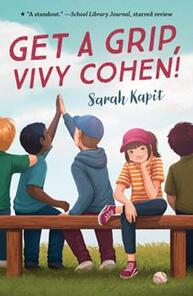
Get a Grip, Vivy Cohen is a sweet story about a girl with autism who wants to join a baseball team and pitch the knuckleball she learned from a pro player. Told in letters and emails between Vivy and VJ Capello, the major-league knuckleballer who's her hero (and a pretty nice guy for responding to all her letters!), this novel will help readers get into the head of a girl who's not much different despite her disabilities. She has to face bullies and her own personal fears when she gets on the mound, but she does it with bravery and honesty and a kindness towards others that is genuinely inspiring.

Picture
Baseball Genius was written by Tim Green and Derek Jeter, so you know the sports parts are dead-on accurate, exciting, and detailed enough to follow well: it's like listening to a game on the radio! The rest of the story is exciting, too: every one of the very short chapters has a cliff hanger of an ending that will keep even reluctant readers going. The story centers on Jalen DeLuca, the son of a hard-working immigrant father and a mother who's left the family to pursue her dream. Jalen's dad doesn't make enough at his Italian restaurant to support his son's baseball aspirations, so Jalen tries to make money by stealing balls from the home of the Yankee's second baseman. This starts a series of events that leads to Jalen using his uncanny ability to predict pitches to help the Yankee stay on the team. While most middle grade readers will love this book, I can't help but feel uncomfortable with the message  that kids can steal and cheat if their circumstances justify it. Green and Jeter wrote this book before the Astros' infamous trashcan banging episode. I wonder how they feel about it now. 

Picture
In The Grip, a Middle Grade book that reads like an autobiography, Marcus Stroman and co-author Samantha Thornhill team up on a story about a young ball player.  Marcus showed talent from a young age, and his father is determined to make that talent pay off. Even though he and mom are divorced, he makes sure Marcus practices every morning. Eventually, Marcus feels overwhelmed by the mental pressure this brings, but his mother finds him a therapist who can help him deal with it.

The book will help children explore what it is like to have parents divorce, being teased for being short, and the need to just be a kid. It is not a fast paced or exciting book, and the plot has no real surprises, but kids who have aspirations for the big league will find an affinity with Marcus and will appreciate knowing that even Golden Glove winners were kids once.  

Picture
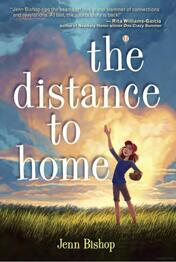
Jenn Bishop's novel The Distance to Home tells the story of Quinnen, a girl who was the star pitcher on her baseball team, the Panthers. When her sister Haley  dies, Quin loses heart for everything, including baseball. Told in chapters that alternate between last summer, when Haley died and this summer, when Quinn is still working through guilt and grief, the story slowly emerges as Quinn begins to understand that she isn't the only one affected by the death. As she develops empathy and understanding, she finds the courage to get back in the game. This book made me cry!

Picture
Another baseball book about a player dealing with the loss of a sibling is Mike Lupicia's The Only Game. Lupicia is the uncontested king of sports novels for middle grade readers; when I was still teaching, his books were in the hands of all my jock boys. He does a good job of describing the games like a true sports announcer, but he also does a good job of revealing the secret fears of middle school athletes. In this novel, the main character is a star pitcher, but feels so much guilt after his dare devil brother's accidental death that he leaves the team. What helps him heal is helping another kid named Teddy, whose weight and lack of confidence has kept him on the sidelines all his life.

Picture
I don't read a lot of graphic novels, but this one attracted me both because it was about baseball and because it was historical fiction. I'm glad I read it, and I think it's perfect for 3-7th grade boys, especially reluctant readers. 

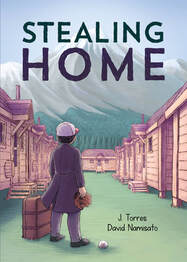
The story in Stealing Home is about Sandy Saito, a Canadian of Japanese descent whose life changes when Japan attacks Pearl Harbor. Sandy is a typical boy. He reads comic books and loves baseball, especially the local Japanese team, the Asahi. Suddenly, he is perceived as different and dangerous. The Canadian government begins treating ethnic Japanese as enemy aliens, taking away their radios and cars. He is excluded from games and taunted by other children. Finally, his family is separated and forced to move to internment camps with substandard facilities. 

J. Torres and David Nashimoto tell a fictional story with so much emotion and historic accuracy that it reads like a memoir. I especially appreciated the extensive background information and resources for further study that are in the back of the book .

Picture
Linda Sue Park's Keeping Score is the story of Maggie Fortini, a Dodgers fan who lives in Brooklyn in the 1950s. Maggie can't play baseball for the same reason that Katy Gordon, the girl in Out in Left Field can't play: back then, it just wasn't allowed. Unlike Katy, Maggie doesn't buck the system. Instead, she learns to keep score from Jim, one of the guys down at the firestation where her father used to work. When Jim enlists and goes to Korea, keeping score is one of the things that connects her to Jim, and it develops into a child-like kind of magic that keeps the world orderly. But when the Dodgers lose AGAIN and then Jim stops writing, Maggie begins to question everything, even God. 

Picture
The Sweet Spot, Stacy Barnett Mozer, is a great book for athletic middle school and upper elementary girls. Thirteen-year-old Sam Barrette’s baseball coach tells her that her attitude's holding her back, but how can she not have an attitude when she has to listen to boys and people in the stands screaming things like “Go play softball,” all season, just because she's the only girl playing in the 13U league. Lovely and sensitive, this book will help guide girls through the difficulties of asserting themselves and becoming leaders in a man's world.

Picture
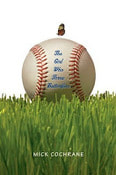
The Girl Who Threw Butterflies, by Mick Cochrane, is another book about a girl trying to play baseball. After her father's death in a car accident, eighth grader, Molly Williams decides to join the baseball team and show off the knuckleball her father taught her how to throw. Although the author does a little more telling than showing, this book also gives a fair picture of a girl overcoming hardships, both on the field and in her personal life.

Picture
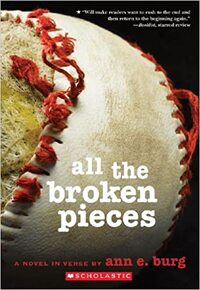
Anne E. Burg's All the Broken Pieces is a novel in verse that tells the story of a twelve-year-old boy whose mother was Vietnamese and his father, an American soldier who abandoned him after the war. He flees his native Vietnam and is adopted in the U.S. is mother urged him to flee to the US, and now he lives with a caring adoptive family.

It's a story about baseball, but it’s even more about fitting in, adoption, discrimination, post traumatic stress disorder, guilt and sorrow, and the difficulty of soldiers returning to the US after the war. Both haunting and lyrical, this book goes beyond the usual baseball-themed books to show an emotional picture of a specific and difficult time in history. Matt Pin is a boy between cultures, who can show the reader both sides of the story with grace and courage. 

I've got one copy of this novel. Tell me in the comments that you'd like it and I'll pick one lucky responder to get it!


Picture
The links in this blog will take you to Bookshop.org, an online bookseller. I am an affiliate with Bookshop and receive a small commision when someone uses my link to purchase a book. A local bookstore also receives a commission. I appreciate the fact that this bookseller supports local businesses in a time when more and more sales go to distant, online retailers. Community is important and deserve our support.

However, I encourage readers to check with their local libraries first!

Jennifer Bohnhoff is an author of books for readers from middle grade to adult. She is not an avid baseball fan, but she is married to one and loves to sit in the stands, eat a hot dog, and take in the action. You can read more about her and her books on her website. 

Tuesday, March 14, 2023

The Writing on the Wall


Picture
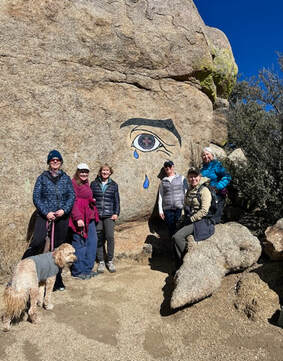
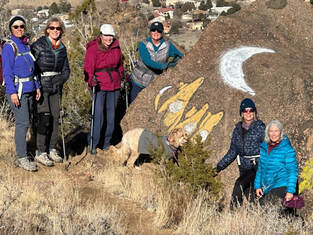
Last month, my hiking group did the short but steep climb up to the Eye of the Sandias, a bit of graffiti in the southern Sandia Mountains, overlooking Tijeras Canyon and the village of Carnue. 

Where this painting came from is a mystery. I
Sandia Mountain Hiking Guide, Mike Coltrin says “The Eye appeared sometime in the 1960s, but the originator is unknown.” 

One blogger calls the painting an adaptation of an ancient Egyptian symbol of protection, power and health, the Eye of Horus. The artist, or some later artist, made the eye New Mexican by substituting a Zia Sun symbol for the pupil. Several sources suggest that the teardrops show the mountain's grief over the encroachment of suburbia or the roar of I-40 through the canyon below it.

Picture
source: https://pngyoung.com/Hiking/eye-of-the-sandias-hike-12102015/
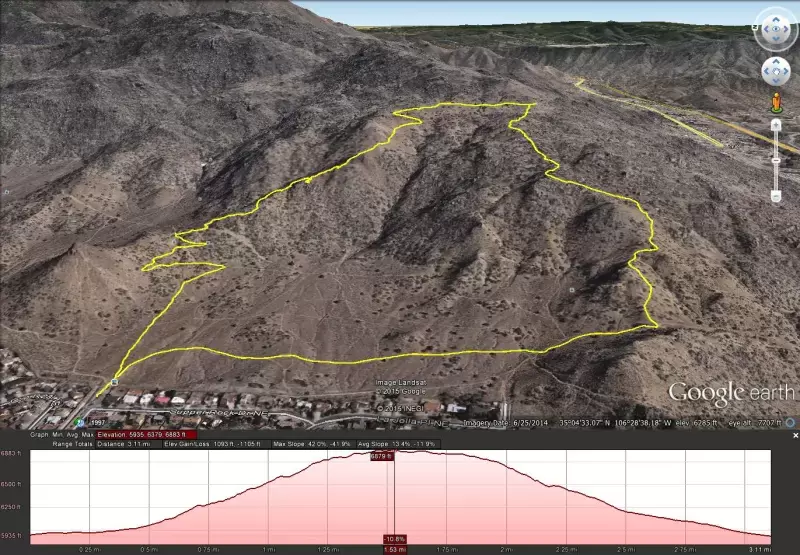
The hike is not an easy one. It gains almost a thousand feet in a distance just over three miles. Some of the trails have slopes approaching 45% and are covered with granite gravel that rolls underfoot. But the views are worth it.
Picture
Our group parked at the trailhead parking lot at the top of Copper. We walked the loop trail going clockwise to avoid going down the steepest parts.
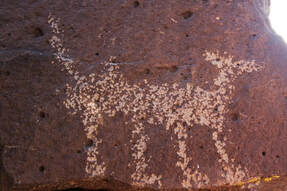
On our way up, we also encountered this rock art, which depicts three coyotes howling at the moon. It is decidedly modern, but the coyote pictured below, which is from the 
La Cieneguilla Petroglyph Site, west of Santa Fe isn't.

Picturehttps://naturetime.wordpress.com/2012/06/19/la-cieneguilla-petroglyph-site-is-awesome/petroglyphs-sante-fe-coyote/
New Mexico has thousands of petroglyphs and pictographs. Some were created by ancient cultures: the Ancestral Puebloan and Mogollon Indians. Later, Apaches and Navajos added their contributions. Early Spanish explorers, and then  Anglo frontiersmen, bored cowboys left their marks and initials on rocks.  As the Eye of the Sandia proves, the art of embellishing rocks continues. 

New Mexico's rock art stretches back into prehistoric times, but is still new compared to rock art in other parts of the world. The island of Sulawesi, in Indonesia has some rock art that is at least 45,500 years old. .The cave paintings at Chauvet Cave in modern day France were created sometime between 43,000 and 65,000 years ago. That's 20,000 years before the first modern humans arrived in Europe. The oldest known cave paintings, those from La Pasiega, Maltravieso and Ardales, in modern day Spain, were created  at least 64,000 years ago, and most likely by Neanderthals. It appears that the desire to decorate rock is older than modern man. 
Picture
My dual timeline novel The Last Song of the Swan retells the story of Beowulf, an Old English epic about a hero who destroys a monster that is raiding a Danish mead-hall. One of the timelines in the novel is modern: a present day high school girl who must write a paper on Beowulf and wonders about the characters. The other timeline is set deep into prehistory, at a time when Neanderthals and modern men co-inhabited those parts of Europe that weren't covered in sheets of ice. My son, the artist Matt Bohnhoff, created modern cave art interpretations to introduce each chapter, and to embellish the cover: rock art that never appeared on rock, but on paper. 


Picture
Jennifer Bohnhoff writes historical and contemporary fiction for middle grade through adult readers. She lives in the mountains of central New Mexico, but hikes wherever trails, rock art, and beauty can be found. 

Thursday, March 9, 2023

Why do Cowboys Wear Huge Belt Buckles?


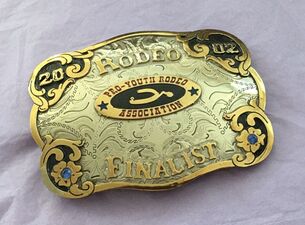
In Summer of the Bombers, my novel scheduled to be published April 10, the main character's house burns down when a controlled burn turns into a wild fire. One of the things that "Punkin" Davis misses the most is her rodeo belt buckle.
Picture
When I taught in a middle school that was part of a ranching community, many of my students wore big, shiny belt buckles that they were very proud of. Western belt buckles are not just fashion; they have an interesting history and serve an important purpose in Western culture.

Picture

​Until the late 1800s, most men, including cowboys, didn’t wear belts with buckles at all. Pants were high-waisted, and tightened with a cinch at the back, or were held up with suspenders. It wasn’t until after Levi Strauss began mass-producing dungaree jeans that had belt loops that men, including cowboys, gave up suspenders and began wearing belts with buckles. Most buckles then, as now, had a square or rectangular piece of metal attached to one end of the belt, with a tongue that went through a hole in the leather to secure it. 

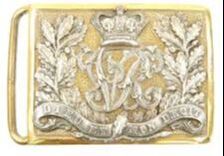
PictureVictorian British Army Officer's buckle
The big buckles that cowboys wear have their origins in the buckles worn by soldiers in European Armies, who expected their soldiers to look sharp when they headed into battle. Each unit issued a different belt buckle to their men, making them easy to distinguish from one another. These buckles were often made of brass and engraved with heraldry or insignia that identified their leader.  The buckles of officers were more elaborate, and sometimes made of gold. It became a tradition for these buckles to be worn at parades and other important events long after the war in which it was issued was over. 

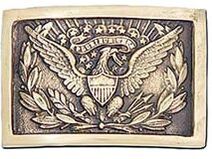
PictureUS Army Officer's buckle, 1855
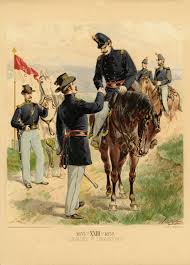
United States picked up the practice of military belt buckles by the time of the Civil War. From 1861 to 1865, friction belt buckles were mass produced in large quantities. These buckles where the belt is pulled behind and through the buckle to keep the belt in place were issued. Those buckles don’t have a prong or hole, and were made of brass. After the end of the Civil War, many veterans kept their buckles. 

Most American military units have switched back to functional buckles. The exception is the U.S. Army Cavalry, which stuck with European tradition and maintains large and ornate buckles that incorporated heraldry elements.
Picture
When competitive and organized rodeos started in late 19th century Colorado, the only cowboys who wore buckles were veterans of the American Civil War. Then, in the 1920s, men’s pants fashion changed. With the lower waistline, belts became a more practical way to keep them up.  About the same time, Hollywood began glamorizing the wild west. Hollywood cowboys such as Tom Mix and Gene Autry wore flashy buckles that audiences all across America oohed and ahhed over. In 1920, the San Francisco Cow Palace in California began awarding buckles as prizes at professional rodeo events.

Because belt buckles continue to be awarded for accomplishments such as barrel racing, bull riding, team roping, tie down roping and more, trophy buckles are sort of a cowboy’s resume.  The most coveted buckles are those awarded by the PRCA, and once earned, are worn with pride. 
 
 
Of course, not all big belt buckles are awards. Large belt buckles are also for sale. Some have the name of a dude ranch on them and can be bought by tourists. Other buckles feature places of interest, animals, or even brands of trucks. But the ones worn with the most pride have been earned.

Picture
Summer of the Bombers, a middle grade contemporary novel about the devastating effects of a wildfire, is scheduled to be published on April 10th. You can preorder the ebook version on Amazon, or the paperback through the author


When a controlled burn goes out of control, it burns a path a destruction through everything that fourteen-year-old Margaret “Punkin” Davis loves. Her home is destroyed, her horse is stolen, and her family is broken apart. She must find the inner strength to rebuild her life one piece at a time or lose everything.
This YA novel about resilience and self determination is based on the events of the devastating Cerro Grande Fire in May, 2000, one of many wild fires that have raged throughout the Western United States. 

Thursday, March 2, 2023

A Short History of Wildfire Management


Picture
Wildfires have been a natural part of the ecosystem since the beginning of time. Fossilized charcoal shows that the first wildfires occurred approximately 419 million years ago, soon after the first terrestrial plants evolved.  The fact that areas that have frequent wildfires have higher species richness and diversity than unburned old forest areas indicates that fires benefit ecosystems. However, what is good for the forest is not always good for man. Man’s intervention has led to changes in the fires themselves.

New Mexico, like much of the American West, possesses characteristics that make wildfires common. In prehistoric times, the area’s volcanism might have contributed to burns. Now, the most common non-human cause of fires is lightning. Climatic cycles also contribute to the likelihood of wildfires. The heavy rains and deep snows of wet periods create crowded stands of small trees and thick underbrush. These become fuel during periods of drought.  This fuel allows the naturally occurring ground fires to become the high-intensity crown fires. 
Picture
In 1872, Yellowstone, the world's first national park, was established. Fifteen years later, the U. S. Army was assigned the responsibility for its protection.

​The Army did not have enough soldiers to fight all of the naturally occurring fires and concentrated on those that were close to roads or human habitation. However, several deadly fires, most notably the 1871 Peshtigo Fire, which killed more than 1,500 people, the 1889 Santiago Canyon Fire, and the 1910 Great Fire made the public believe that all fires were bad.  In 1916, the National Park Service took over park management from the Army and fire suppression became the only fire policy for the next fifty years.
Picture
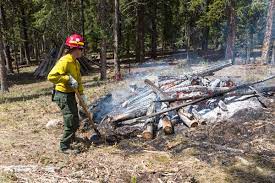
In the 1960s, the government changed its policy. It once again recognized fire as a necessary ecological process. Fires were to be allowed to run their courses as long as they could be contained within fire management units and accomplished approved management objectives. Controlled burns were established to reduce the low-level fuels, keeping fires from becoming crown fires. However, fires, both natural and man made, do not always follow government rules. 


Picture
Jennifer Bohnhoff's next book, Summer of the Bombers, tells the story of a girl who loses everything as a result of a controlled burn that jumps the barriers and races through her town. Scheduled to be published on April 10, it is available to preorder in digital form on Amazon or in paperback directly through the author.  

Sunday, February 26, 2023

A New Cover for a New Book


Back in the spring of 2000, a controlled burn in the Jemez Mountains jumped its control lines and became a raging wildfire.  Known at the Cerro Grande fire, it burned over 400 homes in Los Alamos, New Mexico, shut down the National Laboratory there, and threw life into confusion and chaos for thousands of residents. 


The news story stuck with me for a long time, haunting my thoughts and leading me to ask a lot of questions. What would it have been like to live through something like that? How would losing one's home affect a family? What about the pets of the people burned out? Was everyone helpful, or did predators also descend on the victims of this fire?

Finally, 
my thoughts propelled me to write. I began writing Summer of the Bombers in 2014, during November's  National Novel Writing challenge. I got a third of the way through, then set it aside. I didn't pick it up again for eight years.


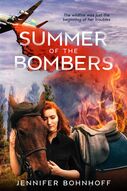
I usually create a mock-up cover early in the writing process. It helps me think about what I have to say and where the story is going. When I pulled out the manuscript began working on it again last year, I created a cover that had some of the elements of the story in it. Fire. Forest. One of the bombers that dropped fire retardant on the flames, and whose drone became the background music for the entire time that the fire raged. I also included a picture of someone on horseback because that horse and his rider are central to the story.

Does anyone recognize the horse and rider? I took that image from another of my novels!


But while creating a cover to help guide my writing is helpful, what I create isn't professional enough for the published novel itself. A published novel needs a cover that reflects the story and lets the reader know what genre the book is in. Horror covers look very different from Romance covers, and a cover for a middle grade novel must be different from a novel written for adults. Many of my latest covers have been created by a Ukrainian company called Get Covers.  I gave the artist a brief synopsis of the story, similar to this copy, which I plan to put on the back cover: 

When the Forest Service announces a controlled burn to clear dead wood from the National Forest, no one in Alamitos, New Mexico is worried. But the fire goes out of control, burning a path of destruction that threatens everything that fourteen-year-old Margaret “Punkin” Davis holds dear. Her home destroyed, her horse stolen and her family broken apart, she must find the inner strength to rebuild her life one piece at a time or lose everything.

Based on events during the devastating Cerro Grande Fire in May, 2000, one of many wild fires that have raged throughout the Western United States, this is a novel about resilience and self determination.


I also told the artist that Punkin was a redhead and Wildfire, her horse, was a Palomino. The novel is a YA, short for young adult novel, which means that anyone from the sixth or seventh grade on up would be able to read it. Based on that, this is what the artist came up with:  


I showed this cover to my critique group, and they were less than enthusiastic. While the girl is a redhead, the look on her face made them feel that this was a horror novel, and the background was just too grim for them. They wondered if people looking at it might think she'd caused the fire. Was she a firebomber? An arsonist?

This was closer, but not quite right, either. My critique group thought it looked like the girl's hair was on fire! They also thought the bomber looked pretty toy-like: definitely not the type of plane we'd seen leaving Kirtland Airforce Base with a belly full of slurry. Also, this girl is way fancier than my Punkin. She'd never wear a top like that one! And the horse was not the Palomino I'd written about. I went back to the artist again. 


They say the third time's a charm. The artist was able to find a better plane, and make the slurry the orangy-red color that most of us had seen on news clips. She was also able to change Punkin's shirt into something a little more suitable for the character. But she wasn't able to change the horse, or get rid of the model's fingernail polish. 


So the mountain came to Mohammed. I contacted my rancher friend (whose help with the horsey and cow scenes in my books has been invaluable!) who could tell me that the horse in the picture was a bay. I changed the story to make my horse a bay, and I added a scene where another character talked Punkin into trying nail polish. It's funny, the things we have to do as writers!

​Here is the final cover (minus the back copy.) What do you think?

History Lessons from a Walk in the Maine Woods

  I recently got back from a wonderful month in Maine. My husband and I rented a house right on a lake, and we spent a good portion of our t...