Tuesday, February 23, 2016

Where Ideas Come From


Tuesday, February 9, 2016

The Sad Tale of Henry O. Flipper


Picture
Henry O. Flipper's historical claim to fame is that he was the first African-American to graduate from West Point. But his story says a lot about lingering prejudices. 

Flipper was born into slavery in Thomasville, Georgia, on March 21, 1856 and was educated once the Emancipation Proclamation freed him and his parents. 

In 1873 he received an appointment to attend West Point. He was not the first black student: there were four other black cadets already attending when he came.

The small group had a difficult time at the academy, where they were rejected by white students. In his 1878 autobiography, The Colored Cadet at West Point, Flipper describes how white professors and cadets refused to speak with him. Faced with 
social ostracism, he had to be content with "a pleasant chat every day, more or less, with the bugler, the tailor, the barber, and other workers at the school. 

In spite of the isolation, Flipper persevered. In 1877, he became the first African American to graduation from West Point and earned  a commission as a second lieutenant in the U.S. Army cavalry. He was assigned to Company A of the 10th Cavalry Regiment, which was one of four all-black "buffalo soldier" regiments. He arrived at Ft. Davis, Texas in 1880, where he was the quartermaster and commissary officer.

Until now, all-black regiments had been commanded by white officers. Flipper was the first black officer to command regular troops in the U.S. Army. It appeared that all of Flipper's perseverance was paying off. He seemed to be doing well, and was even praised for his performance during the Victorio War, a short skirmish with the Chihennes Apaches that ranged through southern New Mexico and Texas and spilled over into Mexico.

But Flipper's rise took an unexpected downturn in August of 1881, when he was arrested on suspicion of embezzling funds. Flipper had discovered a shortage of $1,440 in the accounts and instead of reporting it, lied about it. Flipper later testified that he believed the deficit was because of a mistake on his part, and he had determined to make it up over time out of his own monies. His court martial decided that inexperience and carelessness led to the deficiency and, even though the judge advocate general of the army determined that Flipper had not intended to defraud the government, he received a dishonorable discharge from the army in 1882.

In 1976, thirty-six years after his death, Flipper's heirs, requested that his case be reviewed. The Army then issued a certificate of honorable discharge in light of the fact that white officers found guilty of similar charges remained in service, while Flipper did not. It appears Henry O. Flipper was the victim of 19th Century racial prejudice.

Saturday, January 30, 2016

Crafty like Hec


Picture
When Hector Anderson meets the new girl at school in Tweet Sarts, he falls head over heels.

​What's a 7th grade boy to do? If you're Hec, you do something creative to impress her.

Hec marched to the student council snack bar. He set his cookies on the counter so he could shove his hand into his pocket. “Twelve packs of M&Ms, please,” he said.


Mrs. Darling, the guidance counselor, was tending the snack bar. She peered over the top of her little half glasses and her nostrils flared in disapproval. Hec wondered if she, too, was really some kind of alien invader. She certainly had never been a teenager herself. 


Hec slapped the remainder of the lunch money Mom had given him on the counter. All six dollars of it.


“Surely you don’t plan to eat all twelve packages, Hector,” said Mrs. Darling.


“No ma’am!” Hec shoved the pile of crumpled bills forward.


“You’re not buying for all your friends? You know you can’t buy friendship, don’t you?”


“No ma’am. They’re for a project I saw in a Martha Stewart magazine.”


Mrs. Darling leaned over the counter and gave Hec an alien death stare. “You expect me to believe that you read Martha Stewart magazines, Hector? What are you really planning to do with these M&Ms? Shoot them from straws? Pretend they’re pills and swallow them whole? Crush them in the bleachers? Drool in Technicolor during biology? Go ahead and tell me: I’ve heard it all before.”


“Really!” Hec’s voice cracked so many times the word came out as four syllables in four different octaves. “My mom sometimes leaves her magazines in the bathroom so I look at them when I’m . . .” Hec’s voice cracked like static on a short wave radio. This was not the sort of thing he was used to talking about with women. He decided to skip the gory details and get right to the important part. “I’m gonna make roses with chopsticks. Uhm, in a basket. These are the centers. And there’s tissue paper petals!”


Mrs. Darling shook her head and handed over the candies. “Honestly, Hector. If you used half this much brainpower on your homework you’d be at Harvard by now, a child prodigy on a full scholarship.” But Hec wasn’t listening. He had his candies and was plotting his next step.

And what was Hec's next step? Just like he had said, it was a bouquet of roses for Sandy. 

​Hec's inspiration gave me inspiration. I thought it would be great publicity if I created a bouquet like Hec's and posted it on Pinterest. Why, I told myself, I could get a friend to film me making the flowers and post it on YouTube. The video would go viral! People all over the country would be making bouquets like Hec's! I could become a YouTube and Pinterest sensation! 

​So I went to the supermarket and bought supplies. I took them home and laid them out on the kitchen counter.

And proceeded to make a mess.

​Two hours later, I had a large pile of wadded up tissue paper. I had a basket filled with pink and red somethings, with M&M centers. I wouldn't call them flowers. And I wouldn't post them on YouTube. Or Pinterest.


Picture
Martha Stewart can breathe a sigh of relief. I am not going to be the next YouTube Crafts Queen, and my Pinterest post is not going to be featured in everyone's February feeds.

​But maybe, just maybe, my bouquet is whimsical and earnest enough to win the heart of a 7th grade girl.

​Which is, after all, why it was created in the first place.

__________________________________________
Jennifer Bohnhoff is a retired middle grade social studies and English teacher who writes contemporary and historical fiction for middle grade through adult readers.
For more information on her Anderson Chronicles, a series of lighthearted books for middle grade readers, click here. 


Monday, January 4, 2016

Sandy's Cookies


Saturday, December 12, 2015

Silly Songs, Sweet Sentiments, Serious History


Wednesday, November 25, 2015

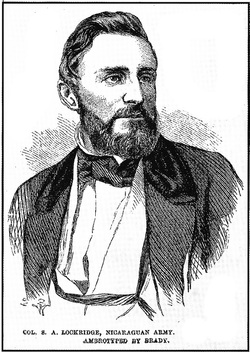
Samuel A. Lockridge, Civil War SCALAWAG


Monday, November 16, 2015

Good inspiration for bad times


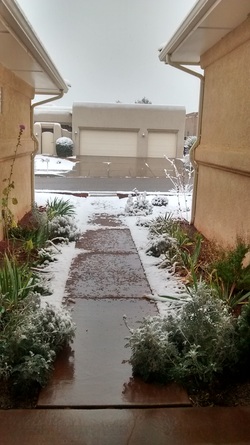
PictureThe view out my front door.
It’s snowing outside: lovely flakes that are just now sticking to the road and making me hopeful for a two hour delay tomorrow. (Note: Us teachers NEVER wish for a snow day; those have to be made up. We fervently wish for a two hour delay, because most of us know we can just talk a little faster and get the same amount of work out of our wiggly 7th graders. It’s a win-win.)

I have the flu right now. Yesterday I had chills and fever and stayed in bed, covered with every blanket in the house, for most of the day.

For most people, snow and the flu are bad things. For a writer, they’re just that more inspiration.

Right now I’m working on my Civil War Novel set in New Mexico, and one of my main characters, Jemmy Martin, is enroute between San Antonio and El Paso with General Sibley’s 3,200-man Army of New Mexico. Jemmy is a packer, a civilian who was hired at $1.25 a day to manage the army pack trains that carried ammunitions and rations because enlisted men either would not or could not properly learn to pack. (Very few packers ever got paid, and when they did, it was in worthless Confederate scrip.)

 Jemmy’s huddled with other men around a fire made with green mesquite. The thorns keep puncturing his benumbed fingers and the saddle blanket around his shoulders isn’t keeping out the cold or the blowing snow, but he’s better off than a lot of soldiers. Because he rides with the pack train, Jemmy has access to the tents and blankets and food supplies. Many a soldier’s diary complains about stopping for the night far from where the train stops and having nothing more than what they had carried.


Sibley lost about 500 men during this 500 mile march. While some men were transferred or deserted, the majority of the loses came from small pox, measles, and pneumonia. Having the chills makes me think that perhaps I need to write a “sick scene” into my novel. Although flu isn’t mentioned in Civil War accounts, it is entirely possible that some of the other diseases, most notably black measles, could have been the flu.


So I sit here, feet up on the hearth, a fire roaring, drinking spiced cider and thinking up mean scenarios to put poor Jemmy Martin through. Cold. Snow. Disease. Poor Jemmy better pray we don’t have an earthquake here. Neither he, nor my historical novel, would like that.

Keeping Time with the Romans

  Modern societies rely on precise and standardized timing. Our schedules are synchronized to prevent chaos, ensure safety, and keep complex...