Monday, December 30, 2019

Quilts and History


Sunday, October 6, 2019

If it's October, it must be Pumpkin


Picture
It's October: high season for anything pumpkin.

I know a lot of pumpkin haters who groan about how pumpkin pervades the market every fall. Consider, though, that the American native is a nutritional heavyweight. This variation of squash originated in Mexico and is very high in dietary Fiber, vitamins A and C, riboflavin, potassium, copper, and manganese. Pumpkin is also a good source of vitamin E, thiamin, niacin, vitamin B6, folate, iron, magnesium, and phosphorus. 

I think God made pumpkin a fall fruit so that our bodies would be ready to fight the cold of winter.


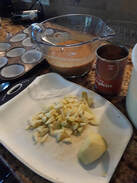
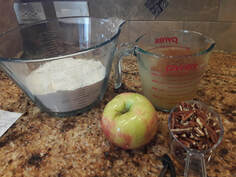
Picturepeeled, cored and chopped, apples give these muffins an extra sweet punch
I love pumpkin so much that my boys grew up eating a lot of pumpkiny food in the fall. My youngest son's favorite pie was pumpkin. We ate a lot of rich pumpkin bread slathered in cream cheese. Pumpkin donuts were a definite every fall. And yes, we ate pumpkin muffins. Interested in any of the above? Let me know and I'll share a recipe with you.

Here's a recipe for muffins that have pumpkin  and diced apple in them, and are crowned with a crunchy streusel topping that would make any muffin special. Try it on blueberry muffins or just plain muffins to make them not-so-plain afterall. 

​I'm including a second pumpkin muffin recipe in my upcoming Manic Muffin Mix Cookbook, which I'll be giving to all the members of my Friends, Fan and Family elist in December. Want in? Sign up to receive my emails here.

Pumpkin Apple Streusel Muffins

PictureThis topping would make any muffin special

For streusel topping, mix in a small bowl

1/4 cup sugar
2 TBS flour
1/2 tsp cinnamon

Use a fork to blend in, mixing until crumbly:
1 1/2 TBS Butter

Set aside streusel topping.

For muffins, mix thoroughly in a large bowl
2 eggs
1 1/2 tsp. vanilla
1/2 cup salad oil
1 cup water
1 cup solid pack pumpkin
1/2 TBS pumpkin pie spice

Add
1 cup peeled and finely chopped apples
Add and stir in until no dry areas remain
2 3/4 cup muffin mix

Spoon batter into greased or paper-lined muffin cups, filling 3/4 full.
Sprinkle streusel topping over batter
Bake in a preheated 350° oven 30-35 minutes, until a toothpick inserted into one comes out clean.
 

Picture
Jennifer Bohnhoff' lives in the mountains in central New Mexico, where she teaches middle school language arts. Since her three sons have grown up and moved away, she only makes muffins and other foods for her husband and visiting friends. She is the author of historical novels set in several different time periods and a series of funny contemporary novels for middle readers. She is currently working on an historical novel set in New Mexico during the Civil War. You can read more about her books on her website by clicking here.

Sunday, September 29, 2019

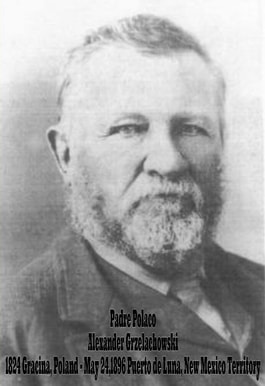
Alexander Grzelachowski: a Famous New Mexican


Picture
Last spring I gave a lecture at the Bear Canyon Senior Center on Civil War battles in New Mexico. Afterwards, one woman in the audience raised her hand and told me that her great-great grandfather had been a chaplain for the Union Army at the Battle of Glorieta. When I asked her if she was Polish, she smiled, knowing that I knew who she was talking about.
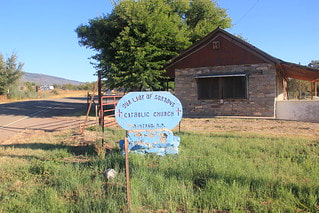
Alexander Grzelachowski was born in 1824 in Gracina, Poland. The son of a Polish Officer in the Napoleonic Wars, he became a Catholic priest, then emigrated to the United States in 1847. He served in Ohio until 1851, when he accompanied Jean Baptiste Lamy, the principle figure in Willa Cather’s novel Death Comes to the Archbishop, to New Mexico. He served several parishes, including Manzano’s Our Lady of Sorrows. Grzelachowski spoke fluent Spanish, and his parishioners called him Padre Polaco, the Polish Father.
Picture
Grzelachowski left the priesthood in 1857 to open a mercantile business in Las Vegas, but when the Civil War broke out, he felt compelled to reenter the priesthood in order to serve his adopted country. He became the 2nd New Mexico Volunteers’ chaplain, and played a critical role in the Battle of Glorieta Pass.
Late on the night of March 28, 1862, Major John Chivington and his men became lost in a snowstorm in the treacherous and uncharted terrain atop Glorieta Mesa. Chivington had set out that morning with orders to drop down on the Confederate rear, so that his 400 men and Colonel John Slough’s 800 men could trap Colonel Scurry’s 1,300 Confederate troops between them. Instead, Chivington and his men had strayed off course, gone too far, and found themselves staring down at Johnson’s Ranch, where the Confederates had left their supply train under a light guard. Chivington had destroyed that train, an act that forced the Confederates to retreat to Texas, securing New Mexico for the Union.
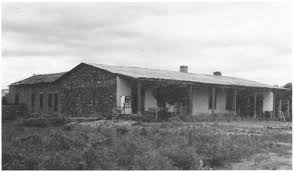

PictureGrzelachowski's store in Puerto de Luna
By nightfall, Chivington’s men were struggling back over Glorieta Mesa. What little intelligence they received suggested that Slough’s inferior numbers had failed to hold the field. The men atop the mesa had no idea where they could descend without encountering enemy troops. The night was dark and stormy, and snow fell heavily. Suddenly, an apparition appeared out of the gloom. It was an imposingly large man on a horse so white that it appeared to glow. Many soldiers thought an angel had appeared in their midst. That angel turned out to be Alexander Grzelachowski, who led the men safely around the Confederate troops and reunited them with Colonel Slough’s men. It was not an easy job. In fact, it was so difficult that Grzelachowski’s horse collapsed and died as he led the men into camp. But without the Father, it might have been Chivington’s troops who died by blundering into an enemy camp or succumbing to the elements.
After the war, Grzelachowski returned to private life. He started a family in 1870, marrying Secundina C. de Baca, with whom he fathered at least two daughters, Emma and Adelina. By 1872, the family had moved to Puerto de Luna, a little town on the bank of the Pecos River, about nine miles south of Santa Rosa. Here he opened a mercantile store similar to the one he operated in Las Vegas. He also ran a ranch, raised sheep, cattle and horses, and maintained a large orchard and vineyard.
Picture
Alexander Grzelachowski’s life intersected with many of New Mexico’s most famous and infamous ​citizens. Even though William Bonney, the young outlaw commonly known as Billy the Kid, reputedly rustled horses from one of his ranches, Grzelachowski seemed to have liked the young outlaw. He instructed his store clerks to allow Billy to take whatever supplies he needed. Bonney attended dances hosted by Grzelachowski, and on December 25, 1880, when Lincoln county Sheriff Pat Garrett and his posse was taking Bonney to jail in Las Vegas, the whole group stopped in Puerto de Luna, where Grzelachowski served Billy wild turkey and all the fixings for his last Christmas dinner.
Grzelachowski continued to be active in civil affairs throughout his life. He was the postmaster for Puerto de Luna, operating the post office out of his mercantile store. He also used the store as his chambers while he served as San Miguel county’s justice of the peace. After he helped lobby the territorial legislature for the creation of Guadalupe county from the southern part of San Miguel county in 1893, he served as the new county's first probate judge. Three new commissioners for Guadalupe county were sworn into office in his store.
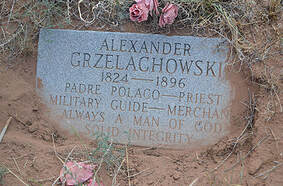
In 1896, when he was 72 years old, the man often called Don Alejandro was thrown from a wagon while riding to his Alamogordo ranch. He is buried in the Nuestra Senora De Los Dolores Cemetery outside of Milagro, a small town in Guadalupe county.

Picture
Jennifer Bohnhoff is a native New Mexican who has learned about many interesting New Mexicans while researching her two Civil War novels, Where Duty Calls (published in 2022) and The Worst Enemy (to be published in August 2023.) Book Three, The Famished Country, will be published in 2024. 

​She wishes to thank Bernadette Flores for sharing pictures and stories of her illustrious ancestor, who will have a small role in her upcoming book.

Sunday, September 15, 2019

Running with the Little Dogs


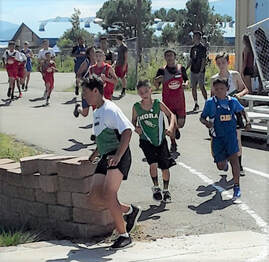
PictureMiddle School boys running at a recent meet in Penasco, New Mexico. One of the author's runners, in blue, is in the far left.

This fall, after a two year hiatus, I have returned to coaching a middle school cross country team. It is an interesting job, to say the least. Middle schoolers, who are in 6th-8th grade, come in all sizes and shapes, and have varying temperaments, from upbeat, silly and optimistic to gothic and depressed. Some middle schoolers run that emotional gamut in a single day. They are raging bundles of adolescent hormones and angst, teetering on the brink of adulthood, then falling backwards into toddler tantrums when they least expect it. If anyone needs the physical release of a good, long run, it's a middle schooler.

My first experience with middle school cross country was in 2007. That was the fall when I returned to teaching after a 22 year stint as a stay-at-home mom. The only job I could find was as a substitute, and I thought that volunteering to help with afterschool activities would help my job prospects. I didn't know that I would find the experience so satisfying that I would continue to coach long after I'd secured a full time teaching position.

When I first began coaching, I was a competent runner who participated in road races of 5K to marathon length, and I could run in the middle of the middle school pack. By the end of that first season, however, I was running in the back. My middle schoolers improved in the course of the season, and I didn't. Each season after that I began a little farther back in the pack and finished a little slower. Students who I'd encouraged to "finish strong" were now doing the same for me. 

I'm now in my third year teaching in a rural school east of Albuquerque, and for the first time, I've rejoined the team. I am slower than ever, which qualifies me to run sweep. I run at the back, helping those who have side stitches, have had encounters with cacti, or just forgot to eat anything but Doritos for lunch and have nothing left to fuel their bodies. Some students only run with me once before they find their mojo and return to the middle and front of the pack. Others run in the back with me every day. They are the little dogs, and the whiners and wheezers.

While the whiners run in the back with me every day, their excuses seem to be new each run. They can be highly entertaining. A couple of weeks ago, one runner couldn't run, he said, because he had a mosquito bite. I asked him where it was. He searched both arms, his legs, and then the back of his neck before admitting that he couldn't remember. Another day, he claimed he had a lung cramp. On a hot afternoon, he asked me to tell his mother than he loved her if he didn't live to see the end of the two mile course.

He is not my only frequent companion. One girl stops to pick wildflowers. Another stops to gawk every time a hawk appears in the sky. Some days I do more walking - and nagging - than running.

Picture
Jennifer Bohnhoff teaches and coaches at a middle school in rural New Mexico. Her most recent book, Super Hec, is about a middle school boy who trains to run a 5K. You can read more about all of her books here. 

Monday, September 9, 2019

Super Shirt


Picture
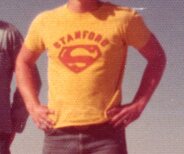
Ever wonder where authors get their ideas? Sometimes they percolate for a very long time before they find a place in a story. A good example is this super shirt.

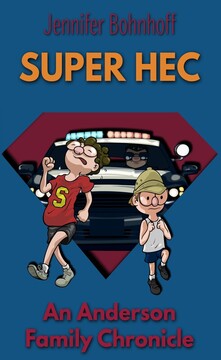
​My latest book, Super Hec, came out this week. It is the third book in the Anderson Chronicles, and it tell the story of what happens to geeky middle schooler Hector Anderson when he decides to take up running. The faded, old t shirt that figures throughout the story has a story of its own.

Picture
Super shirt first shows up at the very beginning of the story, when Eddie, Hec's best friend, pulls it out of his backpack. The forever disorganized Hec has realized that he's forgotten the t shirt he uses for P.E., and his grade will suffer if he can't dress out. Fortunately for Hec, Eddie carries this old t shirt as a spare, saving Hec's grade but making him the butt of jokes in the locker room.

When Sandy, the girl of Hec's dreams, comments on the shirt, it becomes a talisman for him. He is convinced his "lucky" shirt is helping him train for a 5K road race. Eddie's father, the original owner of the shirt, shares training tips with Hec as he remembers his glory days on the Stanford track team. As Hec's legs strengthen and his runs become easier, he can't bear to be parted from Super shirt. It becomes so stinky that his mother begs him to let her wash it. 

Super shirt made its first appearance in my life when I was a young bride back in 1980. My husband and I were moving across country, and I was packing the content of a desk drawer when I came upon an unexposed roll of film. I took it to the store to have it developed. When I returned a week later to pick the pictures up, I flipped through the snapshots, then told the man behind the counter that he had made a mistake. I didn't recognize any of the people in the pictures, nor any of the Italianate, stucco buildings. Clearly, he had given me someone else's pictures. 

The man smiled. He explained that the faded colors indicated that the film had been exposed a long time ago, and had lingered, undeveloped, in the can for a long time, perhaps years. He suggested I take them home and show them to my husband. Perhaps he would recognize the people and places that I didn't. After an argument, I agreed to take the pictures home, but I was sure I would return the next day, vindicated by my husband's inability to recognize those people and places. I was wrong. 
The pictures, it turned out, were five years old. The Italianate building were on the Stanford University campus, where my husband had attended, and the pictures were of him and his classmates. I had never been to Stanford. I had never met most of the people in the pictures. But the humiliating part was that I hadn't even recognized my own husband, even in the picture in which he was wearing a shirt I had seen many times.
Picture
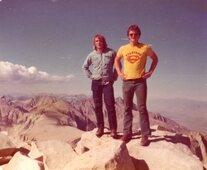
In that picture, my husband is standing triumphantly at the top of Mount Whitney, California's highest peak. He was a young man at the top of his game and on top of the world. His horizon seemed limitless, the future unclouded. By the time I married him, the t shirt was faded and had some holes, but he still loved it and the memories it brought back to him.  

A lot has changed in the nearly 40 years since I developed that picture, but I am happy to say that my husband and I both aged better than the t shirt.


Jennifer Bohnhoff is an author who still runs with middle school students at the school where she teaches English and coaches the cross country team. Her latest book, Super Hec, is available in both paperback and ebook from Amazon.

Monday, September 2, 2019

Apple Muffins for Back to School


Thursday, August 22, 2019

Living off the Iron Harvest


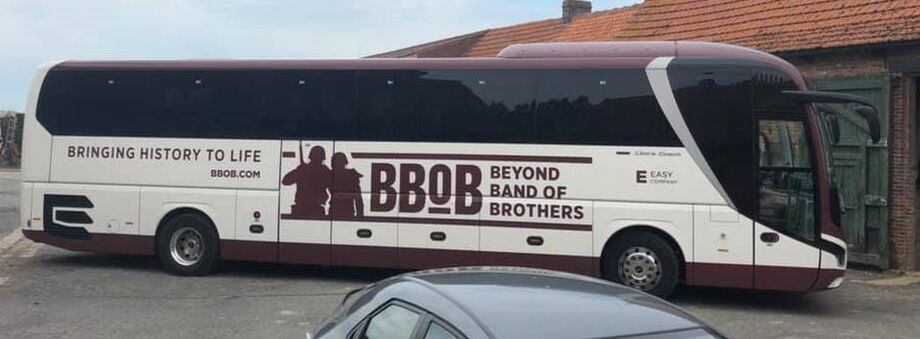
This summer, my husband and I had the extreme pleasure of touring World War I battlefields in Belgium and Northern France. We have always gone on trips like this on our own. We’ve done the research, made the reservations, and done all the planning by ourselves. For this trip, I felt I overwhelmed by the number of places I wanted to go. I was afraid I’d miss something crucial. So we booked a tour with a company called Beyond Band of Brothers. It turned out to be an excellent decision.
Picture

One of the things that BBoB does that really enhances the experience is hire local tour guides. In Flanders, a region that now encompasses part of Belgium and France, that was Iain McHenry, a published author and historian whose understanding of battle tactics and cemeteries was encyclopedic. Iain began studying the Great War when he was in the military and assigned to Belgium. He has since gone on to do research for families of soldiers, for BBC programs, and for his book on the 177th Tunneling Company.
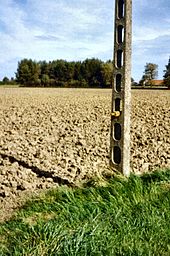
PictureA telegraph pole on the side of a field in Belgium. Note the shells that a farmer has placed in it for disposal.
While we were driving from one site to another, Iain explained that a lot of unexploded ordnance still litters the fields of Flanders. Much of it is still dangerous. France's Department of Mine Clearance, for instance, recovers 900 tons of UXO every year. 

Farmers in the region have taken to calling this the Iron Harvest. Every year, especially during the spring planting and fall ploughing, they uncover unexploded ordnance, rolls of barbed wire, shrapnel, bullets, and other things in their fields. Iain explained that a lot of farmers carry what they find to the sides of their fields and deposit them where bomb squads can recover them.

Iain took us to one farm, whose inhabitants have not only endured the dangers of living and farming such dangerous soil, but embraced its history. As we pulled into the farmyard of Pond Farm, a pleasant, middle-aged blond woman welcomed us. 
 
Pigtailed posts. These screwed into the ground silently and were strung with barbed wire.
 
Picture
She explained in halting English that the farm had been completely destroyed during World War I. When her great-grandfather returned after the war, he built a small shed for the family to live in. Next came a barn, and then the house in which the family lives today. Eventually, shed became a museum of things they picked up in the fields. 

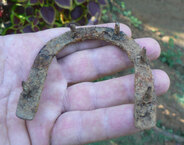
The collection was intriguing. One thing I noticed were dozens of tiny horseshoes. Noting the confusion on my face, she explained that they were not actually for ponies; they were the heel guards from the hobnailed boots that both German and English soldiers wore.

Her son, Stijn, became intrigued by all the ephemera of war. He's been collecting things from the fields since he was a child.  

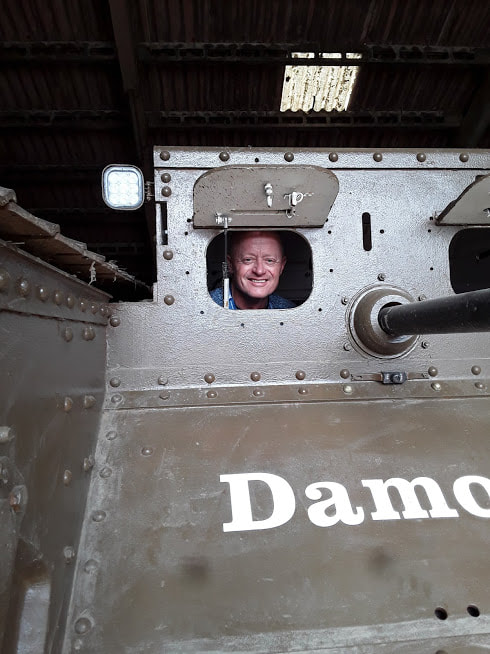
When he found the remnants of a tank in his field, he decided to build one of his own. He requested plans for a Mark IV from the British government and has been working on building one ever since. His mother was pleased to show us his handiwork, parked in the barn among the farm equipment. Building a tank is no small or inexpensive feat. If you would like to help, donations would be gratefully accepted here
World War I has been over now for a hundred years, but the land and its people are still recovering. The Iron Harvest is a legacy that will continue to challenge the people for centuries to come.

Keeping Time with the Romans

  Modern societies rely on precise and standardized timing. Our schedules are synchronized to prevent chaos, ensure safety, and keep complex...