Thursday, July 18, 2024

Finis Ewing Kavanaugh and the Battle for Cubero


Picture
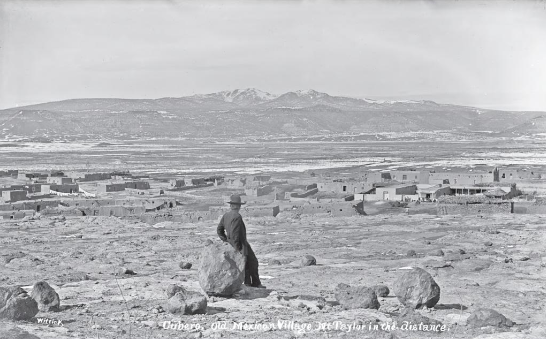
Cubero in the 1860s, Palace of the Governors Photo Archives, NMHM/DCA, 15757
Cubero is a tiny town with a big Civil War story about a battle that was won without a single shot being fired, by a small but determined group of men against a garrison ten times its size. Located just north of I-40 between Laguna Pueblo and Grants, 45 miles west of Albuquerque, the town has less than 300 people today. It has a post office and an elementary school, but not much else.

At the time of the Civil War, Cubero was a small farming community.
Cubero and nearby San Fidel provided hay for the horses stabled at Fort Wingate. It also housed a depot that the Army kept there to keep its soldiers supplied during its intermittent campaigns against the Navajo. The depot, and the trail to Fort Wingate, were guarded by 45 soldiers who were Volunteers in the New Mexico militia.
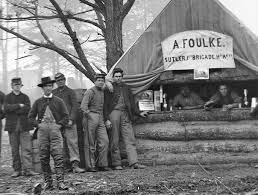
PictureSutlers sold extra food and supplies to soldiers. Their stores were often in tents so they could move with the army.
One of Cubero’s most prominent citizens was Finis Ewing Kavanaugh (some records spell his name with a C). Born in 1833, in Lafayette, Missouri, Kavanaugh attended St. Louis Medical College before establishing a practice in Santa Fe. During the 1850s he served as physician on several of the Army’s Indian campaigns and was part of the expedition into Utah during the Mormon War.

In 1858, he became co-owner of a sutler’s store, a store that provided goods to soldiers, at Camp Floyd.  He also owned the post sutleries at Cubero and Fort Fauntleroy, which changed its name to Lyon, and finally Wingate after Colonel Thomas Turner Fauntleroy left the Union Army to assume a position as brigadier general in the Provisional Army of Virginia. Kavanaugh owned and raced fine horses and served in the territorial legislature. His wife (who may have been common-law), Refugio Aguilar stayed on Kavanaugh’s ranch near Cubero. They had at least 2, and possibly 5 children.
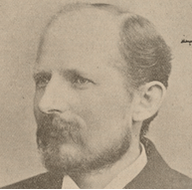

PictureBill Davidson
Although he had served in the U.S. Army, Kavanaugh was a Confederate sympathizer. When he learned that Confederate Brigadier General H. H. Sibley was leading his Army of New Mexico up the Rio Grande, he hatched a plot to provide the Rebels with supplies. Accompanied by three fellow conspirators, George Gardenhier, R.T. Thompson, and Richmond (sometimes called Richard, or Dick) Gillespie, Kavanaugh confronted Francisco Aragon, the captain of the post at Cubero. They convinced the captain that they were the vanguard of a mighty Army, which was bearing down on the post, and that it would be wise of the captain to surrender.

Bill Davidson, a soldier in Sibley’s Army later wrote that, immediately after the battle of Valverde, General Canby had sent a courier to Cubero warning them of the Confederate approach, but the Indians had killed the courier. Whether or not this is true, Aragon was caught completely off guard, and quickly surrendered. the Battle of Cubero was won without a single shot being fired: four Confederates had managed to overwhelm a 45 man garrison with words alone.

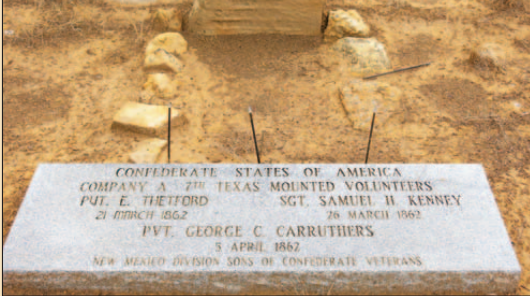
​Gillespie then rode to Albuquerque, where he got Captain A. S. Thurmond and Company A of the 3rd Texas Mounted Volunteers to return with him to Cubero to retrieve the captured supplies. They were able to bring between 20 and 25 wagon-loads of military supplies including 60 guns and 3,000 rounds of ammunition back to Albuquerque. Some of the Confederate soldiers who arrived at Cubero were sick and ended up staying at the abandoned post, where they lived off supplies from Kavenaugh’s store. Three of those soldiers died, probably of pneumonia, and are buried in Cubero’s cemetery. 
Picture
Kathy Helms/Independent https://www.ftwingate.org/docs/pub/ Correspondence/Aug_10_2017_A_Piece_of_Civil_war_history_lies_in_Cubero_Cemetery.pdf
When Kavanaugh and his accomplices were indicted for treason, he headed for Texas, where he was commissioned as a Major in Baird's 4th Texas Cavalry. Kavanaugh's property was confiscated by the U.S. Army and sold for $1,657.28. I could find nothing explaining what happened to his wife and children, which it seems he abandoned when he left the territory. In Texas, he became friends with Colonel Dan Showalter.

After the war, Dr. Kavanaugh went south to Mexico, where he and Showalter opened a bar in Mazatlan.  Showalter was shot and killed in a bar fight in February 1866. Some records state that Kavanaugh died in that same fight, while others report that he died of alcoholism and tuberculosis. He was 33 years old when he was buried in the U.S. National Cemetery in Mexico City.

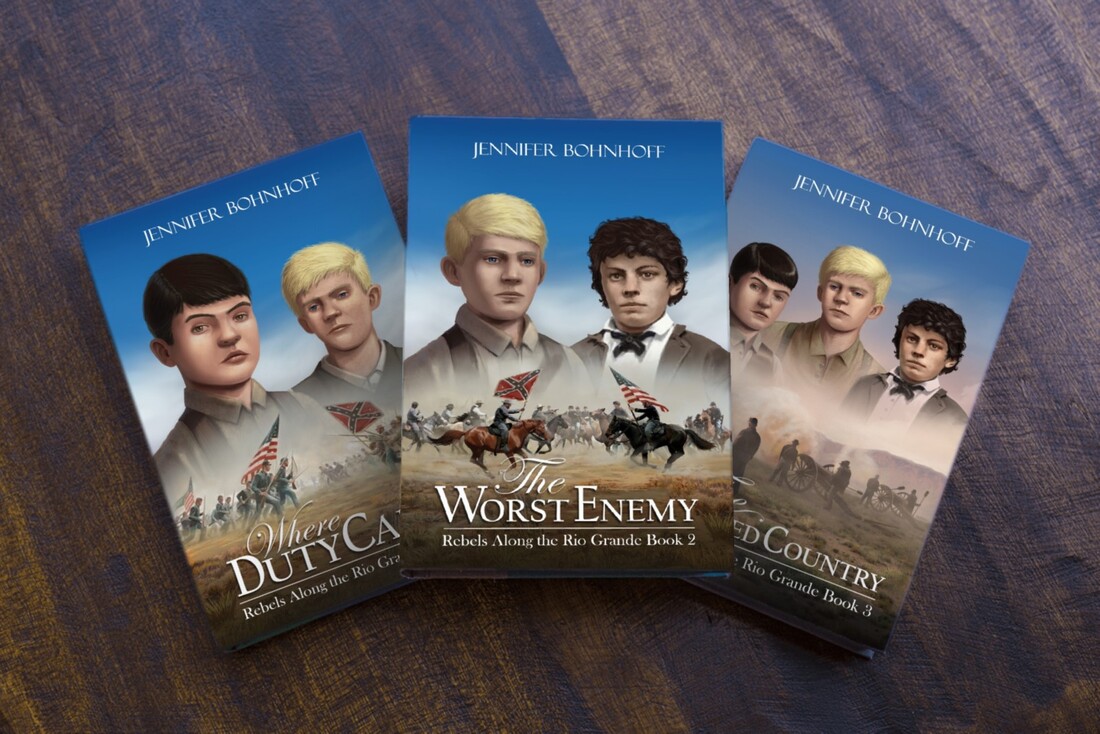
Jennifer Bohnhoff is the author of Rebels Along the Rio Grande, a trilogy of middle grade novels set in New Mexico during the Civil War. The Cubero incident described above happened during the time covered in The Worst Enemy, book 2 of the series. Book 3 will be published in October 2024. 
Picture

Thursday, July 11, 2024

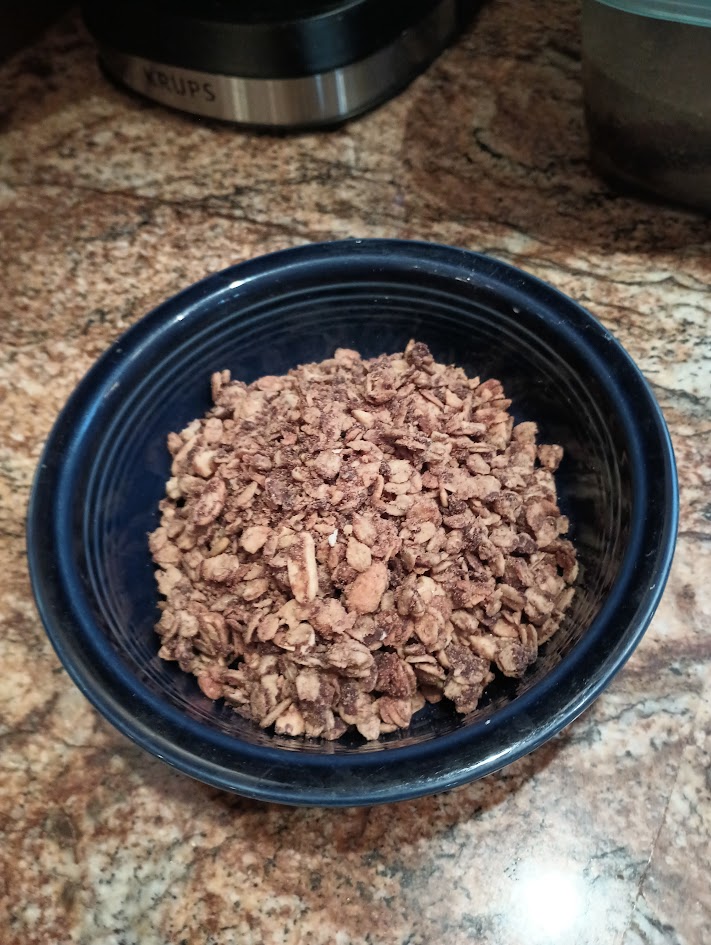
Chocolate Peanut Butter Granola


It's summer, and just too darn hot to cook, even first thing in the morning. 

You will have to turn your oven on to make a batch of this yummy granola, but it'll be worth it! Slice a banana or strawberries over the top and serve with milk for a sweet way to start your day. 

But this is too good to be just for breakfast. Sprinkle it over ice cream for an easy dessert. If you're really feeling creative, pack some of it into a pie plate when it is fresh from the over and the chocolate hasn't yet set up, and you'll have a super crust for an ice cream pie.

Picture

Chocolate Peanut Butter Granola

Preheat oven to 325°
Spray a roasting pan with oil.

Place in roasting pan and mix: 
3 cups regular rolled oats
1 cup roasted peanuts, chopped very coarsely
3/4 cup chocolate chips
1/2 cup sunflower seeds
1 tsp ground cinnamon

Mix in microwave-safe bowl. Microwave 30 seconds, then stir. Repeat until peanut butter is liquid and mixture is smooth:
1/2 cup smooth peanut butter
1/2 cup light karo syrup 
1/4 cup brown sugar
2 TBS water

Pour the peanut butter mixture over the dry ingredients and mix well. Spread in an even layer. 

Bake for 24 minutes, taking out every 8 minutes to stir the edges into the middle, then spread out evenly. 

Remove from oven and let cool completely. Break up larger chunks before storing in an airtight container.


When she's not in the kitchen, Jennifer Bohnhoff's writing historical and contemporary fiction for middle school through adult readers. You can learn more about her books on her website.

Thursday, July 4, 2024

Summer in the High Desert


Picture
Last week I drove into Edgewood, the town that is in the flats to the east of where I live. Edgewood and Albuquerque are equidistant from my house in the Sandia Mountains, and while Albuquerque may have a greater selection of stores, Edgewood has that small town, welcoming feel that is balm to my soul. It's also the town in which I finished my teaching career. I was spent four years teaching language arts and social studies at Edgewood Middle School, and coaching cross country and track. 

Picture
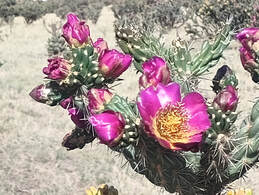
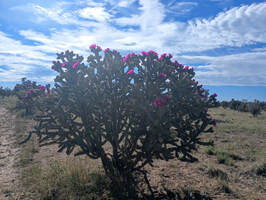
This trip was so I could buy groceries for the upcoming 4th of July holiday and weekend, but it also gave me a chance to run on my old cross country course, which wandered through the high desert just west of the school. The 3.2 mile course runs through a huge stand of cholla cacti. Some of them are 6 or 7 feet high and ten feet across, so it's almost like running through a forest. The cholla were covered with brilliant pink blooms. 

Picture
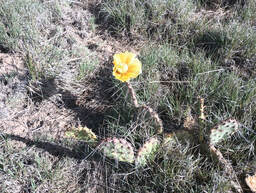
Lower to the ground, prickly pear cactus also sported their summer flowers. It's always struck me as strange that these flowers are a beautiful, translucent yellow, because the juice from a prickly pear is bright pink -- very similar to the color of cholla flowers. If you've never had prickly pear jelly, you're missing out!

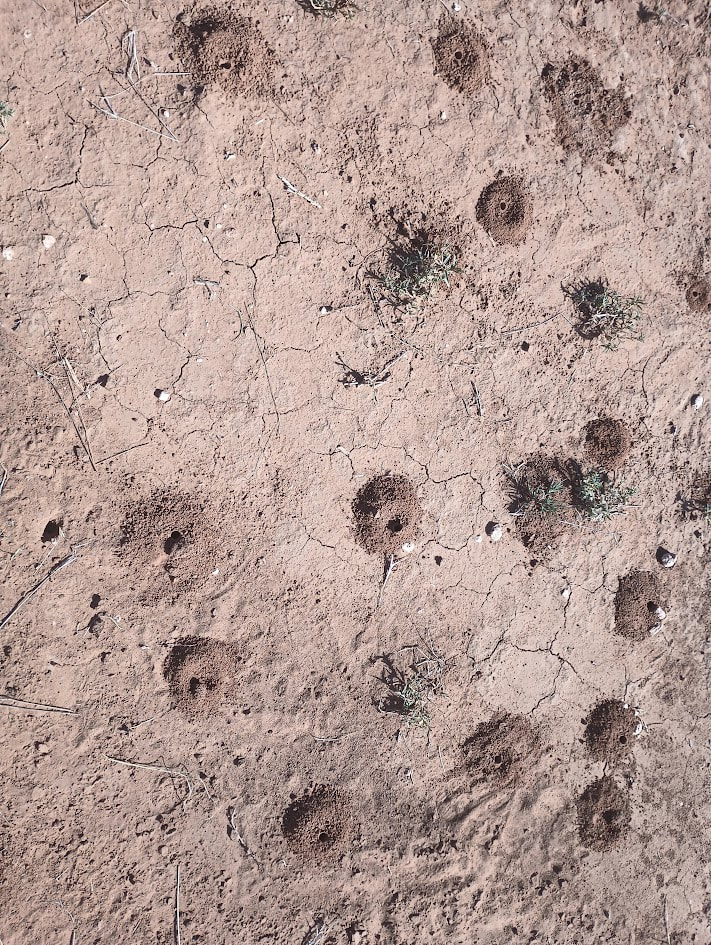
A couple of times, it seemed that the air was full of the buzzing of bees. I finally slowed down and tried to figure out where the buzzing was coming from. There were bees visiting the cholla and prickly pear blossoms, but I soon discovered that most of them were underfoot. These were ground dwelling bees! 
Picture
I hadn't ever known before that there was such a thing, but apparently there are hundreds of different kinds of bees that live in New Mexico, and many of them are ground dwellers. Click here to learn more about them. I don't know whether the ones I saw are digger bees, miner bees, or cactus bees, but it was a pleasure to see them. 

The desert might look deserted, especially on a warm summer day, but it is still alive and full of beauty. 


Thursday, June 27, 2024

The Beginning of World War I


Picture
July 28 marks the 110th anniversary of the beginning of World War I.

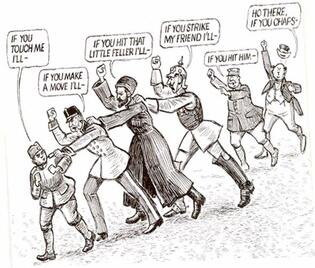
​Some historians refer to early twentieth century Europe as a militaristic powderkeg, ready to go off at the merest suggestion of a spark. European nations at that time were eager for war so that they could prove their superiority over other nations. They had growing militaries and had joined together to form opposing military alliances, pledging to support their partner nations in case of war.

The spark that set off World War I was no mere suggestion. On June 28, 1914, a young Serbian patriot shot and killed Archduke Franz Ferdinand, the heir to the Austro-Hungarian Empire in the city of Sarajevo. One month later, Austria-Hungary declared war on Serbia. Within a month, each side’s allies had joined the fray and World War I was underway.

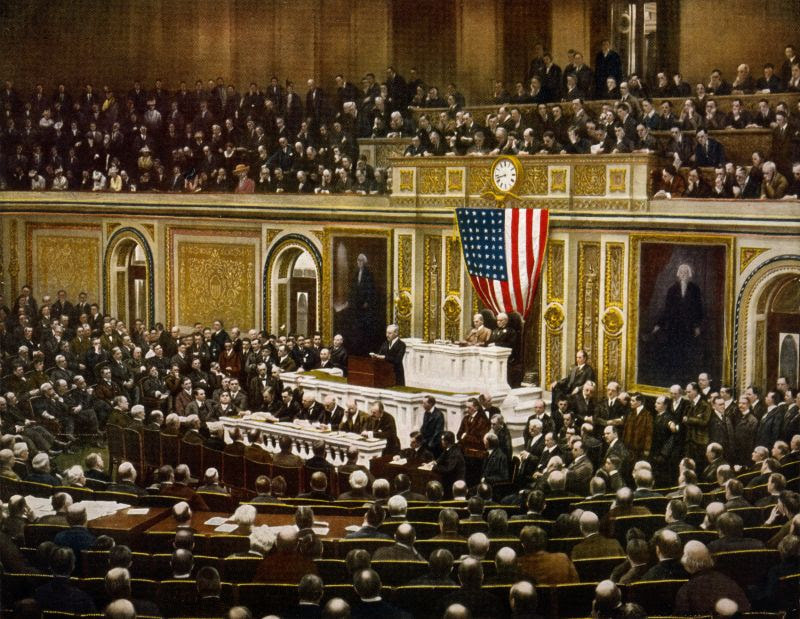
The United States managed to stay out of the fight until three years into the war. On April 2, 1917, when President Woodrow Wilson finally requested the Congress to declare war on Germany, he gave two reasons why America should go to war.
Picture
President Wilson asking Congress to declare war on Germany, April 2, 1917 public domain photo
Picture
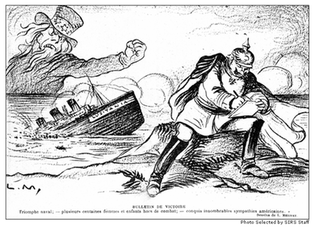
The first reason was that Germany had broken its earlier promise to suspend its unrestricted submarine warfare in the North Atlantic and the Mediterranean. The Hague Convention of 1907 prohibited sinking of merchant ships without warning. Ships had to be stopped and their crews and passengers placed in a safe place before the ship was sunk. The provision of a safe place for crews and passengers did not include lifeboats unless the ship was close to shore. Neutrals could only be sunk if they had been searched, and contraband had been found. However, Germans did not adhere to the rules of the Hague Convention. On May 7, 1915, one of its U-boats sank the Lusitania. a British ship that was carrying contraband. The passengers and crew had been given no warning of the attack and no opportunity to abandon ship or evacuate. 1,195 civilians were killed., including 123 Americans. The American steamer Housatonic was sunk by U-53 on February 3, 1917. Three weeks later, two American civilians died when the British liner Laconia was sunk. The sinking of other American ships, the Lyman M Law, the Algonquin, the City of Memphis, the Illinois, the Vigilancia and the Aztec, followed. It was clear that the Germans had no interest in holding to international law.  Its attacks on Allied and neutral merchant and passenger ships were going to lead to the loss of more American lives and jeopardized American sea trade.

Picture
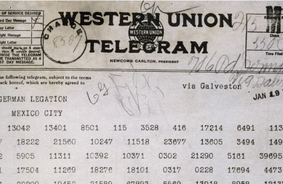
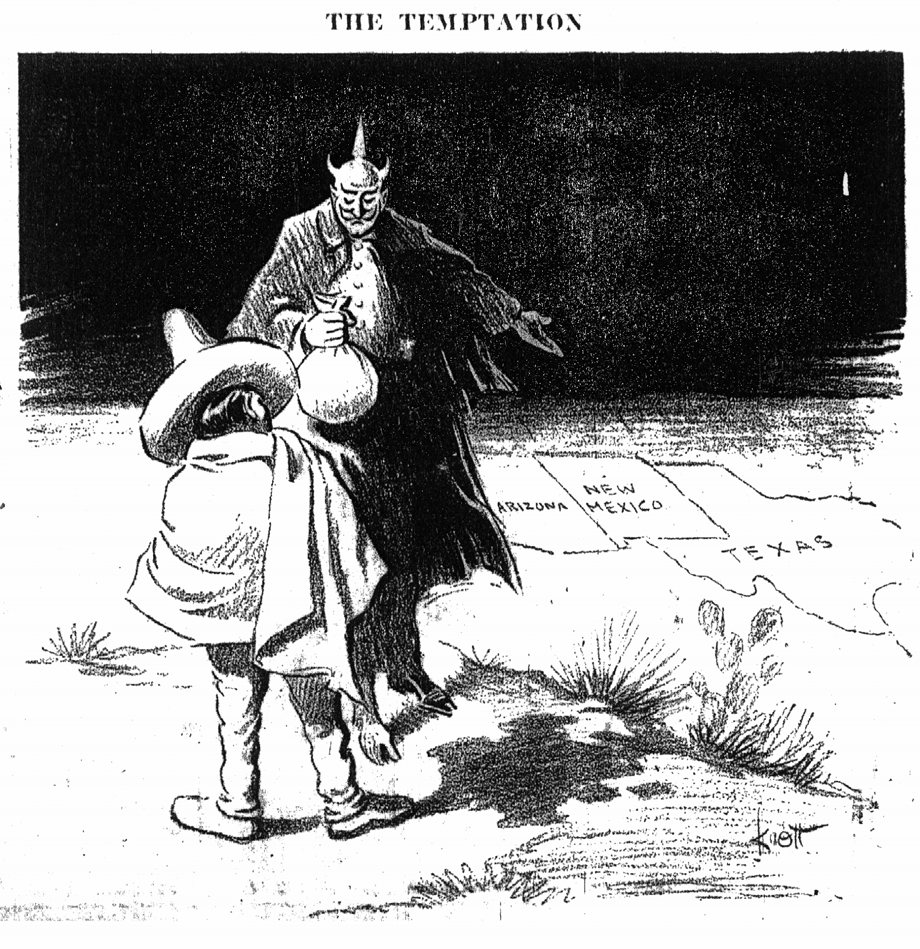
The second reason Wilson urged Congress to declare war on Germany was that Germany was encouraging Mexico to attack the U.S. On January 19, 1917, British naval intelligence intercepted a telegram sent by German Foreign Minister Arthur Zimmermann to the German Ambassador in Mexico. This telegram, known as the Zimmerman telegram, was written in code. When decoded, it showed that in exchange for supporting Germany, the Mexican Government would regain territory lost during the Mexican-American War. This meant that Texas, New Mexico, and Arizona would be returned to Mexico. Coming so soon after Pancho Villa’s raid on Columbus, New Mexico, the threat of war on the border seemed very real.  Intelligence sources shared the Zimmerman telegram with President Wilson on February 24. The American press published the story a couple of days later. This, and the German’s use of unrestricted submarine warfare pushed U.S. public opinion to support entering the war.

Picture
Four days after Wilson’s appearance before Congress, the U.S. declared war on Germany and declared themselves an "Associated Power" of the Allies. Within a year, our Army grew. While there were just 300,000 soldiers stationed in the U.S., by the end of the war in November 1918 there were around 2 million American soldiers in Europe alone. The United States of America had become a global power.

Picture
Jennifer Bohnhoff is a former educator, and the writer of historical fiction for middle grade through adult readers. Her adult novel, A Blaze of Poppies, is set in the time of the Pancho Villa Raid and follows two New Mexican characters into the trenches of World War I. 

Thursday, June 20, 2024

This Year's WWA Middle Grade Spur Award Winners


Picture
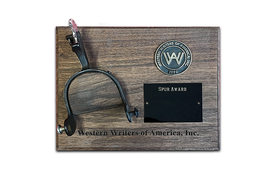
Western Writers of America is an organization that promotes Western literature, nonfiction, movies and music. Since 1953, it has honored the best in Western literature with the annual Spur Awards. Selected by panels of judges, awards are given for works whose inspiration, image and literary excellence best represent the reality and spirit of the American West in a number of different categories. The category of Juvenile Novel is where works for middle grade readers are represented. This year, the category awarded one winner and two finalists, that will be presented during  WWA’s convention June 19-22 in Tulsa, Oklahoma.

Picture
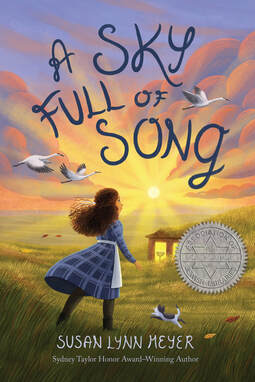
There are many books about settlers on the great plains living a harsh life in a sod dugout while trying to make a new life for themselves. Think Little House on the Prairie, and you've got the idea. A Sky Full of Song is one of these books, but it covers this experience through the lens of Judaism. It is 1905, and eleven-year-old Shoshana accompanies her mother and sisters on a voyage across the Atlantic to join her father and brother in North Dakota. They are escaping the pogroms and persecutions of Ukraine, which at this point in time was part of the Russian Empire. Shoshana finds the northern plains to be beautiful and full of promise, but she comes to realize that the prejudice she had hoped to escape lies within many of the other homesteaders, and she is now culturally isolated. Desperate to fit in, she tries to hide her Jewish identity but a series of dangerous events, some human created and some natural, make her rethink this. Susan Lynn Meyer has painted a beautiful and sometimes harsh story with such hope that it brought me to tears more than once. There's no question in my mind that this novel, which won the Spur Award this year, should win multiple more awards and become a classroom classic. 

Picture
What a fun romp!

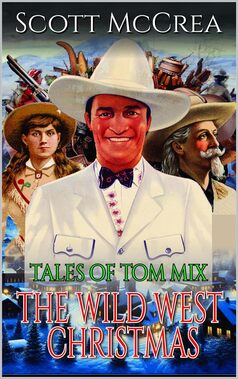
Christmas is coming, and when Buffalo Bill Cody needs help protecting the gifts he's bought for his special Christmas performance for a Tulsa orphanage, he calls on Marshal Tom Mix for help. Despite his best efforts, Mix gets buffaloed and the presents disappear. Can Cody and Mix solve the mystery in time for the Wild West Show to go on? This is a madcap adventure with lots of well delineated characters and the kind of twists and turns that will remind the reader of the fun, old time B grade movies of the 40s and 50s and of dime store western novels. I laughed out loud at the sometimes snarky dialog and the clever turns of phrase. My only concern: for a book targeting younger readers, there's a whole lot of drinking and cussing that might offend some modern sensibilities. This is book #9 in a series that intends to follow the whole career of Tom Mix from young cowboy to Hollywood superstar. It was a finalist for the Spur Award this year.  

Picture
Picture
Two boys. One battle. A life-changing encounter.
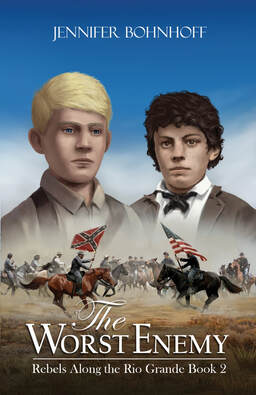
Jemmy Martin left his Texas farm and followed Confederate General Sibley's Army into New Mexico to keep his mules safe. Now after the Battle of Valverde he's protecting Willie, an orphaned drummer boy with a broken arm. Cian Lochlann is an Irish orphan who gave up gold prospecting to join the Union Army. All he wants is a full belly and a strong man to lead him into an unknown future. Both are pulled toward a distant mountain pass in New Mexico territory where the decisive battle of Gen. Sibley's New Mexico campaign will be fought. Called the "Gettysburg of the West" the Battle of Glorieta Pass will test both boys as they face their worst enemy. The Worst Enemy. Book 2 in Rebels Along the Rio Grande, a trilogy of historical fiction novels set in New Mexico during the Civil War, was a finalist for the Spur Award this year. 

Picture
Book 1, Where Duty Calls, was a finalist last year. In it, Jemmy first leaves Texas and encounters Raul Atencio. The nephew of a prosperous Socorro, New Mexico merchant, Raul wants to become rich and powerful like his uncle. While at Fort Craig to deliver supplies and help build defenses, the Confederates arrive, and Raul becomes an unwilling participant in the defense of the Fort.

Upon the banks of the Rio Grande the two armies face off in the Battle of Valverde, and both Jemmy and Raul must struggle to keep themselves, and their dreams, alive.


I have a signed copy of each of these four books that I'd love to give away to eager readers. In the comments below, tell me which one you'd like to read and why, and I will choose a winner for each.


Picture
Jennifer Bohnhoff is the author of a dozen titles for middle grade and adult readers. Book three of Rebels Along the Rio Grande, her series of middle school novels set in New Mexico during the Civil War, is titled The Famished Country and will be released by Kinkajou Press, a division of Artemesia Publishing, in October 2024.

Thursday, June 13, 2024

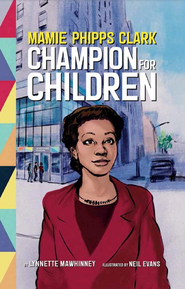
Mamie Phipps Clark: Champion for Children


Thursday, June 6, 2024

Recognizing the 80th Anniversary of D-Day


Eighty years ago, the Allied Forces began the largest amphibious military invasion in human history. On June 6, 1944, more than 130 battleships, cruisers, and destroyers bombarded the French coast while 277 minesweepers cleared the water. Behind them, about 7,000 vessels, packed with nearly 200,000 soldiers from eight Allied nations, crossed the channel, ready to storm the beaches of Normandy. Overhead, over 1,200 aircraft delivered paratroopers behind enemy lines. It was feat the size and scope of had never been seen. It still remains singularly large and impressive today.
More than 2 million Allied personnel took part in Operation Overlord, the code name for the Battle of Normandy that began with the D-Day invasion and continued on through August. During the Trident Conference in Washington in May 1943, the Allies appointed U.S. General Dwight D. Eisenhower to command the Expeditionary Force and put British General Bernard Montgomery in charge of the 21st Army Group, which comprised all the land forces. The allies chose the Normandy coast for the landings, assigning Americans the sectors codenamed Utah and Omaha, while the British were to land at Sword and Gold, and the Canadians were to land at Juno. 
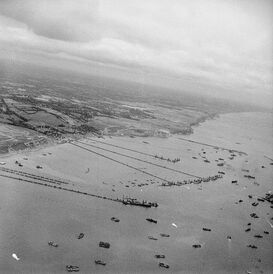
PictureBy Harrison (Sgt), No 5 Army Film & Photographic Unit - http://media.iwm.org.uk/iwm/mediaLib//8/media-8246/large.jpg This photograph BU 1024 comes from the collections of the Imperial War Museums., Public Domain
The Allies needed to develop special technology to meet the conditions expected on the Normandy beachhead. They invented artificial ports, called Mulberry harbors, to provide deep water jetties and places where the invasion force could download reinforcements and supplies before major French ports were recaptured from the Germans and their damage repaired. Two Mulberry harbors were created:  Mulberry "A" at Omaha Beach and Mulberry "B" at Gold Beach. The harbor at Omaha Beach was damaged by a violent storm before it was ever completed, and the Americans abandoned it, landing their men and material over the open beaches. However, the harbor at Gold Beach was a great success. Over 2.5 million men, 500,000 vehicles, and 4 million tons of supplies used Mulberry “B” during the 10 months it was in use. 

Another technology developed for the D-Day landings were the Hobart's Funnies,a group of specialized armoured fighting vehicles based on the British Churchill tank, and American M4 Sherman, but equipped with bulldozers, flamethrowers, demolition charges, reels of canvas that could be unrolled to form paths for other vehicles, assault bridges, ramps, and other modifications to help take the beach and destroy German fortifications. Hobart's Funnies were named for Major-General Sir Percy Cleghorn Stanley Hobart, a British Engineer.
 

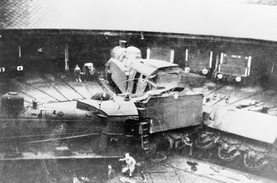
PictureTrain damaged by resistance sabateurs https://www.iwm.org.uk/collections/item/object/205206871
All the while that Allied forces were developing their plans and technologies, Resistance groups were active throughout German-occupied France. Their contributions to the invasion of Normandy included the gathering of intelligence on German defences and the carrying out of sabotage missions to disrupt the German war effort, including the destruction of rail lines and train engines and the cutting of telegraph and telephone lines. Because there were many different Resistance organizations that operated independently and often had different goals, coordinating them with the Allied forces was difficult. Many, however, listened to the secret messages from the Free French that were broadcast over the BBC. On the first of May, and again on June 1, such messages warned that the invasion would be soon and encouraged Allied secret agents and resistance fighters to carry out their acts of sabotage as soon as possible. 

​Although the Allies failed to accomplish their objectives for the first day of the invasion, they were able to gain a tenuous foothold on the land that Germany had held since taking France. They captured the port at Cherbourg on June 26, and the city of Caen on July 21. By August 25, the Allies had liberated Paris. Five days later, the Germans retreated east across the Seine marking the close of Operation Overlord and the beginning of the end for the Nazi regime. 

Few of the veterans of D-Day are still alive, but we remember them and honor them for their bravery. 


Picture
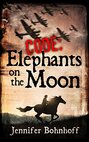
Code: Elephants on the Moon is author Jennifer Bohnhoff's novel about Eponine Lambaol, a girl who senses that strange things are going on in her Nazi-held village in Normandy. As D-Day nears, she joins with others to resist the Germans and prepare for the Allied invasion. Written for middle school readers, adults have also found this an informative and entertaining read. 

Keeping Time with the Romans

  Modern societies rely on precise and standardized timing. Our schedules are synchronized to prevent chaos, ensure safety, and keep complex...