
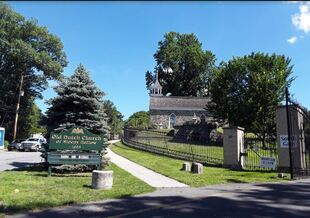
 This summer I visited family on the east coast. While there, I got to visit the Old Dutch Church, in Sleepy Hollow, New York. The Old Dutch Church was built somewhere around 1685 by settlers to the area when it was still under Dutch control, and New York was still New Amsterdam. The church is part of the Lutheran branch of Christianity, and still has services. 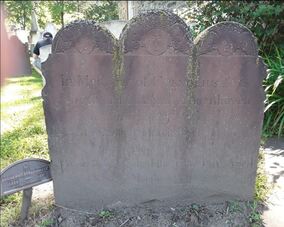 The church was locked up on the day that I visited, so I didn’t get to see what it looks like inside. I did, however, spend several hours touring the cemetery. I love cemeteries, especially old ones. The tombstones tell so many stories. This tombstone has the names of three children, Cornelius, Jacob and Catalyia, who all died on September 24, 1794. 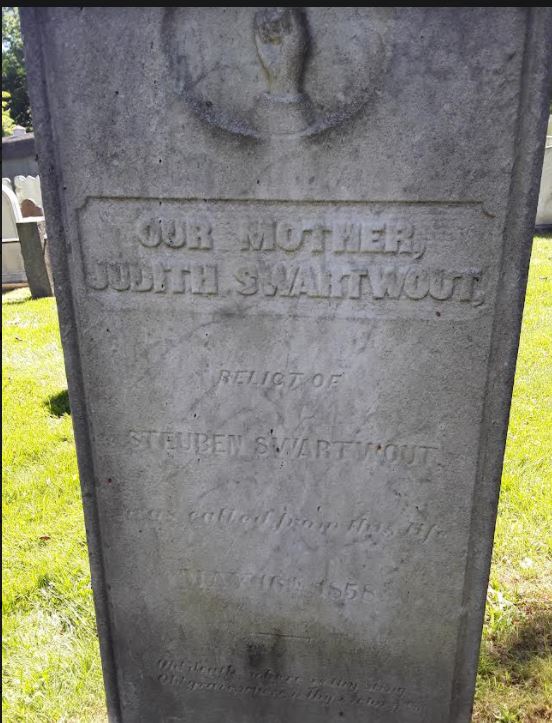 I took a picture of this tombstone because of the interesting use of English. It says the woman is the relict of a man. I had to consult a dictionary to learn that relict is an old word for widow. 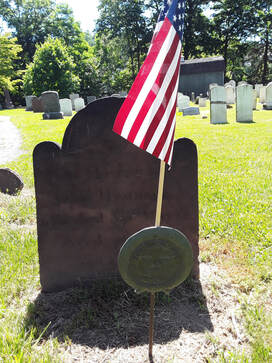 Many of the tombstones had American flags and badges indicating that the buried was a veteran. This is the grave of one of the many Revolutionary War veterans who were interred in this cemetery. There was a large area with Civil War dead, including one who, if I read the dates correctly, died during the war when he was only twelve years old. I assume he had been a drummer boy. There were World War I tombstones, like the one pictured below, and tombstones from later wars as well. 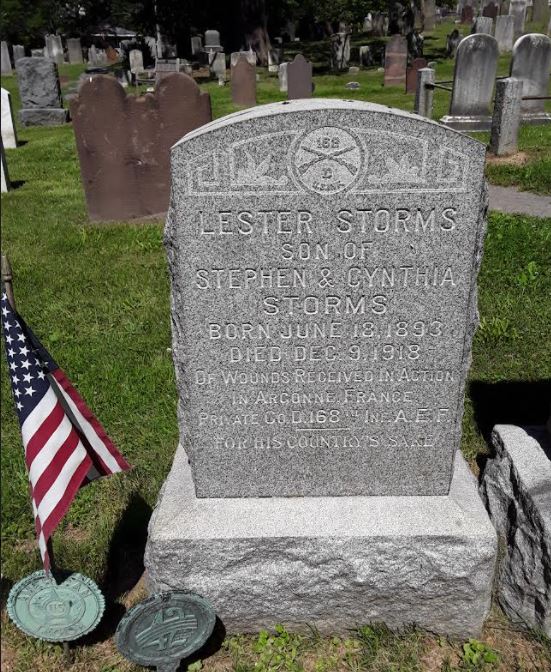 When most people think of Sleepy Hollow, they think of Washington Irving, an early American author. He is buried here, too. 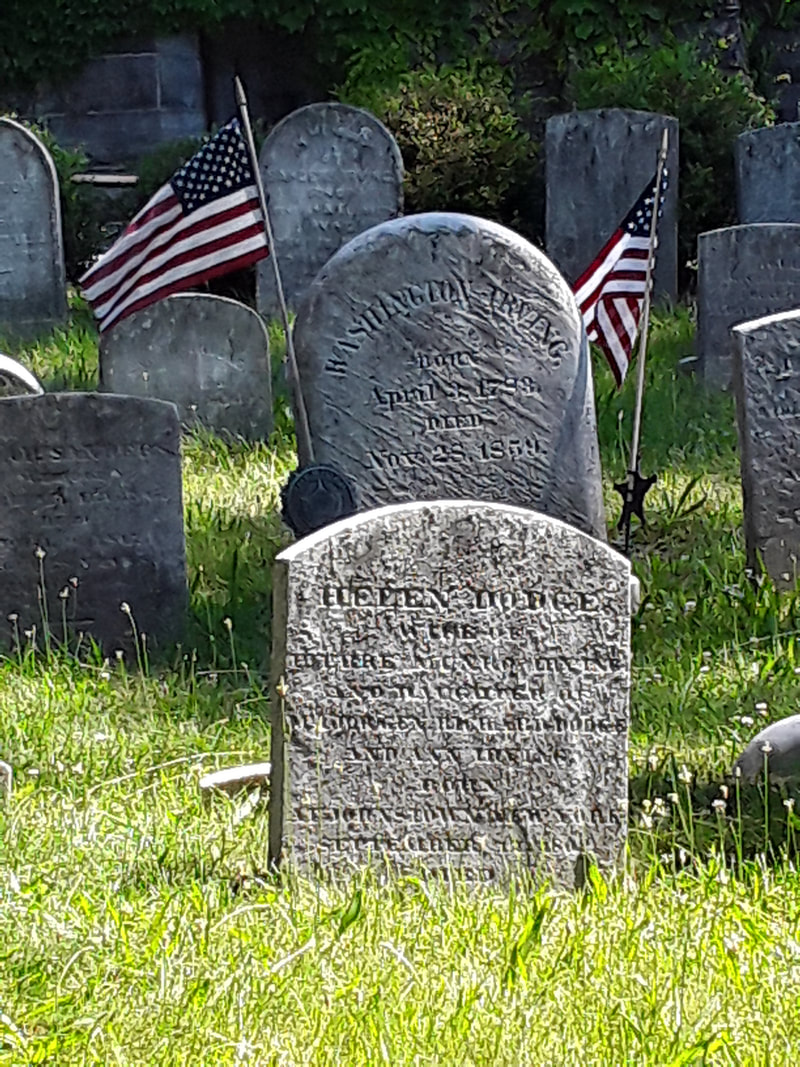 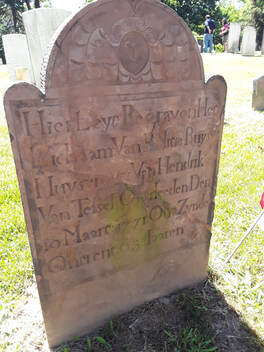 Irving’s short story, The Legend of Sleepy Hollow put this little town on the literary map and into American consciousness. I think most people know the story of the pompous and prudish teacher Ichabod Crane, who meets his match in the strapping farmboy Brom Van Brunt as they battle for the hand of the fair and rich Katrina Van Tassel. (If you don’t know the story, you can read it here.) While the story may be fiction, Irving set it firmly within the real place he lived. The cemetery was filled with Van Tassels. This stone is written in Dutch, but others were in English. It’s clear that this was a prominent family in the community.
And the headless horseman? Supposedly a Hessian soldier who was decapitated by a cannonball during an unnamed battle of the American Revolution, he’d not been searching long for his head, since the story is set in 1790. If he’s searching still, tonight would be the night! Wishing all of my readers a safe Halloween! Jennifer Bohnhoff writes historical fiction. To learn more about her and her books, go to her blog. |



No comments:
Post a Comment