
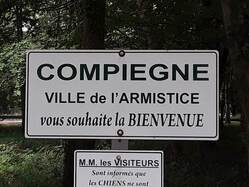
As far as most people are concerned, World War I ended at 11 am. Paris time on November 11, 1918. That is, when the Armistice of Compiègne, which was signed in a railcar at Le Francport, near the French town of Compiègne earlier that morning, took affect.
The war had been winding down for a while already. Russia had left the war in March, 1918, when they agreed to the Treaty of Brest-Litovsk, in which they turned over Finland, the Baltic provinces, parts of Poland and Ukraine to the Central Powers. Other armistices had taken Bulgaria, the Ottoman Empire and the Austro-Hungarian Empire out of the fighting.
The war had been winding down for a while already. Russia had left the war in March, 1918, when they agreed to the Treaty of Brest-Litovsk, in which they turned over Finland, the Baltic provinces, parts of Poland and Ukraine to the Central Powers. Other armistices had taken Bulgaria, the Ottoman Empire and the Austro-Hungarian Empire out of the fighting.
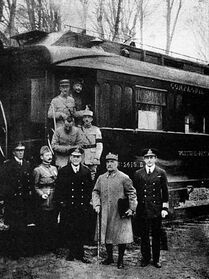
The signing of the Armistice de Compiègne marked a victory for the Allies and a defeat, although not formally a surrender, for Germany. The terms of were largely written by the Allied Supreme Commander, French Marshal Ferdinand Foch. They included the cessation of hostilities on the Western Front, the withdrawal of German forces from west of the Rhine, and Allied occupation of the Rhineland and bridgeheads further east. All infrastructure in Germany was to be preserved for Allied use, and aircraft, warships, and military materiel were to be surrendered. Although Allied prisoners of war and interned civilians were to be released, the treaty did not specify the release of German prisoners, eventual reparations, and the naval blockade of Germany was not to be lifted.
Although the Armistice was officially signed at 5:45 a.m., it did not come into effect until 11am. This was to allow time for the news to reach combatants. There is no reason why 11am was chosen except for the symmetry of the numbers. Fighting continued in many sections of the front right up until the appointed hour, resulting in 10,944 casualties. 2,738 men died on the last day of the war. This led to controversy after the war. In the United States, Congress opened an investigation to find out why and if blame should be placed on the leaders of the American Expeditionary Forces. In France, many graves of French soldiers who died on 11 November were backdated to 10 November.
Although the Armistice was officially signed at 5:45 a.m., it did not come into effect until 11am. This was to allow time for the news to reach combatants. There is no reason why 11am was chosen except for the symmetry of the numbers. Fighting continued in many sections of the front right up until the appointed hour, resulting in 10,944 casualties. 2,738 men died on the last day of the war. This led to controversy after the war. In the United States, Congress opened an investigation to find out why and if blame should be placed on the leaders of the American Expeditionary Forces. In France, many graves of French soldiers who died on 11 November were backdated to 10 November.
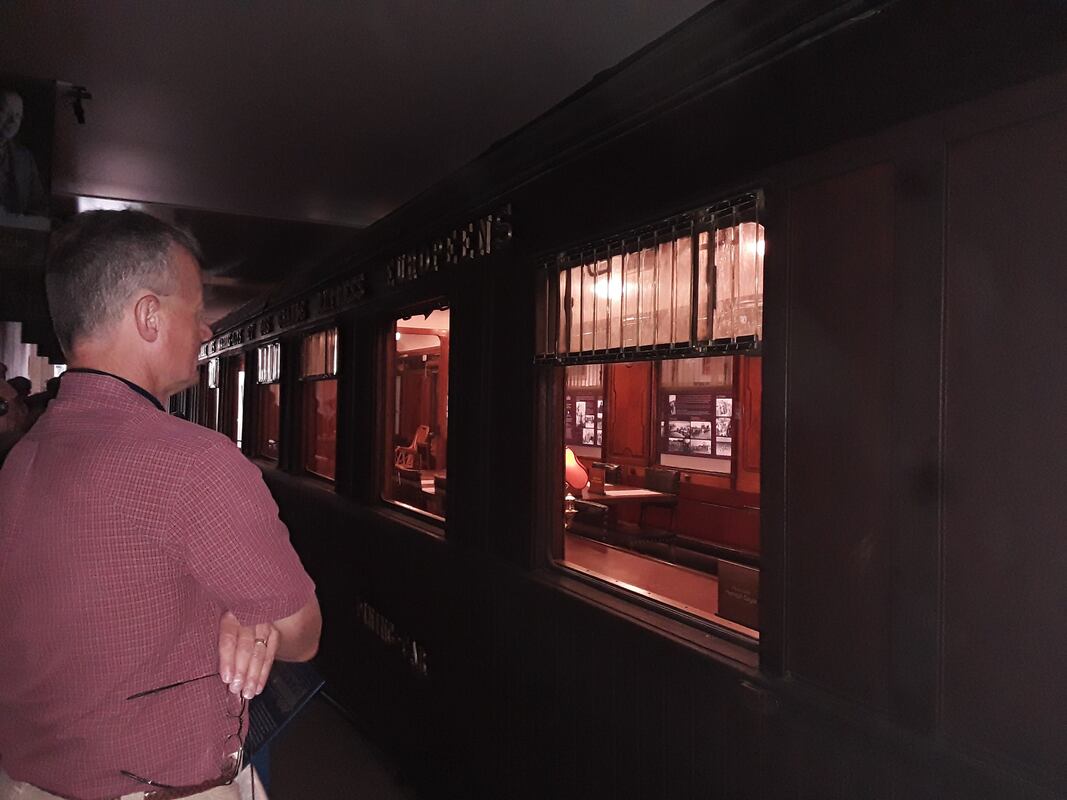 The author's husband looking into the restored train car. It is now kept in a dark room to preserve it.
One reason the fighting continued was that many Allies didn’t trust that the Armistice would last, and wished to be in the most favorable position should fighting resume. Some artillery units reportedly continued to fire on German targets so they wouldn’t have to haul away their spare ammunition. Battery 4 of the US Navy fired its last shot long-range 14-inch railway gun from the Verdun area at 10:57:30 a.m., timed to land far behind the German front line just before the Armistice was scheduled to begin.
When 11a.m. finally did arrive, the guns fell silent along most of the line. In some places, men on both sides laid down their arms, crossed the line, and shook hands. In other places, there was cheering and applause. But in general, soldiers were too tired and too wary that this was an illusion to do anything to celebrate. One British corporal reported: "...the Germans came from their trenches, bowed to us and then went away. That was it. There was nothing with which we could celebrate, except cookies."
When 11a.m. finally did arrive, the guns fell silent along most of the line. In some places, men on both sides laid down their arms, crossed the line, and shook hands. In other places, there was cheering and applause. But in general, soldiers were too tired and too wary that this was an illusion to do anything to celebrate. One British corporal reported: "...the Germans came from their trenches, bowed to us and then went away. That was it. There was nothing with which we could celebrate, except cookies."
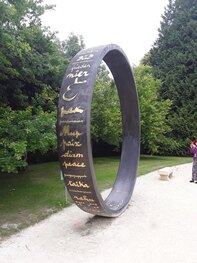 The Peace Memorial at Compiègne
Because this was a world-wide war, news of the armistice did not reach all battlefields at once. The King's African Rifles, fighting in what was then called Northern Rhodesia and is in today's Zambia, did not hear that the war was over for two weeks. When they did, the British commanders contacted the Germans and they their own armistice ceremony.
Although the armistice ended the fighting on the Western Front, the war did not actually, officially conclude until much later. The armistice that began on November 11 lasted until December 13, when the parties involved renegotiated terms that held until January 16, 1919. The peace was delayed two more times before June 28, when the Treaty of Versailles, was finally signed. The treaty was ratified, and the world was finally officially at peace on January 10, 1920.
Although the armistice ended the fighting on the Western Front, the war did not actually, officially conclude until much later. The armistice that began on November 11 lasted until December 13, when the parties involved renegotiated terms that held until January 16, 1919. The peace was delayed two more times before June 28, when the Treaty of Versailles, was finally signed. The treaty was ratified, and the world was finally officially at peace on January 10, 1920.
Jennifer Bohnhoff is the author of A Blaze of Poppies, a novel set in New Mexico and France during World War 1.


No comments:
Post a Comment