
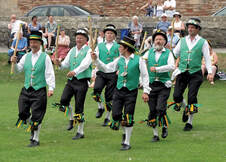
Morris dancing is a type of English folk that has been around since at least the fourteenth century. The earliest record of it is from May 19, 1448, when a ground of Morris dancers in London were paid 7s (35p) for their services. By Elizabethan times it was already considered to be an ancient dance, and references appear to it in a number of early plays
The term 'morris' most likely came from the French word morisque, which means 'a dance.'
Usually, Morris dancing is accompanied by music, but sometimes it is unaccompanied. The dancers often wear bell pads on their shins and carry sticks, swords or handkerchiefs.
The term 'morris' most likely came from the French word morisque, which means 'a dance.'
Usually, Morris dancing is accompanied by music, but sometimes it is unaccompanied. The dancers often wear bell pads on their shins and carry sticks, swords or handkerchiefs.
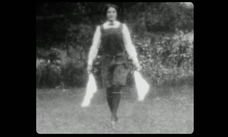
And up until the twentieth century, the rhythmic stepping and intricately choreographed figures were always, exclusively, performed by men.
World War I changed that.
During the First World War, much of the English countryside was largely devoid of their menfolk. Unless women stepped in, fields lay fallow and crops weren't harvested. The situation wasn't much better after the end of the war. In some English towns and villages, male mortality rate approached seventy percent. Just like the fields, women needed to step in if the tradition of Morris dancing was to continue.
World War I changed that.
During the First World War, much of the English countryside was largely devoid of their menfolk. Unless women stepped in, fields lay fallow and crops weren't harvested. The situation wasn't much better after the end of the war. In some English towns and villages, male mortality rate approached seventy percent. Just like the fields, women needed to step in if the tradition of Morris dancing was to continue.
In 1972, an English folk singer named Austin John Marshall heard someone commenting rather derisively on all the older women who participated in Morris dancing, and his heart went out to them. Marshall knew that many of the older ladies who participated in Country Dance Societies were war widows, or women who had lost fiancés or lovers during the Great War. Country dancing kept the memory of their young men alive, and it kept a centuries-old tradition from dying out.
Marshall wrote Whitsun Dance as a tribute to the widows, sweethearts, sisters and daughters of the men lost in World War I. He wrote it fifty years after the war ended. Another fifty has passed since that time. May we continue to keep alive the memories.
Marshall wrote Whitsun Dance as a tribute to the widows, sweethearts, sisters and daughters of the men lost in World War I. He wrote it fifty years after the war ended. Another fifty has passed since that time. May we continue to keep alive the memories.
Whitsun Dance
It's fifty long springtimes since she was a bride,
But still you may see her at each Whitsuntide
In a dress of white linen with ribbons of green,
As green as her memories of loving.
The feet that were nimble tread carefully now,
As gentle a measure as age will allow,
Through groves of white blossoms, by fields of young corn,
Where once she was pledged to her true-love.
The fields they stand empty, the hedges grow (go) free--
No young men to turn them or pastures go see (seed)
They are gone where the forest of oak trees before
Have gone, to be wasted in battle.
Down from the green farmlands and from their loved ones
Marched husbands and brothers and fathers and sons.
There's a fine roll of honor where the Maypole once stood,
And the ladies go dancing at Whitsun.
There's a straight row of houses in these latter days
All covering the downs where the sheep used to graze.
There's a field of red poppies (a gift from the Queen)
But the ladies remember at Whitsun,
And the ladies go dancing at Whitsun.
But still you may see her at each Whitsuntide
In a dress of white linen with ribbons of green,
As green as her memories of loving.
The feet that were nimble tread carefully now,
As gentle a measure as age will allow,
Through groves of white blossoms, by fields of young corn,
Where once she was pledged to her true-love.
The fields they stand empty, the hedges grow (go) free--
No young men to turn them or pastures go see (seed)
They are gone where the forest of oak trees before
Have gone, to be wasted in battle.
Down from the green farmlands and from their loved ones
Marched husbands and brothers and fathers and sons.
There's a fine roll of honor where the Maypole once stood,
And the ladies go dancing at Whitsun.
There's a straight row of houses in these latter days
All covering the downs where the sheep used to graze.
There's a field of red poppies (a gift from the Queen)
But the ladies remember at Whitsun,
And the ladies go dancing at Whitsun.
JJennifer Bohnhoff's historical novel A Blaze of Poppies tells the story of a young rancher from Southern New Mexico who serves as a nurse in a French field hospital in a desperate attempt to keep her family's ranch from being sold, and to stay near the National Guardsman she has learned to love. You can read more about that novel here.


No comments:
Post a Comment