Tuesday, June 28, 2022

Elegy for a Cantankerous Cat


Monday, June 27, 2022

Horses in History: Comanche


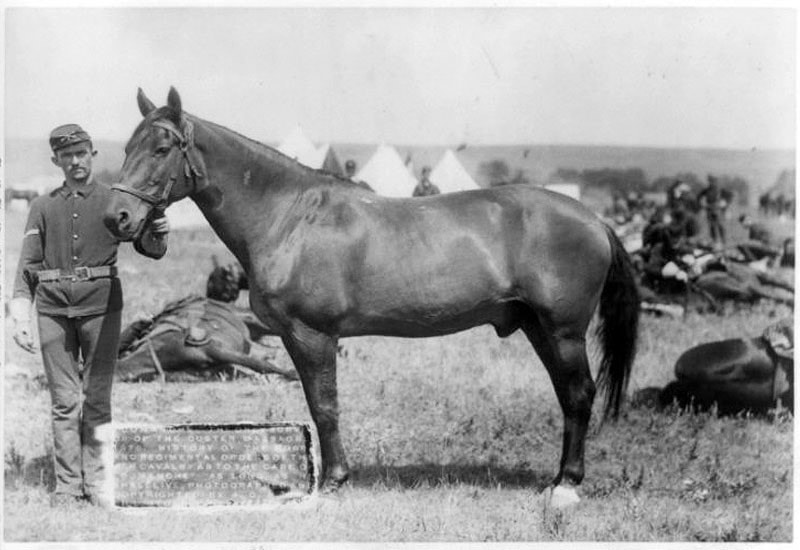
The anniversary of the Battle of the Little Bighorn, which Plains Indians call the Battle of the Greasy Grass and is often called Custer's Last Stand, happened last week. The battle, which took place on June 25-26, 1876 along the Little Bighorn River in southeastern Montana Territory, was an overwhelming victory for the Lakota, Northern Cheyenne, and Arapaho. The 7th Cavalry troops engaged in this battle were all killed. The only survivor was a buckskin gelding named Comanche.

Comanche was born around 1862 on the flat plains that were then called the Great Horse Desert of Texas. Like the thousands of mustangs that roamed the region, he exhibited the black stripe down his back and dun coloration of the early Spanish horses from which they were descended. Comanche had a small white star on his forehead and stood 15 hands tall. Many noted that his big head, thick neck, and short legs were out of proportion for his body. But what he lacked in beauty, he made up for in bravery.
Picture
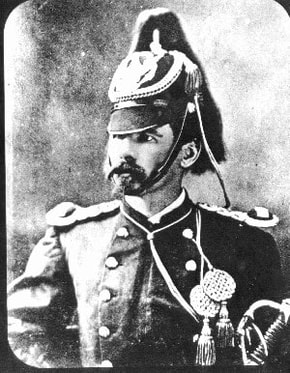
PictureMyles Keogh, 1872
​Comanche was captured in a wild horse muster on April 3, 1868. The army bought him for $90, which was an average price for an upbroken mustang. He was loaded into a railroad car and shipped to Fort Leavenworth, where he and the other horses were branded. First Lieutenant Tom W. Custer, the brother of Lieutenant Colonel George Armstrong Custer bought him and 40 other horses for use by the 7th cavalry.

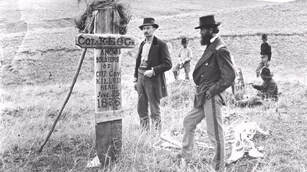
Captain Myles Keogh of the 7th Cavalry’s I Company liked the look of Comanche and bought him for his own personal mount.  In September 1868, while fighting the Comanche in Kansas, the horse was wounded by an arrow in the hindquarters but continued to let Keogh fight from his back. Keogh named his mount “Comanche” after that engagement as a tribute to the horse’s bravery. Comanche was wounded many more times and always exhibited the same toughness that he did in his first battle.

PictureMyles Keogh grave site, 1879.
On June 25, 1876, Captain Keogh rode Comanche into what became known as the Battle of Little Bighorn. When other soldiers arrived at the battlefield two days later, they found that all of the men riding with Custer that day had been killed. Perhaps as many as a hundred of the 7th Cavalry’s horses had survived the battle and were taken by Indian warriors. A yellow bulldog tht had been with the troops was missing, too. Comanche had been left behind, the only living thing left on the battlefield, Even though he wasn't, Comanche became known as the lone survivor of the Battle of Little Bighorn.

It is supposed that the reason Comanche was left behind is that he was close to death and the Indians assumed he wouldn’t make it. Comanche had had arrows sticking out of him and had lost a lot of blood. Four bullets had punctured the back of the shoulder, another had gone through a hoof, and he had one gunshot wound on either hind leg. His coat was matted with dried blood and soil.

Sergeant John Rivers, the 7th Cavalry’s farrier , and an old battle comrade of Myles Keogh, inspected Comanche and decided that he would survive. While the solders were busy burying their 7th Calvary comrades, Rivers took charge of the animal. Comanche was sent Fort Meade, in what is now the Sturgis, South Dakota, where he recovered from his wounds under veterinary care. A year later, he was shipped to Fort Riley, Kansas, where he became the 7th Cavalry’s mascot. Colonel Samuel D. Sturgis, the commanding officer, issued “General Order Number 7," which decreed that the horse would never again be ridden, and that he would always be paraded, draped in black, in all military ceremonies involving the 7th Cavalry.
“The horse known as ‘Comanche” being the only living representative of the bloody tragedy of the Little Big Horn, June 25th, 1876, his kind treatment and comfort shall be a matter of special pride and solicitude on the part of every member of the Seventh Cavalry to the end that his life be preserved to the utmost limit..."
"Further, Company I will see that a special and comfortable stable is fitted for him and he will not be ridden by any person whatsoever, under any circumstances, nor will be put to any kind of work.”
Comanche was given the honorary title of a “Second Commanding Officer” of the 7th Cavalry. He was even “interviewed” for the daily papers when Sergeant Rivers told his story.

In 1891, Comanche died of colic, a common ailment of old horses. He was likely 29 years old. He is one of only three horses who have been given a full military funeral. The only other horses so honored were Black Jack, who served in more than a thousand military funerals in the 1950s and 1960s, and Sergeant Reckless, who served in Korea. 
Picture
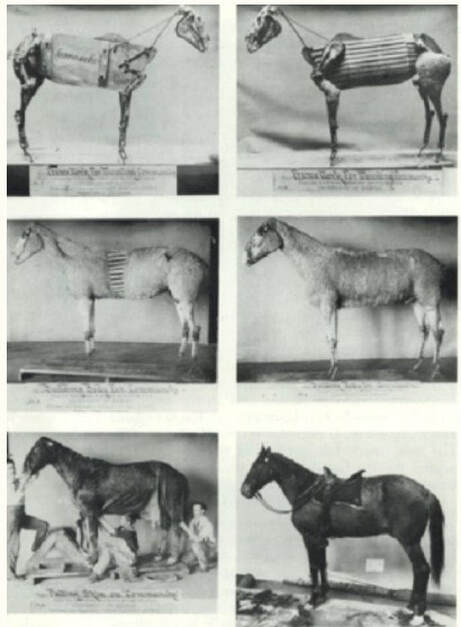
Comanche’s hide was stretched over a frame by Kansas taxidermist Lewis Dyche and  remains on exhibit in the University of Kansas’ Natural History Museum, in Dyche Hall.

Picture
A retired Middle School History and Language Arts teacher, Jennifer Bohnhoff writes historical fiction and contemporary novels for older children and adults. You can read more about her and her books on her blog. 

Wednesday, June 22, 2022

The Death of the Exchange Hotel


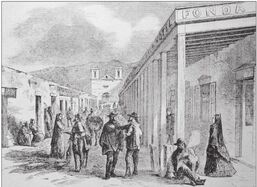
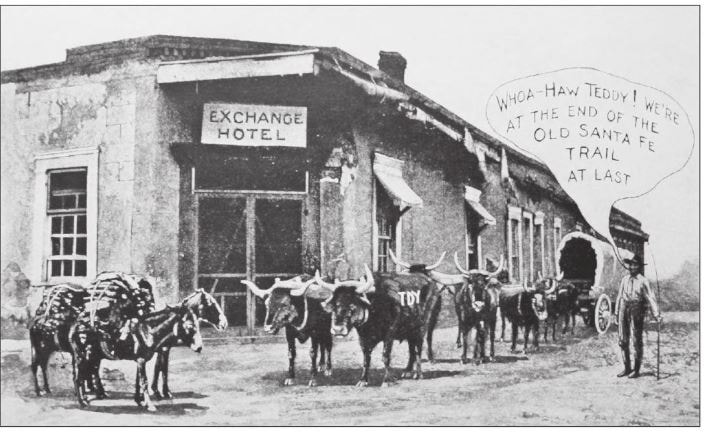
PictureThe first etching of the hotel at the corner of San Francisco and Shelby, by Theodore B. Davis of Harper's Weekly, in 1846. In the background is La Parochia, the church that was built in 1717 and replaced in 1869 by St. Francis Cathedral.
The Exchange Hotel sat on what might be the oldest hotel corner in the United States. The corner of San Francisco and Shelby Street in Santa Fe, New Mexico has held a hotel since, perhaps, before the Pilgrims arrived at Plymouth Rock.

Although there is no documentation before 1822, when the Santa Fe Trail opened, tradition says that an inn, or tavern stood on that corner for hundreds of years before that time. Some suggest that the first inn was built there in 1609, when the city was first founded.. 

Picture
By 1822, the inn (or fonda in Spanish) that stood there was a well-known rendezvous for trappers, traders, pioneers, merchants, soldiers and politicians. Its gaming tables held faro and monte games, and its luncheons were considered the best in town. Located at the end of the Santa Fe Trail and the Camino Real, it was the scene of many celebrations.

n 1846, when General Stephen Watts Kearny conquered New Mexico for the United States as part of the Mexican-American War, the fonda was taken over by Americans. For a few years it was known as The United States Hotel, but by 1850 it had changed its name to The Exchange. 

As the only hotel in town, the Exchange was the site of many grand balls and receptions. John Fremont, Kit Carson, U.S. Grant, Rutherford Hayes, Lew Wallace and William Tecumseh Sherman are known to have stayed here.

But by the turn of the twentieth century, the building that held the Exchange was no longer in its prime. New hotels, such as the Capital, the Palace, and De Vargas, had better amenities. In 1907, the Exchange was converted into a boarding house, which became seedier and seedier over the years. In 1917, a fire damaged much of the building. By 1919, it was slated for demolition.
Picture
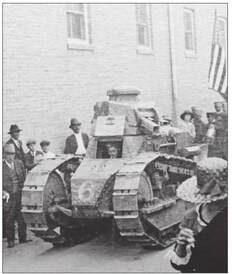
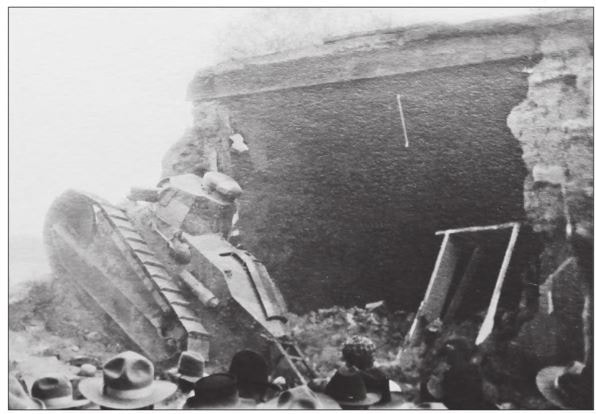
The Exchange met her end during a gigantic Victory Bond Rally in April 1919. During the rally, all the shops in town closed and the citizens gathered in the Plaza to hear speeches by local dignitaries and World War I heroes. People who bought Victory Bonds valued at $100 or more were allowed to drive Mud Puppy, a two man tank that had seen action in the Argonne Forest. By the end of the rally, the corner entrance of the building was demolished. A year later, a new hotel, the La Fonda, rose from the ruins of the Exchange. 

Picture
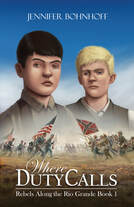
Jennifer Bohnhoff writes historical fiction set in New Mexico. Where Duty Calls, book 1 of the Rebels Along the Rio Grande is about the Civil War. A Blaze of Poppies takes place during World War I.

Thursday, June 16, 2022

Vague and Unrecognized Maps of New Mexico


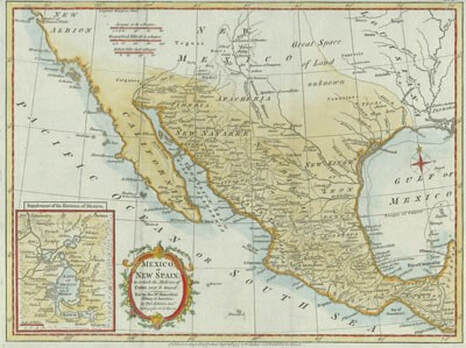
New Mexico had already been settled by Europeans for 314 years when it became the 47th state of the United States on January 6, 1912. During that long period, New Mexico’s borders changed repeatedly as Spain, France, Britain, United States, Mexico, Texas, and the Confederate States of America vied for control.Often, no one agreed on where the borders actually were.
Picture
Mexico or New Spain, published in London in 1777. Note that New Mexico is written across a vast, uncharted area above Mexico and the land between it and Louisiana is called “Great Space of Land unknown.” Courtesy Fray Angélico Chávez History Library.

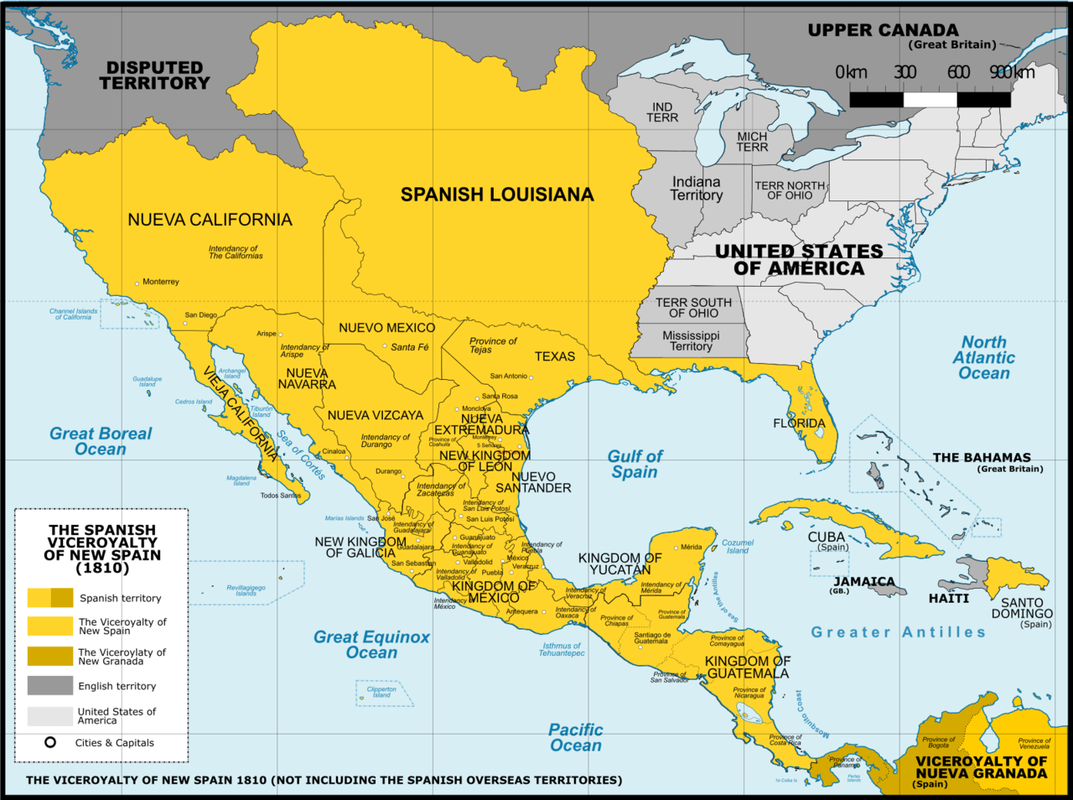
Spain laid claim to a vast area of North America when it established its New World empire in the 16th century. Most of what is now the central and western United States, including Arizona, Colorado, Utah, Texas, New Mexico, and beyond was called New Mexico. As Spain focused on settling Mexico and South America, the north remained unexplored, its boundaries undefined. In 1598, King Felipe II sent Juan de Onate, his soldiers and their families north, to establish a colony in the middle of New Mexico. Located in the upper Rio Grande, their missions were to pacify and convert the Indians and to discourage other Europeans, particularly the French, from settling their northern territories. The French threat ended after France’s defeat in the French & Indian Wars, when Louis XV ceded all of the Louisiana territory, except New Orleans, to Spain, who returned it to France some forty years later when Napoleon demanded it. Napoleon had promised that the land would never be sold to a third party, but he did exactly that a year later, selling it to the United States.
Picture
Picture
Spain’s possession of Texas was uncontested until the United States purchased the Louisiana Territory in 1803. The U.S. claimed the Purchase included all the land between New Orleans and the Rio Grande including most of the New Mexico settlements. Spain claimed that New Mexico and Texas extended to the Missouri River, encompassing land all the way to present day Montana. Since the U.S. had no presence on the Rio Grande and Spain had none along the Missouri, neither country could enforce their claim. New Mexico’s Governor Fernando Chacon tried to force back Lewis and Clark’s expedition to chart the west, but hostile plains Indians drove him back. He did, however, manage to capture Lieutenant Zebulon Pike and his band of explorers in what is now southwestern Colorado in 1806.  Pike and his men were treated well, and after a year’s interrogation were released in New Orleans.

When Mexico declared independence from Spain in 1821, it instituted two policies that increased American presence n New Mexico. First, it allowed trade along the Santa Fe trail.
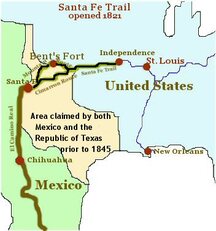
Spain had forbidden New Mexico to trade with anyone but Mexico.  Now Americans brought their influence, along with wagon trains full of goods and supplies from Missouri. Those merchants who settled in New Mexico and became influential in local society and politics.  The Bent Brothers put their trading fort on the east bank of the Arkansas River in what is now Colorado because that river was the northeastern border of Mexican territory at the time. 


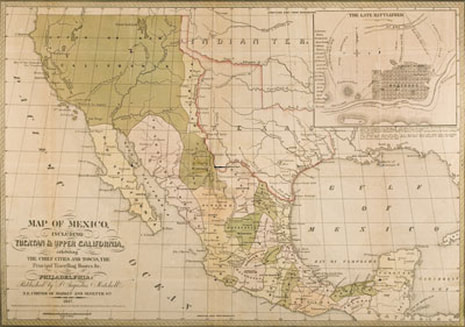
The second decision the Mexican government did was invite Anglo-Americans to settle in the part of the territory known as Texas beginning in 1824. In less than a decade, Americans far outnumbered Hispanics in Texas. They never assimilated into the local culture and won independence in 1836. Mexican authorities never formally acknowledged the Republic of Texas, which claimed territory all the way to the Rio Grande.
Picture
Map published in Philadelphia in 1847 shows Texas’ extending to the east bank of the Rio Grande. Courtesy Fray Angélico Chávez History Library.
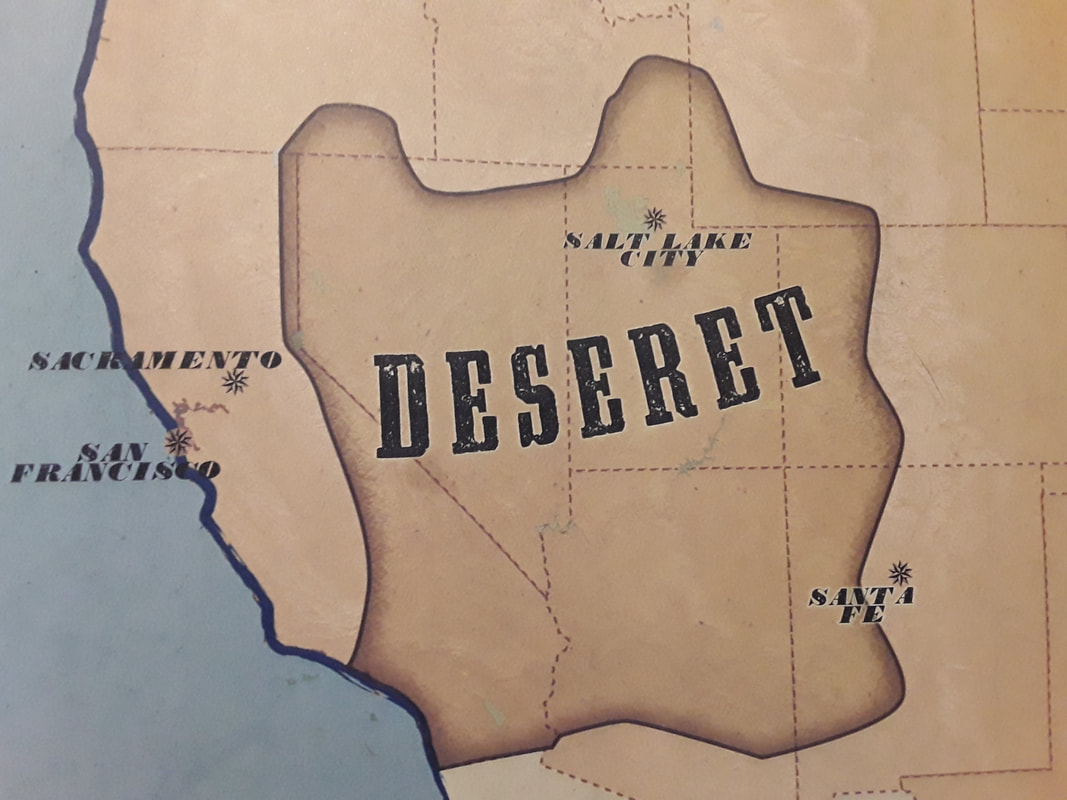
But the Texans were not the only people trying to grab land from New Mexico. Soon after Brigham Young led the Mormons west to the Salt Lake Basin, he petitioned Congress to create a new state for his people. His proposed state, Deseret, included a bit of California coastline and nearly the entire western half of New Mexico. Instead, the federal government created a much smaller state and named it after the Ute tribe.
Picture
Map from Lost States: True Stories of Texlahoma, Transylvania, and other States That Never Made It, by Michael J. Trinklein.
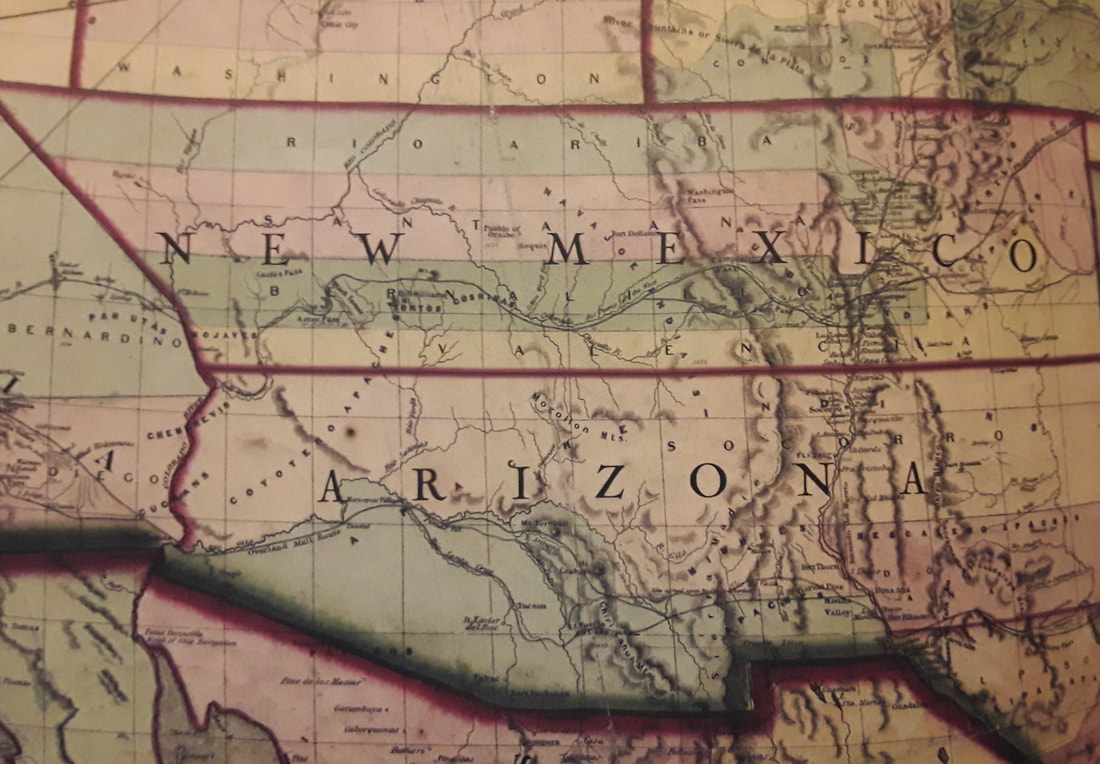
In 1861, Confederate Lieutenant Colonel John Baylor brought his 2nd Texas Cavalry Regiment into New Mexico. He split the territory in two horizontally, creating a Confederate Arizona in the south and a Union New Mexico in the north. This map was never acknowledged by the Union States. 
Picture
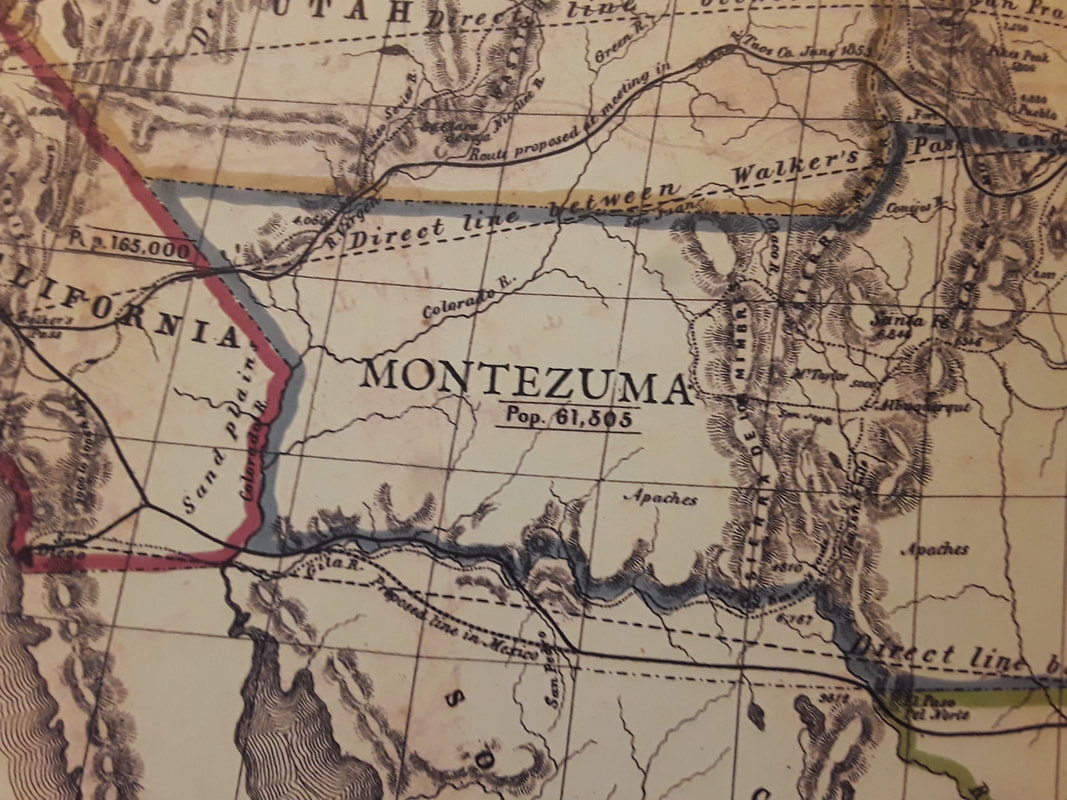
New Mexico became a U.S. territory after the Mexican American War. It fought off a Confederate invasion during the Civil War. However, it languished as a territory for decades. One reason was its name, which remains a confusion to many. In 1887, local leaders suggested switching the territory’s name to Montezuma in the hopes that it would no longer be assumed to be part of the country to our south. The also proposed renaming the territory Lincoln, but an association with the Lincoln County Wars made that inadvisable.   
Picture
Map from Lost States: True Stories of Texlahoma, Transylvania, and other States That Never Made It, by Michael J. Trinklein.
When New Mexico finally did enter the Union as a state, it was very much reduced in size. It's western half became the state of Arizona, and its east was Texas. Large portions of its northern border are now part of Colorado. And still there are countless people who don't know where New Mexico is and what country claims it. 

A native New Mexican, author Jennifer Bohnhoff isn't quite sure where she is most of the time. While her latest book Where Duty Calls is set in New Mexico during the Civil War, she is currently at work on a book about the Folsom people, who lived in New Mexico 10,000 years ago. Unfortunately, they left no maps. 

Sunday, June 12, 2022

A Chocolate Cup of Cheer


Chocolate has been on the menu in New Mexico for thousands of years. It has been used to seal deals, comfort and celebrate, show status, and just to enjoy. Some pottery found in the Four Corners region has the same chocolate residue that is found in ancient Olmec bowls. This indicates that the same trade routes that brought scarlet macaw feathers to Chaco Canyon also brought up chocolate.
Picture
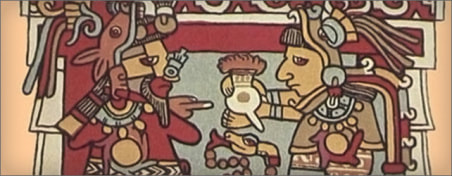
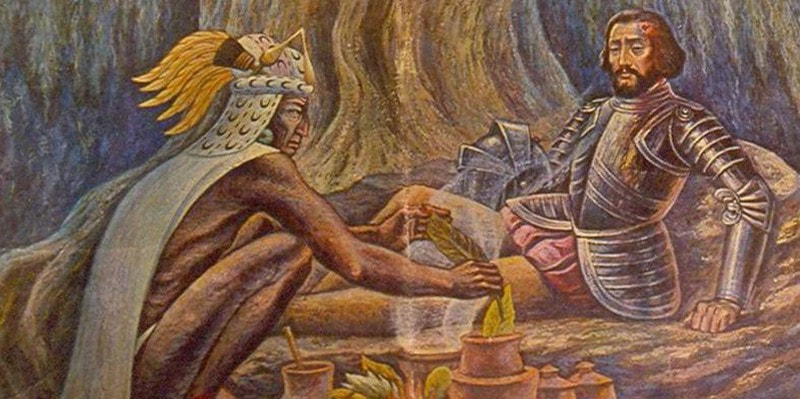
The Spanish learned about chocolate from the Aztecs and took it with them when they explored the north.. In 1692, Diego de Vargas, the newly appointed Spanish Governor of New Mexico, met with a Pueblo leader named Luis Picuri in his tent. The meeting included drinking chocolate.   
Picture
Conquistador Hernan Cortez Experiencing Cacao Ritual
Drinking cocoa became an important part of rituals in New Mexico.
Picture
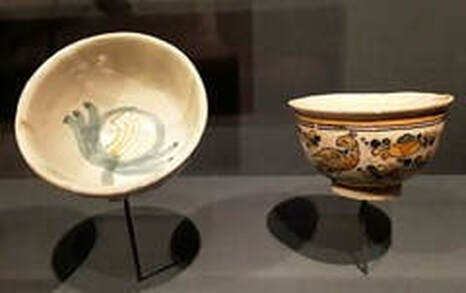
Jicaras, or chocolate cups from Abo and Quarai New Mexico, 17th C. Picture taken at the History Museum in Santa Fe.
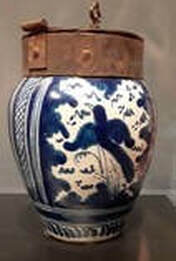
PicturePicture taken at the History Museum in Santa Fe.
The Palace of the Governors, New Mexico’s History Museum, has on display some artifacts that are associated with chocolate.  This storage jar was used to keep cocoa powder. New Mexico was quite isolated and life was rough here. People had few luxuries. The fact that cocoa was stored in such an ornate jar, with a metal lid indicated just how highly prized it was.

One of the ways cocoa is used here in New Mexico is in champurrado, a thick Mexican drink that is especially popular on Dia del Muerto and during La Posada, the nine day festival leading up to Christmas.  


Picture
When there's far too much celebrating going on in his house on Christmas Eve, Raul, one of the main characters in Where Duty Calls takes a cup of champurrado, a thick hot Mexican chocolate drink, outside and sits with his father. The two enjoy the silence outside together. 

It may be a little warm for champurrado where you are (it certainly is too hot here!) but here's the the recipe. I hope you enjoy it, if not to celebrate the publication of Where Duty Calls, then for some other special occasion. 

Champurrado

Ingredients 
3 cups of water
2 cinnamon sticks
1 tsp. anise seeds
¼ cup masa harina 
2 cups milk
1/4 cup Mexican chocolate, chopped 
1/3 cup piloncillo, chopped


1. Put water, cinnamon sticks and anise star into a large saucepan and bring to boil. Remove from the heat, cover, and let steep for 1 hour, then remove the cinnamon sticks and anise by pouring through a sieve.

2. Return the water to the saucepot and put on low heat. Slowly add the masa harina to the warm water, whisking until combined. (a regular whisk will work just fine, but the authentic implement is wooden and is called a molinillo)

3. Add milk, chocolate, and piloncillo and simmer until chocolate is melted and sugar is dissolved. Serve immediately.
 Notes on ingredients: Masa harina is dried corn that has been treated with lye, then ground to the consistency of flour. Do not try to substitute cornmeal for the masa in this recipe. If you cannot find Mexican chocolate, you can substitute 2 oz. of any chocolate that is 60%-70% cacao. Piloncillo is unrefined sugar that has been packed into cones. If you cannot find it, you can substitute turbinado sugar or brown sugar.
Picture
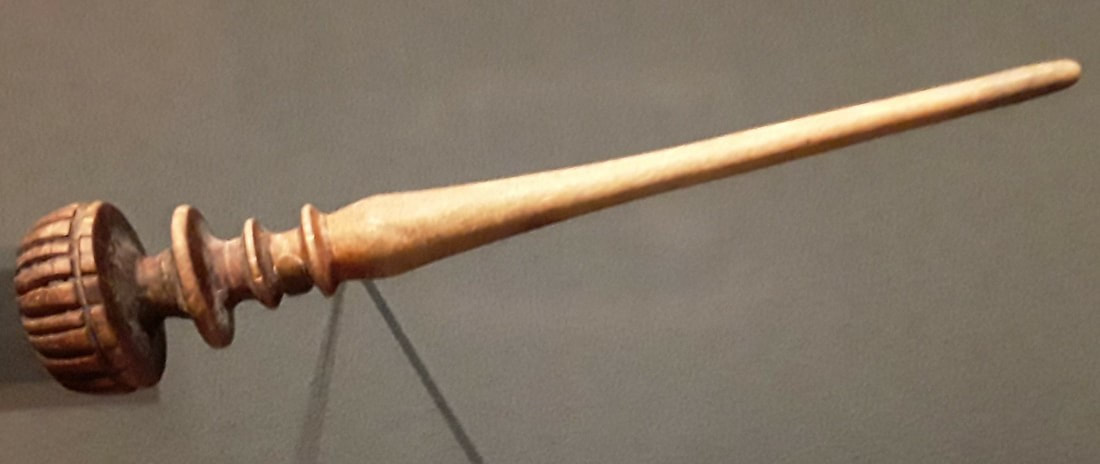
Champurrado was frothed with a molinillo, or chocolate whisk, The one above is from about 1830, and looks very similar to modern versions. The large end would be placed in the pot of hot chocolate and the thin handle was held between the palms of the hands and spun to make the beverage frothy.

Picture
Where Duty Calls  is the first in a trilogy of middle grade novels set in New Mexico during the American Civil War. Published by Kinkajou Press, a division of Artemesia Publishing, it is available in paperback and ebook online and in bookstores. Ask your local bookstore to order a copy if they don't have one in stock. Signed copies can be purchased directly from the author. 

Jennifer Bohnhoff is a native New Mexican who taught New Mexico History to Middle Schoolers. She now stays home and writes. She is available for class and group presentations on the Civil War in New Mexico and on other subjects that tie into her books. 

Wednesday, June 8, 2022

Why did the Confederacy want New Mexico?


PictureAn illustration by Ian Bristow in Where Duty Calls.
New Mexico is a dry and harsh land. We do not have the soil or the water to support plantations. Yet, in 1861 a Confederate force entered the state. Why would they bother? The answer lies with one man, who convinced the South that there were two good reasons for the Confederacy to want this territory.

​The U.S. Army prior to the Civil War was rather small. Its ten infantry regiments, four artillery regiments, three mounted infantry regiments, and two regiments each of cavalry and dragoons were scattered across the continent, with only 18 of the 197 companies garrisoned east of the Mississippi River. Of the 16,367 men in the Army, 1,108 were commissioned officers. When the Civil War broke out in April 1861, about 20% of these officers resigned. Most of these men were Southerners by birth and chose to join the Confederate Army. 
Picture
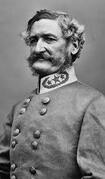
​One of the men who resigned was Henry H. Sibley, a native of Louisiana who was serving New Mexico Territory with the 2nd U.S. Dragoons. Sibley resigned his commission on May 13, 1861, the day he was supposed to be promoted to Major. He accepted an appointment to colonel in the Confederate army three days later. A month after that, he became a Brigadier General, in command of a West Texas brigade of volunteer cavalry. He recruited and gathered his force in San Antonio and named it the Army of New Mexico. 

​Taking New Mexico was only the first step in Sibley’s bold plan to capture the west for the Confederacy. And the New Mexico Campaign would cost the South almost nothing. Sibley assured Confederate President Jefferson Davis that his troops would be able to live off the land, resupplying themselves with Union stores as they captured first Fort Craig and then Fort Union. But even at no cost, why would the South want New Mexico? There were two reasons: access and idealism.
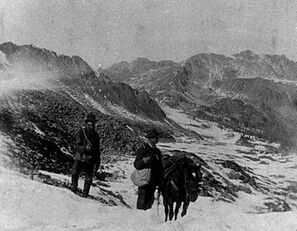
PictureGold prospectors in the Rocky Mountains of western Kansas Territory, near Pike's Peak in what would become Colorado
​New Mexico provided access to more desirable lands. One of those lands was Colorado, New Mexico’s neighbor to the north. If Sibley could wrest the Union Army from New Mexico, he could take control of Fort Union. In addition to having the greatest stockpile of supplies in the west, the fort could become a forward base of supply from which to continue north. Gold had been discovered in Colorado in 1858.  Sibley argued that capturing a territory filled with gold and silver mines would help replenish the badly depleted Confederate treasury. The Rio Grande was a natural conduit to Colorado, guaranteeing water to the troops and their mounts as they traveled north. 

PictureJohn Baylor, governor of Confederate Arizona.
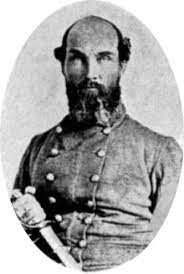
​Once Sibley had captured the goldfields of Colorado, he planned to turn west and take the second on his list of desirable lands, California. By July of 1861, the Union Navy had established a blockade of all the major southern ports from Virginia to Texas. The Confederacy desperately needed to establish a new supply line to the South. Sibley argued that this could be done through the warm-water ports of California. The southern part of the territory, including the land acquired by the United State in the Gadsden Purchase of 1853, had already been secured for the Confederacy by Lieutenant John R. Baylor, who had ridden in and taken control in July, 1861. This land was the most promising for building a transcontinental railroad, which would then link the California ports to Southern cities.  

Picture
Picture
The deep water port of Los Angeles
​But acquiring Colorado and California for the South was not reason enough for Sibley to invade New Mexico. Tied into the need for a southern port and a railroad was the ideal of Manifest Destiny. In 1845, editor John Louis O'Sullivan had coined “Manifest Destiny” to promote the annexation of Texas and the acquisition of the Oregon territory. Americans began believing in a country that stretched from sea to shinning sea, from the Atlantic seaboard to the shores of the Pacific. When the country divided during the War, this dream was taken up by both the North and the South. New Mexico Territory would be part of the wide swath of land the Confederacy needed to prove their own destiny, both to themselves and to the other nations of the world. 
Picture
Emanuel Gottlieb Leutze, Westward the Course of Empire Takes Its Way (mural study, U.S. Capitol), 1861
In the end, Sibley's dreams and the dreams of the Confederacy could not overcome reality. The Army of New Mexico could not live off the land. They had far too much hoofstock for the amount of fodder available in the dry desert. The local population, which lived just above subsistence level in even the best of times, could not support the troops. After the war, in a letter to John McRae, father of the South Carolina-born Union Captain Alexander McRae, who fought bravely and was killed at the Battle of Valverde, General Sibley wrote “You will naturally speculate upon the causes of my precipitate evacuation of the Territory of New Mexico after it had been virtually conquered. My dear Sir, we beat the enemy whenever we encountered him. The famished country beat us.”

Picture
Retired history teacher Jennifer Bohnhoff has written a middle grade novel about the Confederate invasion of New Mexico during the Civil War. Where Duty Calls, available from Kinkajou Press, a division of Artemesia Publishing, is the first in a trilogy of novels entitled Rebels Along the Rio Grand

Larches

  This past October my husband and I took a trip to New England to see the turning foliage. We were driving through the northern part of Ver...