
Chocolate has been on the menu in New Mexico for thousands of years. It has been used to seal deals, comfort and celebrate, show status, and just to enjoy. Some pottery found in the Four Corners region has the same chocolate residue that is found in ancient Olmec bowls. This indicates that the same trade routes that brought scarlet macaw feathers to Chaco Canyon also brought up chocolate.
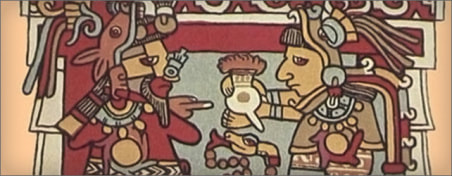
The Spanish learned about chocolate from the Aztecs and took it with them when they explored the north.. In 1692, Diego de Vargas, the newly appointed Spanish Governor of New Mexico, met with a Pueblo leader named Luis Picuri in his tent. The meeting included drinking chocolate.
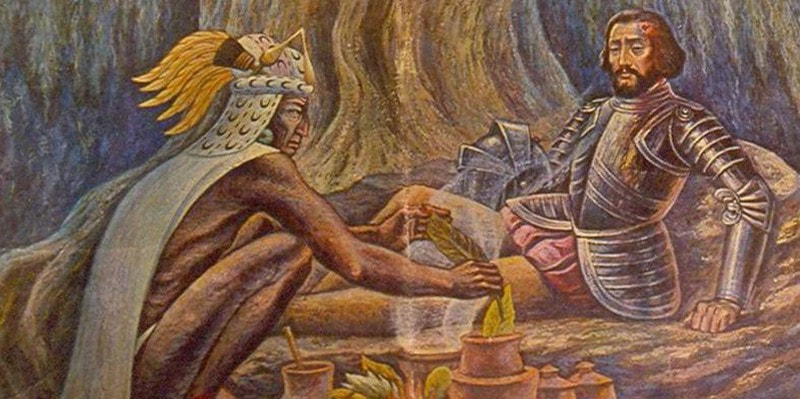
Conquistador Hernan Cortez Experiencing Cacao Ritual
Drinking cocoa became an important part of rituals in New Mexico.
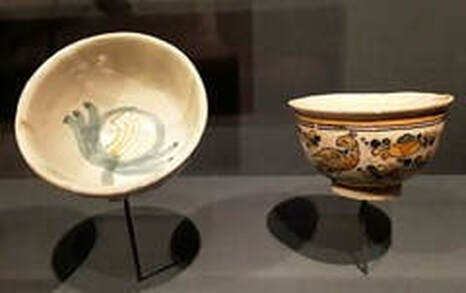
Jicaras, or chocolate cups from Abo and Quarai New Mexico, 17th C. Picture taken at the History Museum in Santa Fe.
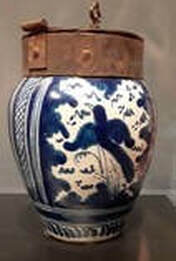 Picture taken at the History Museum in Santa Fe.
The Palace of the Governors, New Mexico’s History Museum, has on display some artifacts that are associated with chocolate. This storage jar was used to keep cocoa powder. New Mexico was quite isolated and life was rough here. People had few luxuries. The fact that cocoa was stored in such an ornate jar, with a metal lid indicated just how highly prized it was.
One of the ways cocoa is used here in New Mexico is in champurrado, a thick Mexican drink that is especially popular on Dia del Muerto and during La Posada, the nine day festival leading up to Christmas.
One of the ways cocoa is used here in New Mexico is in champurrado, a thick Mexican drink that is especially popular on Dia del Muerto and during La Posada, the nine day festival leading up to Christmas.
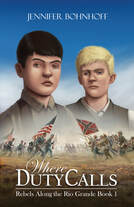
When there's far too much celebrating going on in his house on Christmas Eve, Raul, one of the main characters in Where Duty Calls takes a cup of champurrado, a thick hot Mexican chocolate drink, outside and sits with his father. The two enjoy the silence outside together.
It may be a little warm for champurrado where you are (it certainly is too hot here!) but here's the the recipe. I hope you enjoy it, if not to celebrate the publication of Where Duty Calls, then for some other special occasion.
It may be a little warm for champurrado where you are (it certainly is too hot here!) but here's the the recipe. I hope you enjoy it, if not to celebrate the publication of Where Duty Calls, then for some other special occasion.
Champurrado
Ingredients
3 cups of water
2 cinnamon sticks
1 tsp. anise seeds
¼ cup masa harina
2 cups milk
1/4 cup Mexican chocolate, chopped
1/3 cup piloncillo, chopped
1. Put water, cinnamon sticks and anise star into a large saucepan and bring to boil. Remove from the heat, cover, and let steep for 1 hour, then remove the cinnamon sticks and anise by pouring through a sieve.
2. Return the water to the saucepot and put on low heat. Slowly add the masa harina to the warm water, whisking until combined. (a regular whisk will work just fine, but the authentic implement is wooden and is called a molinillo)
3. Add milk, chocolate, and piloncillo and simmer until chocolate is melted and sugar is dissolved. Serve immediately. Notes on ingredients: Masa harina is dried corn that has been treated with lye, then ground to the consistency of flour. Do not try to substitute cornmeal for the masa in this recipe. If you cannot find Mexican chocolate, you can substitute 2 oz. of any chocolate that is 60%-70% cacao. Piloncillo is unrefined sugar that has been packed into cones. If you cannot find it, you can substitute turbinado sugar or brown sugar.
3 cups of water
2 cinnamon sticks
1 tsp. anise seeds
¼ cup masa harina
2 cups milk
1/4 cup Mexican chocolate, chopped
1/3 cup piloncillo, chopped
1. Put water, cinnamon sticks and anise star into a large saucepan and bring to boil. Remove from the heat, cover, and let steep for 1 hour, then remove the cinnamon sticks and anise by pouring through a sieve.
2. Return the water to the saucepot and put on low heat. Slowly add the masa harina to the warm water, whisking until combined. (a regular whisk will work just fine, but the authentic implement is wooden and is called a molinillo)
3. Add milk, chocolate, and piloncillo and simmer until chocolate is melted and sugar is dissolved. Serve immediately. Notes on ingredients: Masa harina is dried corn that has been treated with lye, then ground to the consistency of flour. Do not try to substitute cornmeal for the masa in this recipe. If you cannot find Mexican chocolate, you can substitute 2 oz. of any chocolate that is 60%-70% cacao. Piloncillo is unrefined sugar that has been packed into cones. If you cannot find it, you can substitute turbinado sugar or brown sugar.
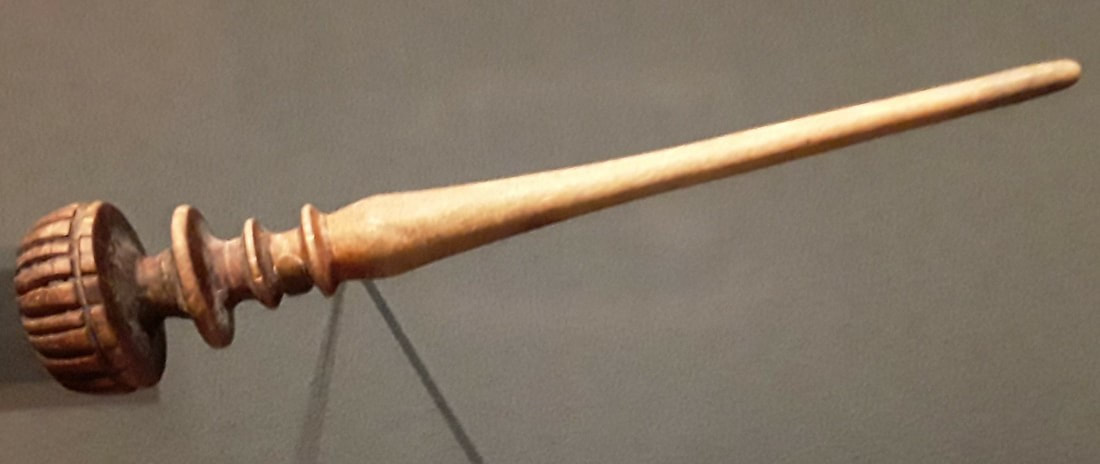
Champurrado was frothed with a molinillo, or chocolate whisk, The one above is from about 1830, and looks very similar to modern versions. The large end would be placed in the pot of hot chocolate and the thin handle was held between the palms of the hands and spun to make the beverage frothy.

Where Duty Calls is the first in a trilogy of middle grade novels set in New Mexico during the American Civil War. Published by Kinkajou Press, a division of Artemesia Publishing, it is available in paperback and ebook online and in bookstores. Ask your local bookstore to order a copy if they don't have one in stock. Signed copies can be purchased directly from the author.
Jennifer Bohnhoff is a native New Mexican who taught New Mexico History to Middle Schoolers. She now stays home and writes. She is available for class and group presentations on the Civil War in New Mexico and on other subjects that tie into her books.
Jennifer Bohnhoff is a native New Mexican who taught New Mexico History to Middle Schoolers. She now stays home and writes. She is available for class and group presentations on the Civil War in New Mexico and on other subjects that tie into her books.


No comments:
Post a Comment