Sunday, July 18, 2021

Bobbed Hair and Bravery


Sunday, July 11, 2021

Elizabeth Garrett: Songbird of the Southwest


Picture
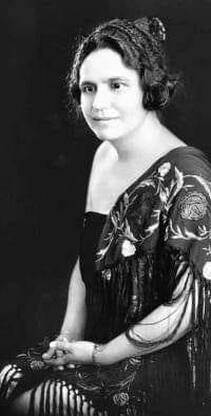
Elizabeth Garrett may not have the name recognition of her famous father, but she deserves to be well known among New Mexicans for her personal bravery and her contributions to her state.

Elizabeth’s father was Pat Garret, a bartender, customs agent, and lawman who was sheriff of both Lincoln and Doña Ana Counties in New Mexico. He is most known for killing Billy the Kid, then coauthoring a book titled The Authentic Life of Billy, the Kid, which for decades was considered the most authoritative biography of the famous outlaw. 

Pat Garret and his second wife, Apolinaria Gutierrez Garrett had eight children. Elizabeth, the third child, was born on October 9, 1885 in their home in Eagle Creek, outside the small community of Alto, in New Mexico’s Sierra Blanca Mountains. In the same year, the nearby town of Ruidoso was established. 


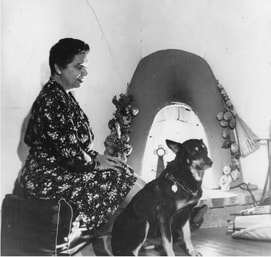
PictureMrs. Elizabeth Garrett and Teene, her seeing-eye dog, at her 'La Carita' home in Roswell, New Mexico. Courtesy of the Palace of the Governors Photo Archives (NMHM/DCA), 057207.
Elizabeth’s life was never easy but she had an independent spirit and a can-do attitude. It is unsure whether she was born blind or lost her sight at an early age. Soon after her birth, the family moved to Roswell, where she led an active outdoor life, riding horses, playing in her family’s apple orchard, and doing all the things the other children did. When she was six, she was sent to the Texas School for the Blind in Austin, where her education included the musical instruction that would guide her future. When she graduated, she rejoined her family, who had moved to El Paso when her father began working as a Customs Officer. When the family moved to Las Cruces, Elizabeth stayed alone in El Paso for three more years so she could continue to teach music there. After that, she moved to Roswell and supervised the building of her dream home, a five-room adobe.

Elizabeth composed and sang her own songs at performances around the state and the country. She once performed for the prisoners at New York’s infamous Sing Sing Prison. Her most memorable song is "O, Fair New Mexico," which she wrote in 1915. Two years later,  New Mexico Governor Washington E. Lindsey asked her to sing it to the state legislature, who unanimously voted to make it the official state song the very next day.

Elizabeth Garrett died in Roswell on October 16, 1947 after falling while out on a walk.

O fair New Mexico

Under a sky of azure,
Where balmy breezes blow,
Kissed by the golden sunshine,
Is Nuevo Mejico.
Land of the Montezuma,
With fiery hearts aglow,
Land of the deeds historic,
Is Nuevo Mejico.

O, Fair New Mexico,
We love, we love you so,
Our hearts with pride o’reflow,
No matter where we go.
O, Fair New Mexico,
We love, we love you so,
The grandest state to know
New Mexico.

Rugged and high sierras,
With deep canyons below,
Dotted with fertile valleys,
Is Nuevo Mejico.
Fields full of sweet alfalfa,
Richest perfumes bestow,
State of apple blossoms,
Is Nuevo Mejico.

O, Fair New Mexico,
We love, we love you so,
Our hearts with pride o’reflow,
No matter where we go.
O, Fair New Mexico,
We love, we love you so,
The grandest state to know
New Mexico.

Days that are full of heart-dreams,
Nights when the moon hangs low;
Beaming its benedictions,
O’er Nuevo Mejico.
Land with its bright manana,
Coming through weal and woe;
State of esperanza,
Is Nuevo Mejico.

O, Fair New Mexico,
We love, we love you so,
Our hearts with pride o’reflow,
No matter where we go.
O, Fair New Mexico,
We love, we love you so,
The grandest state to know
New Mexico.
"O, Fair New Mexico" is a tango in 2/4 time. I believe New Mexico is the only state that has a tango as its state song. It is in the key of A flat major. Its three stanzas, with refrain, describe the climate, geography, agriculture, and overall beauty of the state of New Mexico. In order to show the two cultures that Ms. Garrett had running in her own veins, each stanza uses the Spanish words "Nuevo México," while the refrain uses "New Mexico."

New Mexicans really like their music, and its legislators like to acknowledge that face. While "O, Fair New Mexico" remains the official state song, the state also has an official Spanish-language state song, a state bilingual song, a state ballad, and an official cowboy song.


Picture
​In February 1937, Elizabeth Garrett gave an interview given to Works Progress Administration writer Georgia Redfield, where she said this about her famous father: “Quite frequently,” said Elizabeth Garrett, “my father had to bring harmony with a gun. I try to do so by carrying a tune.” You can read the transcript of the interview here.


Jennifer Bohnhoff is a native New Mexican and a former New Mexico history teacher. She lives in the mountains of central New Mexico, where she is presently writing the third in a trilogy of historical novels set in New Mexico during the Civil War. The first in the series, Where Duty Calls," will be published by Kinkajou Press in May 2022.
​To read more about her and her writing, click here.

Sunday, July 4, 2021

Cookies and Quakers


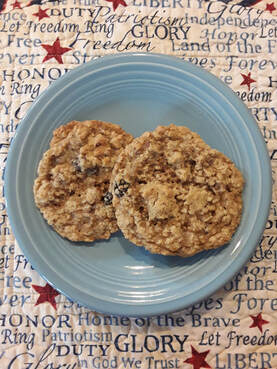
My husband loves cookies. He comes by that love naturally: his mother was a prolific cookie baker. Her Christmas cookie platter brimmed with dozens of different types of cookies. I didn’t get all of her recipes, and even if I did, I couldn’t match my mother-in-law’s cookie baking skills, but I’ve tried, for my husband’s sake. Although he likes many kinds of cookies, these oatmeal and raisin ones are one of his favorites. They are chewy and satisfying and, as cookies go, good for you. I added ground flax to this recipe around 20 years ago, when Hank developed high cholesterol. The doctor said that if he didn’t get his numbers down, he’d have to go on medication. Hank started exercising more, and I added almonds to his lunches, more fruits and veggies to all meals, and flax and oatmeal to many of my recipes. It seemed to do the trick. Hank’s still medication-free and his cholesterol numbers are good.

​Hank’s Special Oatmeal Raisin Cookies

Picture
¾ cup sugar
¼ cup brown sugar
½ cup butter, softened
½ tsp vanilla
1 egg
½ tsp baking soda
¼ tsp salt
½ tsp apple pie spice (you can use cinnamon if you prefer)
3/4 cup flour
2 tbs ground flax
1 ½ cup quick-cooking oats (you can use regular oats, and your cookies will be a little chewier)
½ cup raisins
½ cup chopped pecans
 
Heat oven to 375°.
 
In large bowl, beat sugar, brown sugar and butter until light and fluffy.
Add vanilla and egg and blend well.
Add baking soda, salt, apple pie spice, flour, and flax and blend well.
Stir in oats, raisins and nuts.
 
Drop by rounded tablespoonfuls, 2” apart, onto greased cookie sheets.
Bake at 375° for 8-10 minutes until golden brown.
Cool 1 minute, then use a spatula to remove from cookie sheets onto a cooling rack.


​Famous American Quakers

Picture
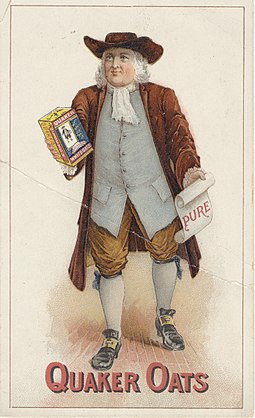
Unless you’re like me and use generic and store brands, the oats you use for these cookies might come from a box that has a picture of a Quaker on it. According to the Quaker Oats Company, this man was America's first registered trademark for a breakfast cereal. Registered on September 4th, 1877, the logo featured a full-length Quaker man holding a scroll with the word "Pure" written across it.
 
Back in 1909, the company identified this figure as William Penn, the founder of the Commonwealth of Pennsylvania, and called him the "standard bearer of the Quakers and of Quaker Oats." Now, however, the company says that he is not the representation of an actual person, but symbolizes the Quaker virtues of honesty, integrity, purity and strength.


Picture
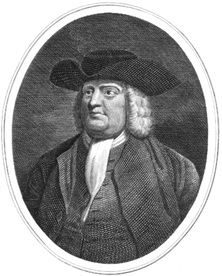
William Penn was born in England on October 14, 1644.  King Charles II owed his father, the admiral and politician Sir William Penn, a great deal of money, and in 1681 he handed over a large piece of his North American land holdings along the North Atlantic coast in what is now Pennsylvania and Delaware to cover his debts. The younger Penn, who had been imprisoned in the Tower of London several times for his membership in the Religious Society of Friends, commonly known as Quakers, immediately set sail for America. As soon as he arrived, he convened the first Pennsylvania General Assembly. The democratic principles that he established in the Pennsylvania Frame of Government served as an inspiration for the members of the convention framing the new Constitution of the United States in Philadelphia in 1787.
 
Penn’s pacifist theories helped him propose a European Assembly, whose deputies would discuss and peacefully adjudicate issues among the nations, an idea no dissimilar to the European Union in place today.
 
Penn founded the city of Philadelphia, directing that it be laid out in an easy-to-navigate grid that was very different from the tangled street of his native London. Because Pennsylvania means "Penn's Woods," he named the cross streets after types of trees.
 
In addition to being an early advocate of democracy and religious freedom, Penn is known for his good relations and successful treaties with the Lenape Native Americans. He died on July 30, 1718.


But although he is the most famous Quaker, William Penn is not the only one. American folk hero Daniel Boone’s family emigrated to the U.S. because they were Quakers and raised their famous son in their beliefs.  Cassius Coolidge, the painter who created the famous Dogs Playing Poker was born in upstate New York into a family of abolitionist Quakers. Actor James Dean was raised Quaker and is buried in a Quaker cemetery. President Richard Milhous Nixon’s mother was from an old Quaker family, and he attended a Quaker college in California named Whittier College. Joan Baez's father, Albert, a co-inventor of the X-ray microscope and a well-known physicist, converted to Quakerism when Joan was a child, influencing her anti-war stand. Blues guitarist Bonnie Raitt was also raised in a Quaker family. As far as I know, none of them have ever advocated eating oatmeal.  

Picture
Author Jennifer Bohnhoff was raised Lutheran and eats a lot of oatmeal. She is especially fond of it when it is in cookies. Read all her blogs here and sign up for her newsletter here.

Sunday, June 27, 2021

Horses in History: Traveller


PictureThis Photo by Unknown Author is licensed under CC BY-SA
Horses served an important role in the Civil War, and suffered as greatly as the men beneath them. It has been estimated that 1.5 million horses and mules died in the Civil War. Five million pounds of dead horses was removed from the Gettysburg battlefield alone. But of all the horses that served in this period, none is as famous as Traveller.

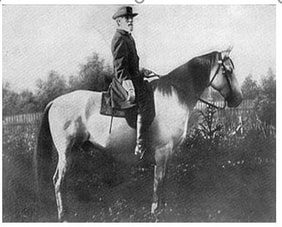
Traveller, spelled as the British do, with two Ls, was an iron grey American Saddlebred with black points and a dark mane and tail. The 16-hand tall horse was sired by a race horse named Grey Eagle, who had won $20,000 in a Louisville, Kentucky stake race, and born in 1857 in Greenbrier County, in what is now West Virginia. His first owner named him “Jeff Davis,” after the Mississippi Senator and Mexican American War hero who eventually became the President of the Confederacy.

In 1861 the son of the original owner took the horse with him when he joined the legion of former Virginia governor Brig. Gen. Henry Wise. He sold the horse to Captain Joseph M. Broun, a quartermaster of Wise’s Legion’s 3rd Infantry. Broun renamed the horse “Greenbriar.” When Robert E. Lee arrived to advise Wise in late August 1861, he saw Broun’s horse and was immediately taken with him, calling the horse ‘my colt’ and saying he would need it before the war was over. Aware of the difference in their ranks, Broun offered to give the horse to Lee, who declined the offer. Broun then offered to sell Greenbriar to Lee for the same price he had himself paid for the horse. Lee added an extra $15 to cover the depreciating value of the Confederate dollar. Lee bought the horse in February 1862 and renamed him Traveller because of his ability to walk at a fast pace.
 
Although Traveller was not the only horse Lee rode from that time on, it was the one he rode and most and the one that became linked to him in the public’s eye. He was known for great endurance during long marches, and being unflappable in battle. He was not perfect, though. Lee’s youngest son, Robert E. Lee Jr later wrote that the horse fretted a lot, especially when in crowds if he wasn’t regularly exercised. At the Second Battle of Manassas he shied at enemy movements, rearing and throwing the General, who broke bones in both his hands during the fall. 

After the war, Lee continued to keep the grey near him. He brought Traveller to Washington University when he became its president, and the pair were a common site on campus. Traveller became such a celebrity that his mane and tail thinned because students plucked the dark hairs as souvenirs. Locks of Lee’s hair and Traveller’s mane are still part of the collection at Arlington House, Lee’s former home on the grounds of Arlington National Cemetery.

When Lee died in October of 1870, Traveller was draped in black crepe walked, riderless, behind the funeral hearse. Less than a year later, Traveller stepped on a nail and contracted tetanus. He died June of 1871 and was buried along a creek adjoining Washington University’s campus near Lee Chapel.

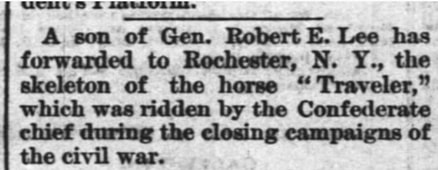
But Traveller’s story didn’t end with his death. In 1875, Custis Lee, who had succeeded his father as President of the institution that was renamed Washington and Lee University after the General’s death, exhumed Traveller and sent his bones to Henry Augustus Ward, a University of Rochester faculty member who traveled the world acquiring a massive assortment of geological and zoological specimens and taxidermy samples for museums.
Picture
CLIPPED FROM The Times-Picayune New Orleans, Louisiana 15 Dec 1875, Wed
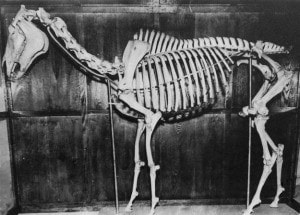
PictureAn undated image of Traveller’s skeleton on display in Lexington.
The skeleton was returned to Washington and Lee in 1907, and later moved to the basement of Lee Chapel. By the time his bones were reburied in front of the chapel in 1960, the bones had deteriorated and were covered with the penned signatures of visitors. 


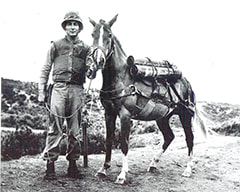
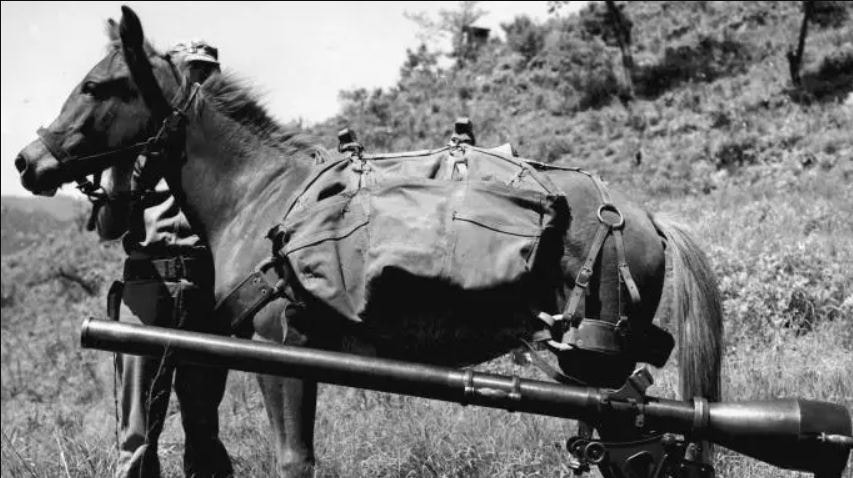
Jennifer Bohnhoff is a writer who lives in the mountains of central New Mexico. You can read about her on her website. You can read another story about a horse from history,  Sergeant Reckless, an Army horse during the Korean war, here.

Sunday, June 6, 2021


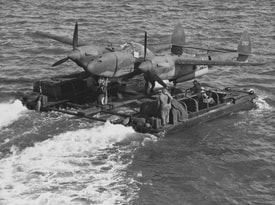
PictureTwo DUKWs carrying a P-38. (Photo: Worldwarphotos.info)
After World War II had ended, General Dwight Eisenhower wrote that while most of his senior officers considered the bulldozer, the Jeep, the 2,5-ton truck, and the C-47 airplane the four most vital pieces of military equipment to the Allies’ success, he thought that the DUKW was “one of the most valuable pieces of equipment produced by the United States during the war.” (Philip Handleman, and Walter J. Boyne, editors: Brassey’s Air Combat Reader, pg. 255). Not everyone shared Ike’s enthusiasm for the amphibious vehicles commonly called ‘ducks.” Their less than stellar performance during the D-Day invasion made many suspicious of them.

DUKW, which comes from the model-naming terminology used by GMC, is an acronym for the fact that it was “D,” designed in 1942, “U,” a utility vehicle that was “K,” all-wheel drive, with “W,” two rear axles. Soldiers, who had nicknames for everything, first called them Ducks. The vehicle was developed in only 38 days through a collaboration between yacht designers Sparkman & Stephens and General Motors. It had a 104 horsepower Chevy engine which was able to reach 50 mph on land and 6 mph on water. They were 31 feet long, 8 feet wide, and 7 feet high. A quarter of the 21,000+ DUKWs that were manufactured between 1942 and 1945 had .50 caliber Browning machine guns ring-mounted to them. 

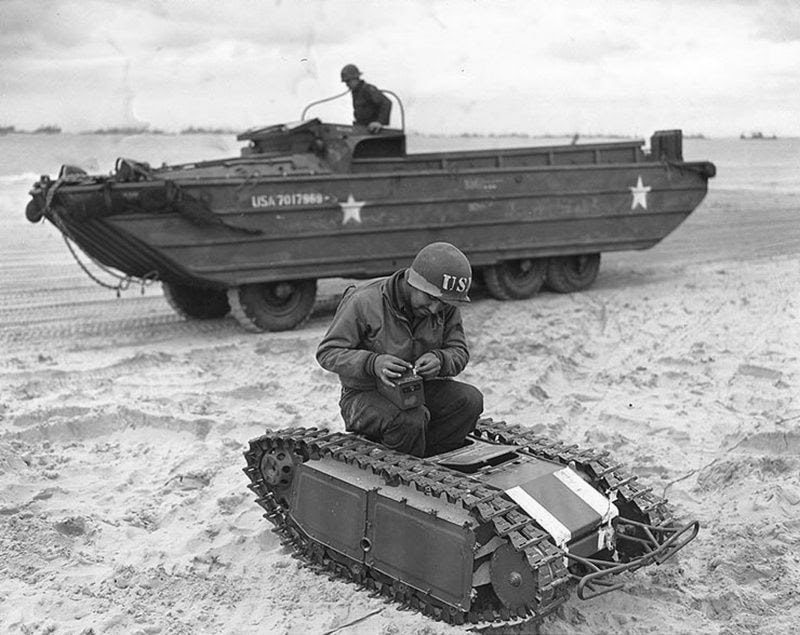
PictureA DUKW at Utah Beach. In front, a soldier inspects a German Goliath tracked mine. (Photo: world-war-2.wikia.org)
DUKWs, which were able to carry a payload of 2.5 tons, or around 20 troops with all their equipment, were originally designed to allow the military to drop cargo off where there were no ports at which to dock supply ships. It was the first vehicle to come equipped with a Speir's Device, a central tire inflation system which allowed drivers to vary the tire pressure to adapt to different surfaces. Fully inflated tires were good for hard surfaces such as roads, while softer tires gave better grip on beach sand.

The Army was not impressed with its design at first, and rejected them. However, when a Coast Guard patrol craft ran aground on a sand bar during a storm near Provincetown, Massachusetts, a prototype DUKW that was being tested nearby was able to save the patrol craft’s crew. The Army, now aware of the craft’s versatility, changed its mind. By March 1943, they were successfully being used in Guadalcanal in the South Pacific. They were also used to great effect in Operation Husky, the 1943 invasion of Sicily. In addition to their normal transport duties, DUKWs were used as naval ambulances and for providing fire support to landing troops. 

Opinions on DUKWs changed after their failure during the D-Day Invasion, where all but one of the vehicles being used to haul howitzers to Omaha Beach sank shortly after debarking from their carriers. This wasn’t a failure of the vehicle so much as a failure of command to understand the DUKW’s limitations. In good weather, DUKWs perform well. In bad weather, especially in high waves and when loaded with heavy cargo such as howitzers, they are not seaworthy. 

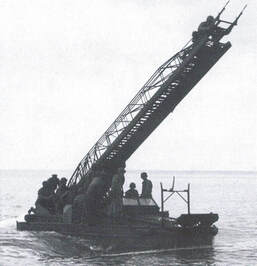
PictureThe specially modified DUKW with an extension ladder used at Pointe du Hoc (Photo: Mikesresearch.com)
Not all DUKWs performed badly, even on the choppy waters of the Norman Coast. U.S. Rangers used specially modified DUKWs with 100foot extension ladders to climb the steep cliffs of Pointe du Hoc to take out the German gun emplacements there.

Most DUKWs were decommissioned after World War II. A few hundred went to the Korean War and to Vietnam, while others were distributed to police and civilian search-and-rescue units, where they continue to serve. 


Picture
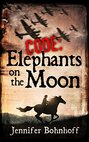
Jennifer Bohnhoff's historical novel Code: Elephants on the Moon tells the story of a young French woman who becomes involved in the Resistance movement in preparation for the Allied Invasion on D-Day. You can see pictures of the village where the action takes place here

Sunday, May 30, 2021

Horses in History: The Four Legged Sergeant


Wednesday, May 5, 2021

American Mothers and Authors


May is the month in which we celebrate Mother's Days, so it seems appropriate to recognize some American mothers who were also authors.
Picture
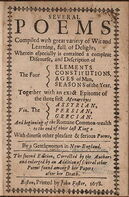
Anne Bradstreet (March 20, 1612 – September 16, 1672) was the wife of the  governor of the Massachusetts Colony and the mother of eight children, but she was also a poet who wrote about marriage, family and the natural world. Her first book of poetry, The Tenth Muse Lately Sprung Up in America, was published in London in 1650, making her the first American woman to be published in Europe and the New World. 

PictureIllustration from a 1770 edition of Rowlandson's book.
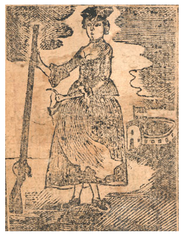
Mary Rowlandson (c. 1637 – January 5, 1711) was the wife of a minister and mother of four children, one of whom died in infancy. The family lived in Lancaster, Massachusetts, a town that was on the edge of the wilderness at that time. In 1676, during King Philip's War, Lancaster was raided by Narragansett, Wampanoag, and Nipmuc Indians, and Mary and her her three children were taken. One of her daughters died of wounds after a week of captivity, but Mary and her remaining two children were ransomed after eleven weeks. Six years later, Rowlandson published The Sovereignty and Goodness of God: Being a Narrative of the Captivity and Restoration of Mrs. Mary Rowlandson, which many consider to be America's first best-seller.

Picture
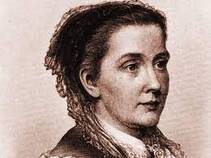
Julia Ward Howe (May 27, 1819 – October 17, 1910) may be best know as the author of the “Battle Hymn of the Republic,” but it is just one of many poems she wrote. In addition, she was the author of plays, and books, and the publisher of literary magazines. She was also the mother of six children, active in advocating for world peace, women’s education, and women's right to vote. Julia wrote extensively over the course of her life and was also active as a speaker who championed morality and Christianity. 

In 1872, Howe asked for June 2 to become a "Mother's Day for Peace." Although she was unsuccessful, Anna Jarvis, the women who managed to establish the modern Mother's Day 36 years later reportedly was inspired by her own mother's work with Howe.

Vanilla Wafers

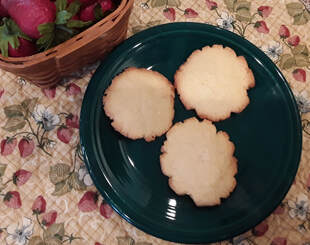
Surely you've bought a box of vanilla wafers before. Why not make them yourself? These not too sweet cookies are perfect for accompanying a bowl of strawberries or a fruit salad, or as the base in banana pudding. If you are having a mother's day celebration, be sure to include them. 
Picture
1/2 cup butter
1.2 cup shortening
2/3 cup sugar
2 tsp. vanilla
1 tsp salt 
2 eggs
2 3/4 cups flour

Cream butter, shortening and sugar together until fluffy. Add vanilla and salt. Add eggs, one at a time, beating well after each. Stir in flour. 

Scoop up dough with a teaspoon, roll into a ball, then set on a parchment-lined cookie sheet, 2" apart. Flatten with the bottom of a glass that has been dipped in flour so it doesn't stick. 

Bake at 375 for 10-12 minutes, until browned on the edges. Let cook on a rack.
 

Picture
Jennifer Bohnhoff is the mother of three fine sons, the mother-in-law of three wonderful daughters in law, and the grandmother of three granddaughters and one grandson. She lives in New Mexico, where she teaches New Mexico History and writes. You can find out more about her at her blog. 

Keeping Time with the Romans

  Modern societies rely on precise and standardized timing. Our schedules are synchronized to prevent chaos, ensure safety, and keep complex...