Saturday, September 23, 2023

Miraculous! An Interview with Author Caroline Starr Rose


The Cerro Grande Fire


Picture
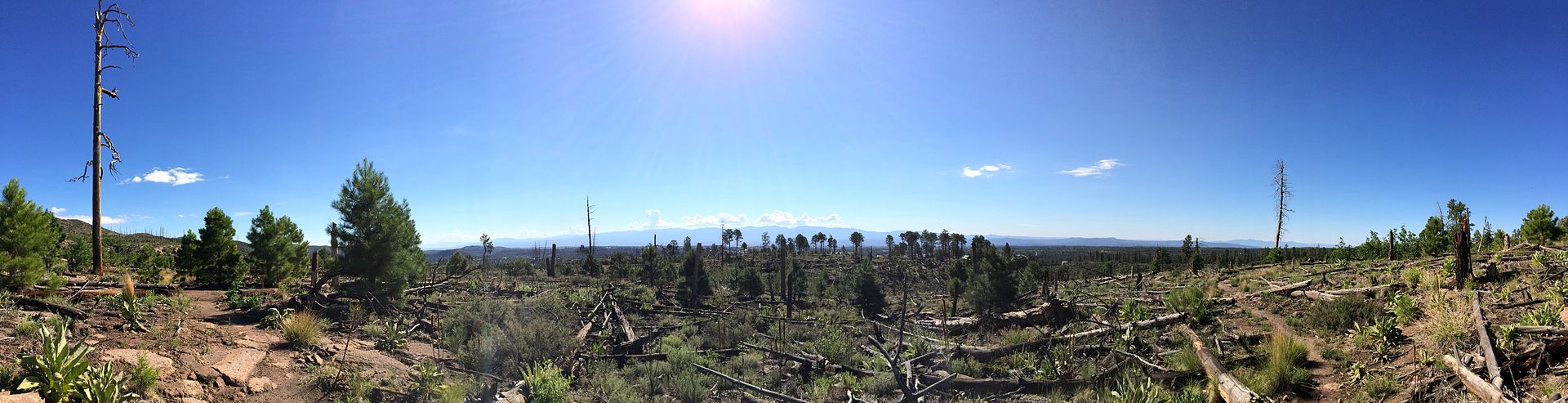
Fourteen years after the Cerro Grande fire, devastation on the Quemazon Trail west of Los Alamos is still obvious. This image was obtained from http://www.gao.gov/new.items/rc00257t.pdf, a document titled "T-RCED-00-257 Fire Management: Lessons Learned From the Cerro Grande Fire", Public Domain
In May of 2000, a disastrous forest fire that came to be named The Cerro Grande Fire began in the hills above the town of Los Alamos, New Mexico. By the time it was contained, it had burned many homes, threatened national security, and destroyed the lives of many people.
 
The fire started as a controlled burn high on Cerro Grande, a 10,200-foot summit covered with a mix of ponderosa pine, douglas fir, white fir, and aspen trees. The summit, which sits on the rim of the Valles Caldera, has a rincon, or meadow on its southern slopes. The United States Forest Service chose that rincon as the starting place for a controlled burn that was part of a 10-year plan for reducing fire hazard within Bandelier National Monument. That rincon is the headwaters of Frijoles Creek, which flows southeast into the Rio Grande. It is close to New Mexico State Road 4, the main highway through Los Alamos County. 

PictureThe smoke from the fire made it all the way to Oklahoma. Public Domain, https://commons.wikimedia.org/w/index.php?curid=10523496
Spring may not be the best time to start controlled burns in the Jemez. High winds are common during this time of year. In addition to that, the forests were extremely dry but filled with undergrowth. In the early-to-mid-1990s, the Jemez had received abnormally high precipitation, leading to an explosion of luxuriant undergrowth. Then, several years of severe drought had dried out the forest. Deadfall, trees that had died and laid on the ground, had a moisture content lower than that of well-cured firewood. Conditions were ideal for a major forest fire. However, officials worried that if controlled burn were not used to clear the forest, a lightning strike or human carelessness could lead to disaster. Officials decided that a controlled burn was safer than letting nature take its course. The burn was scheduled to begin late in the evening of May 4, 2000.

Just after the burn had begun, the winds picked up. By May 5th, the fire had burned through its controllines on the east side. The burn was declared a wildfire that afternoon. By May 7th, the fire’s behavior had become increasingly erratic, with spotting, the creation of new fires, due to flying embers, becoming common. Los Alamos National Laboratory shut down operations on May 8. Two days later, the town of Los Alamos was evacuated. That evening, 235 homes in Los Alamos were destroyed.
 
 
By the time the fire was declared officially contained, on June 6, over 400 families had lost their homes and over 43,000 acres had been burned. Los Alamos National Laboratory suffered from destruction or damage to its structures, but none of the  special nuclear material housed there was destroyed or damaged. Luckily, there was no loss of human life. The US General Accounting Office estimated total damages at $1 billion. The Cerro Grande fire was declared extinguished on July 20, 2000.

But even if the fire was no longer threatening Los Alamos, life could not go back to normal. Scientists determined that the soil beneath a layer of ash or burned soil had become hydrophobic, or water repellant. Los Alamos, the laboratory, and the lower parts of the burned area are all situated on the Pajarito Plateau, an area which has a lot of canyons that concentrate surface runoff.  When the monsoon rains which usually begin in July occurred, it was highly likely that the hydrophobic soil would result in serious flash flooding. Diamond Drive, one of the town's arterial roads, was damaged in such a flood.
​
These floods also created serious erosion issues, especially along the 57 miles of trails that had become clogged with fallen trees and boulders washed down from higher elevations. A volunteer task force devoted many thousands of hours to rebuilding trails and planting trees. Local school children made many thousands of "seed balls" to broadcast in the burned areas, and about 7000 hydromulching and hydroseeding flights occurred during the month of July. Water quality had to be monitored for several years after the fire. 

PictureA FEMAville in Greensburg, Kansas photo by Jackie Langholz
In order to house people who had been burned out, the Federal Emergency Management Agency (FEMA) brought in portable buildings, or trailers. The trailers weren’t available until June because they not only had to be delivered, but hooked up to municipal utilities that had to be extended out to undeveloped land near the county rodeo grounds on North Mesa. Known locally as FEMAville, the complex housed hundreds of displaced residents. In 2006, when the trailers were removed, most of the displaced residents had been settled into new homes, although reconstruction of houses in the burned area continued for several years after that.

Wildfires have grown increasingly common in the years since the Cerro Grande fire, and they continue to be a source of great controversy, especially when they begin through government action. 

Picture
Jennifer Bohnhoff is an author of books for middle grade through adult readers. She lives in the fire-prone mountains of central New Mexico. Her next book, Summer of the Bombers, is scheduled to come out on April 10th. The story of a girl who loses both her home and her horse because of a controlled burn gone rampant, it is based loosely on the Cerro Grande fire.

Thursday, September 21, 2023

The New Mexico National Guard In A Blaze of Poppies


Picture
A Blaze of Poppies takes place in Southern New Mexico and France during the tumultuous 1910s. Its main character, Agnes Day, is a ranching woman who is determined to keep her family’s ranch, the Sunset, within the family who’s held it for three generations.

The family’s brand is the lazy D, a capital D laid over on its side. The D not only stands for the Days, who’ve owned the ranch since before the Civil War, but on its side it looks like a sunrise. 


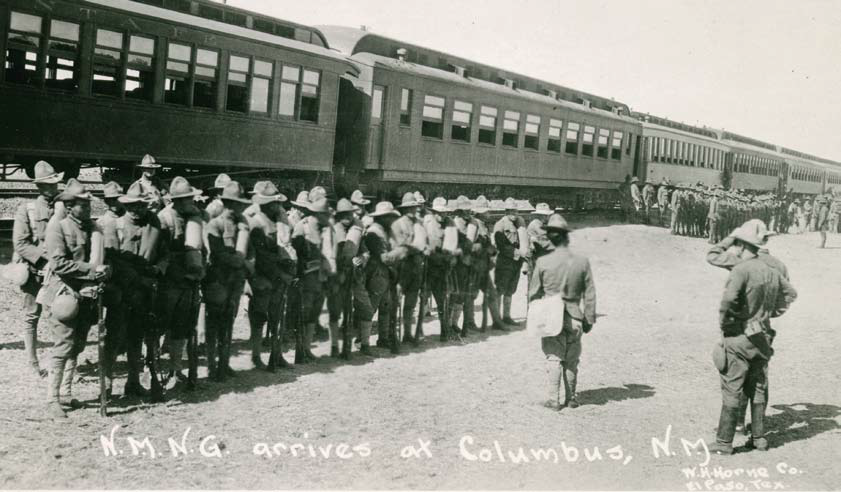
The man who quietly supports Agnes through difficult times is Will Bowers, a member of the National Guard who is serving border patrol at Camp Columbus.
​

New Mexico’s National Guard began serving its country before New Mexico was even a state. In 1898, when the Spanish American War broke out, New Mexico Guardsmen helped form the 2nd Squadron, 1st United States Cavalry. This unit was part of Teddy Roosevelt's Rough Riders and were among those who charged up San Juan Hill.
Picture
Teddy (center) and some of his Rough Riders.
In 1916, when Pancho Villa raided the southern New Mexican town of Columbus, New Mexico’s National Guard, under the command of Black Jack Pershing, pursued the outlaw into Mexico. The Guard spent the next year on this border duty. 
Picture
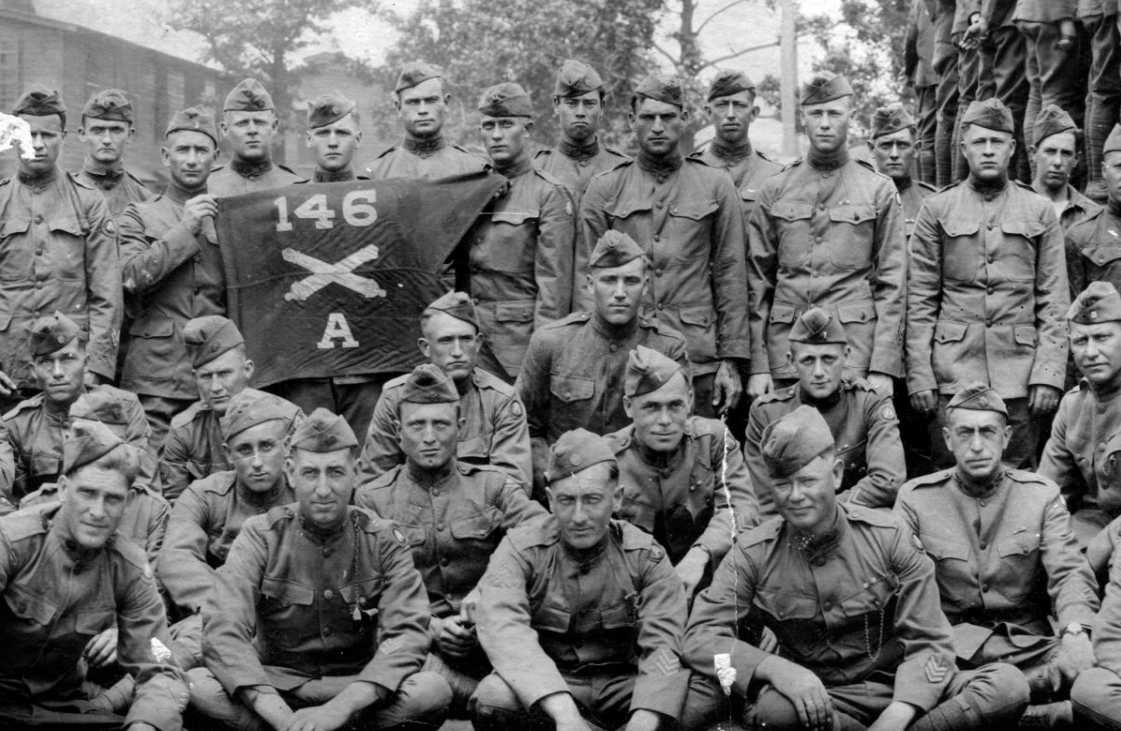
Pershing was so impressed with the Guards’ performance in the rough field conditions of the desert southwest that he insisted they join the mobilization efforts when the United States entered World War I. New Mexico National Guardsmen were among some of the first to arrive in France. They didn’t, however, go over as a single unit. The First Infantry Regiment was activated into Federal Service and assigned to the 40th Infantry Division. A Battery of Field Artillery was assigned to the 41st Division and became part of the 146th Field Artillery Regiment, which took part in the actions at Champagne-Marne, Alsne-Marne, and Meuse-Argonne.
Picture
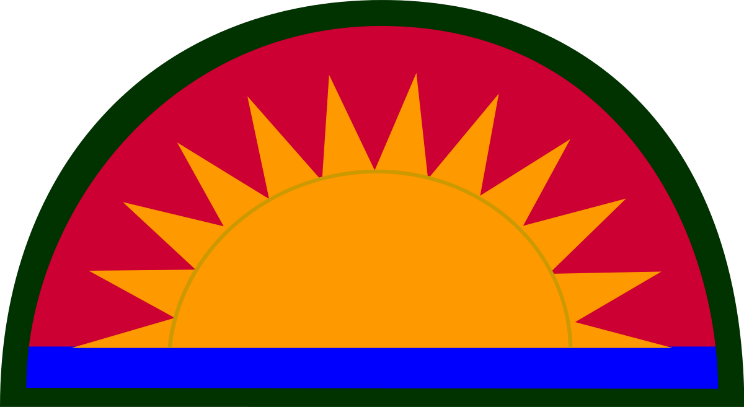
Because the 41st Division was largely made up of soldiers from Oregon and other northwest states that bordered the Pacific Ocean, it was named the "Sunset Division." Its semicircular shoulder patch featured a red background, with a yellow sun setting into a blue sea.
Picture
Picture
When Agnes first sees Will’s patch, she thinks it is a sunrise instead of a sunset. To her, it looks like a fancier version of the lazy D that is the family brand. They are, after all, the Day family, and the ranch is The Sunrise Ranch. She muses that perhaps she should add rays to the lazy D so it will look even more like the image on Will’s patch. 

Agnes wants to keep the ranch, and she wants Will to be there with her. But Will has a hidden past that makes him afraid to commit, even to the woman he loves. Read A Blaze of Poppies to find out whether the story ends in sunshine or shadow. 


Picture
A Blaze of Poppies is an historical novel set in southern New Mexico at the time of the Pancho Villa Raid and World War I. If you'd like to see pictures that correspond with the story, go to Jennifer's Pinterest page. To buy the novel as an ebook, go to Amazon. A paperback version can be bought at many online booksellers, including Amazon and Bookshop, Signed copies can be bought directly from the author.

Thursday, August 24, 2023

An Interesting Connection


Picture
Back in July I wrote a blog about Gabriel Rene Paul, the commanding officer at Fort Union at the time of the Civil War. I had no idea then that I would run across a curious connection to him so soon, but I have: a connection between him and Sacajawea, the young Shoshone woman who traveled with the Lewis and Clark Expedition. 

Picture
Not much is actually known about Sacajawea. The teenaged girl left no writings of her own, if indeed she could write. The journals, letters, official records, and reports from the period call her by many names, and often fail to record that she was even present.  Author Candy Moulton’s Sacajawea: mystery, myth and legend does a great job of piecing together a thorough timeline of her life those few references, then goes on to tackle Sacajawea’s legacy and the myths surrounding her years after the Expedition.  ​

Picture© 2022 by WikiCommons user Tommy5544. Permission to use granted under the Creative Commons Attribution-Share Alike 4.0 International license. This design by Glenna Goodacre and modeled by Shoshone Randy’L He-dow Teton
Sacajawea may be legendary for her travel with Lewis and Clark, but her legacy comes through her son, Jean Baptiste Charbonneau. Jean Baptiste was just an infant when he crossed the continent with his mother and father, the French trapper Toussaint Charbonneau. The members of the expedition nicknamed the baby Pompey, and named a prominent stone pillar in Montana after him. He is the only Native American child who has been honored to have his image placed on an American coin. 

Picture
Pompey's Pillar
PictureAugust Chouteau,
William Clark was so taken with the child that he offered to adopt him and raise him as his own. This was too good an opportunity for the Frenchman and his Indian wife to refuse. Adoption by the man who had been the Indian agent for all tribes west of the Mississippi and was now the Governor of Louisiana Territory would open the child to the upper echelons of power and wealth. In 1809, when Jean Baptiste was about four years old, the couple brought him to St. Louis, where he was baptized and handed over to his new guardian.

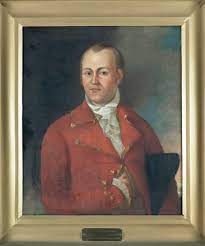
Toussaint was clever in his choice for his son’s godfather, picking someone who would offer just as much prestige and chances for advancement as Clark himself did. August Chouteau, who jointly founded the city of St. Louis with his stepfather, Pierre de Laclède Liguest, was one of the richest and most politically prominent men on the western frontier. His twelve-year-old daughter, Eulalie, became the child’s godmother. 

Now, here’s the curious connection: Four years later, after her marriage to Louis Rene Paul, Eulalie would give birth to her son, Gabriel Rene Paul. This child would grow up to be the commander of Fort Union at the time of the Civil War, and later be seriously wounded at Gettysburg. The godmother of a child on the Lewis and Clark expedition was the mother of a Civil War general!
PictureColonel Philip St. George Cook
But that wasn’t the only connection I found between Jean Baptiste Charbonneau and someone else who’s been an interest of mine. Charbonneau followed his in his father's footsteps, becoming and trapper and guide and meeting many of the men who were famous for trailblazing the west, including Kit Carson and Jim Bridger. In 1846, during the Mexican American War, he was hired by Colonel Philip St. George Cook to guide the Mormon Battalion to California. Charbonneau met Cooke and his men in Albuquerque on October 24 and took them all the way to the Pacific. It was the second time he’d seen this ocean, but the first time he’d remember it: he’d seen it when he was just about a year old, when his mother had guided Lewis and Clark through the Rockies. 

Picture
Picture
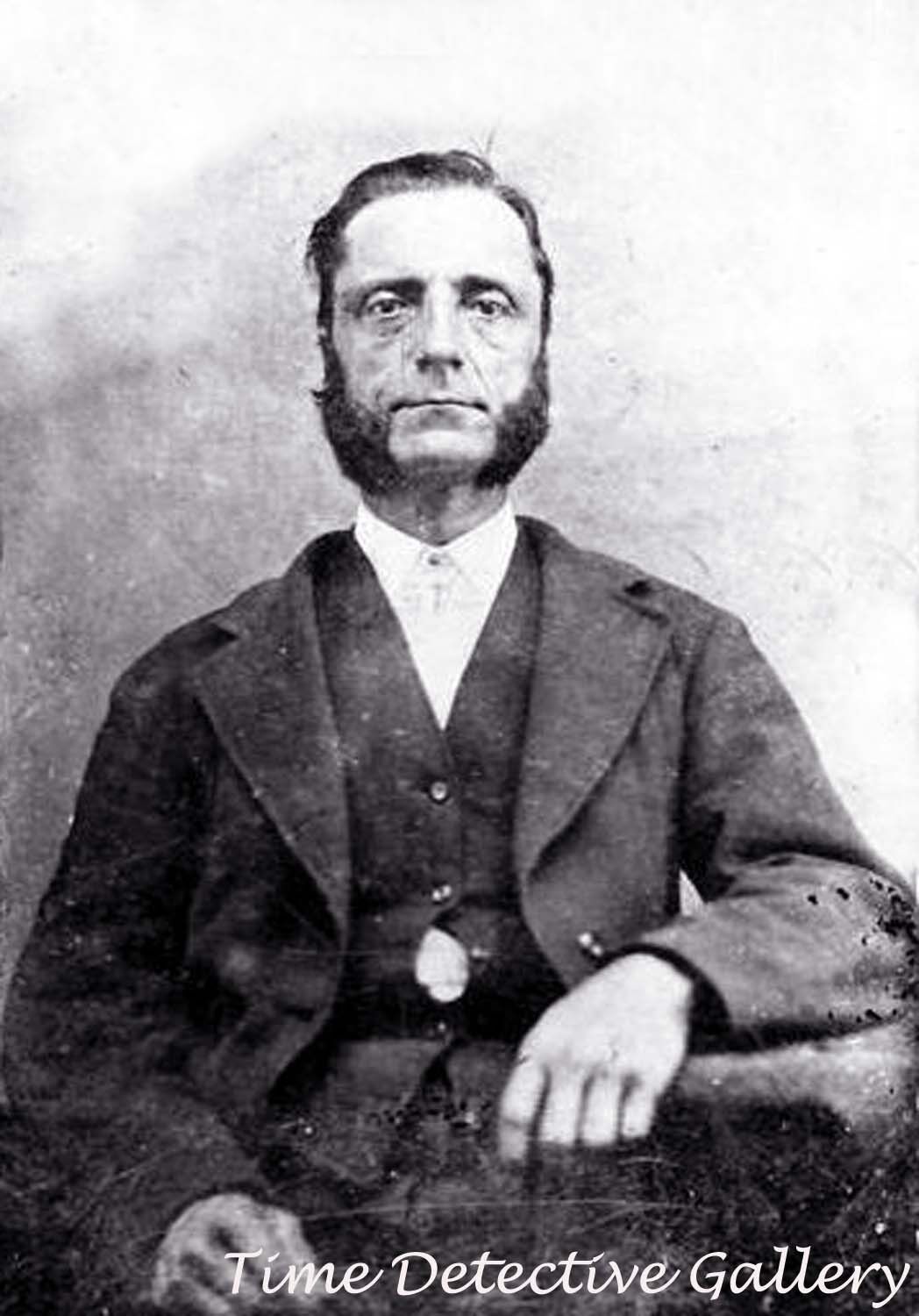
Left: The only picture that may be a picture of Charbonne.

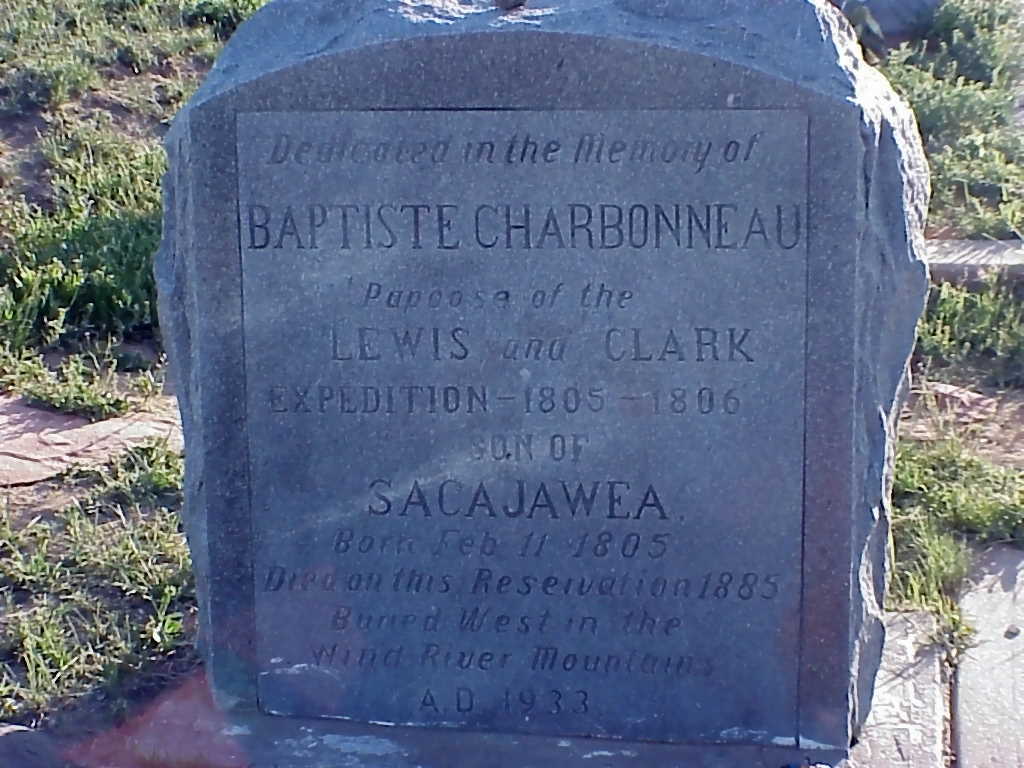
Above: Charonne's gravestone. He died enroute to a Montana goldfield when he was 61 years old.


Jennifer Bohnhoff writes novels for middle school readers through adults. Gabriel Rene Paul plays a very small part in her recent novel, The Worst Enemy, book 2 of the trilogy Rebels Along the Rio Grande.  

Thursday, August 17, 2023

Now Available!


Picture
I am pleased to announce that The Worst Enemy, book 2 in the Rebels Along the Rio Grande series, is now available in paperback! 

If you prefer ebooks to paperbacks, you can pick up your download of The Worst Enemy here. 

​And if you would rather buy a signed copy directly from the author, you can buy your copy here.


Picture
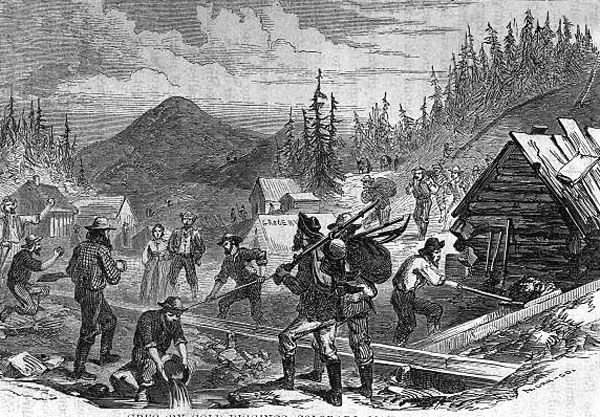
​The Worst Enemy is the story of two boys. Jemmy Martin is a farm boy from San Antonio, Texas. In Where Duty Calls, the first book in the series, Jemmy joins H.H. Sibley's Army of New Mexico. Sibley invaded New Mexico in the hopes of capturing the Colorado and California gold fields for the Confederacy and fulfilling a dream of manifest destiny for the south by extending its territory to the Pacific Ocean. Jemmy goes not because he has strong Confederate sympathies, but because his brother has sold the family's mules to the Confederate army and he feels the need to protect them and return them home.

Picture
The second boy in The Worst Enemy is Cian Lochlann. Cian came to America with his parents to escape the Irish Potato Famine. The family settled in Boston, but by the time he enters his teens, Cian is an orphan. He travels west to try his luck in the Denver gold boom and then, at the outbreak of the Civil War, enlists in the Colorado Volunteers, who are sent south to stop the Confederates. 

The two armies, and the two boys, meet in the mountains east of Santa Fe in what becomes known as the Battle of Glorieta Pass. Jemmy and Cian must make a life-changing decision.

Picture
Jennifer Bohnhoff is a former Middle School New Mexico History teacher, who now writes full time from her home in the mountains of central New Mexico. The story of Jemmy Martin, Cian Lochlann, and Raul Atencio concludes in the third book of the Rebels Along the Rio Grande trilogy, The Famished Country, which is expected to be released in spring 2024.

Wednesday, August 9, 2023

Happy Birthday, Smokey Bear!


Picture
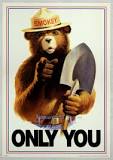
Smokey Bear was authorized by the US Forest Service on August 9, 1944. His creation was part of the effort to protect forests during WWII when so many of the nation’s firefighters were serving in the armed forces. It took two months before artist Albert Staehle delivered the first poster for the campaign. On it, Smokey wears jeans and a campaign hat while he pours a bucket of water on a campfire. The message reads, "Smokey says – Care will prevent 9 out of 10 forest fires!" 

Picture
The slogan "Remember ... only YOU can prevent forest fires." Was created by the Wartime Advertising Council (later called the Ad Council) in 1947. The words “forest fires" were replaced with "wildfires" in 2001 in response to a massive outbreak of wildfires in natural areas other than forests and to clarify that the campaign was advocating the prevention of unplanned fires, not controlled burns or prescribed fires for conservation purposes.

Picture
In May 1950, firefighters quelling the Capitan Cap Fire in New Mexico’s Lincoln National found a five-pound, three-month old American black bear cub high up in a tree. Because his paws and hind legs had been burned, the little bear was named Hotfoot Teddy. He was sent to Santa Fe, to live in the home of New Mexico Department of Game and Fish Ranger Ray Bell and his family while a local veterinarian helped him recover. After that, he lived with the assistant director of the New Mexico Department of Game and Fish while the state game warden negotiated the cub to the Forest Service if he could be used in their conservation and wildfire prevention publicity programs. Somewhere along the line, the cub was renamed Smokey. At the end of June, 1950 the recovered, four-month old cub was flown to Washington, D.C., where a special exhibit was created for him in the National Zoo.

Picture
Smokey Bear lived at the National Zoo for 26 years. During that time he received millions of visitors. So many letters were addressed to him that he got his own ZIP code (20252) in 1964.  Because Smokey and his mate, Goldie Bear, never had cubs, the zoo added "Little Smokey" to their cage in 1971. Interestingly, Little Smokey was also an orphaned bear cub from the Lincoln Forest. 
Picture
Smokey Bear officially "retired" from his role as living icon on May 2, 1975, and Little Smokey was renamed Smokey Bear II. A year later, Smokey died. His body was returned to Capitan, New Mexico, where he is buried in the State Historical Park.


Picture
Author Jennifer Bohnhoff is a New Mexico native who remembers visiting Smokey Bear at the National Zoo when she was a child. Her book Summer of the Bombers tells a fictionalized story of the Cerro Grande fire that ravaged Los Alamos, New Mexico in 2000.  An avid hiker, she asks you to help keep Smokey's memory by preventing fires while

Thursday, August 3, 2023

Manuel Antonio Chaves, the Little Lion of New Mexico


PictureChavez in 1848
Manuel Antonio Chaves is an interesting person not only because he lived and was influential in three eras of New Mexico’s history. Born at the end of the Spanish colonial period, he grew to manhood in the rough and wild days of the Santa Fe trade when Mexico ruled the land. He spent his mature years during the period when New Mexico was a territory of the United States. He personally witnessed and was often an important part of almost every major historical event which occurred during the period, including the Texan-Santa Fe Expedition, the Mexican War, rebellion and uprisings, the Civil War, and skirmishes with Utes, Navajos, and Apache. Although just 5 feet 7 inches and 140 pounds, Chaves was such a tough fighter that he was called El Leoncito, The Little Lion. Although not everyone today honors him, he was a man of his time who worked tirelessly for his people. 

PictureAn early map of Atrisco
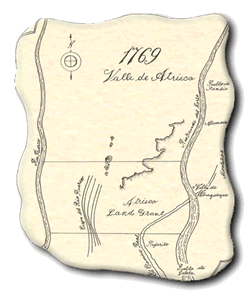
Chaves was born October 18, 1818 in the village of Atrisco, which is now a part of Albuquerque. His family claimed lineal descendant from one of the Spanish conquistadors that came to New Mexico with Don Juan de Oñate in 1598. At the time of his birth, At that time, New Mexico was still a part of the Spanish Empire, an isolated northern border considered far from civilization. Hispanics and Native American tribes clashed, often violently in this frontier. As he likely spent most of his childhood tending the family’s sheep and working in their fields, he would have needed to keep a watchful eye out for raiding Navajos, who often stole livestock and children. 

Navajos weren’t the only raiders in New Mexico at the time. Ranchers mounted raids against the Navajo, Ute, Apache and Comanche, stealing children to trade or sell as slaves. Chaves joined his first raiding party when he was only 16 years old. It was a disaster. His group, which had approximately fifty men, accidentally stumbled into a ceremonial gathering of thousands of Navajos in what was probably Canyon de Chelly. Chaves was wounded by arrows seven times. The only survivor, he managed to make the nearly 200-mile trek home with no provisions. Chaves’ bravery led him to be a leader whenever ranchers needed someone to organize attacks or to retrieve stolen sheep or horses. In 1851, Chaves led 600 men on a raid “to pursue the Navajo Nation to their extermination or complete surrender.” Although there is no record of how that particular campaign went, it is clear that over the years Chaves and his men killed dozens of Ute and Apache and stole horses, jewelry, blankets, weapons and slaves. Chaves’ household servants had been captured from the Comanches while still children.
PictureManuel Armijo
By the time he was nineteen, New Mexico had become a province of an independent Mexico and the handsome, steely eyed and soft-voiced Chavez had gained a reputation as a capable fighter and fearless under fire. He was a crack shot with his Hawken rifle and a cunning scout. In August 1837, he was under the command of his cousin Manuel Armijo, who was putting down an uprising in Santa Fe that resulted in the murder of the governor, Albino Perez. Armijo was appointed to take Perez’ place and within two years, Chaves was commissioned as an ensign in the rural mounted militia.
​
In 1841, he rejoined his cousin when New Mexico was threatened by a group of invading Texans. Governor Armijo and his militiamen managed to capture the hapless armed force known as the Texan-Santa Fe Expedition and Chaves, serving as secretary and interpreter, most likely negotiated the surrender of about half of the Texans, who were sent south to Mexican prisons. The Mexican government awarded Chaves the cross of honor for his service.

PictureStephen Watts Kearny
Chaves was prepared to fight as a militia officer for Armijo in 1846, when the United States invaded during the Mexican-American War, but this time, Armijo surrendered and the Battle of Santa Fe ended before it began. Gen. Stephen Watts Kearny managed to take New Mexico without firing a shot. Chaves was jailed, on charges that he was attempting to foment an uprising in Santa Fe, but he was later acquitted of all charges.

Picture
In 1847, Chaves swore an oath of allegiance to the United States. He enlisted as a private in the U.S. “Emergency Brigade” that put down the Taos Revolt during which another New Mexican Governor, this time Charles Bent, was murdered. During the Siege of Pueblo de Taos, Chaves used his rifle butt to club down a Puebloan who was fighting with his captain, Ceran St. Vrain. 

Once the U.S. was firmly in control of the territory, they found themselves just as beleaguered by Native incursions as the Spanish and Mexican regimes before them. In 1851, Chaves took part in military campaigns, leading an expedition against the Navajos. He was commissioned to Captain to lead one of six companies during the Ute-Jicarilla War in 1855. By 1860, he held the rank of Lt. Colonel in the Second New Mexico Mounted Volunteers, a unit that was formed to fight the Navajos and Apache. In 1861, he was placed in command of Fort Fauntleroy (later renamed Fort Wingate.) During his tenure there, a fight caused by allegations of cheating during a horse race led to several Navajo deaths. a fight between his men and visiting Navajos in which a number of Navajos were killed. Kit Carson arrested Chaves after the fight, but since the circumstances of the killings unclear and Confederate forces were threatening New Mexico’s southern border, Colonel Edward Canby suspended the house arrest after two months.

In 1862, Confederate General Henry Sibley led a force of Texans into New Mexico and Chaves found himself battling Texans once again. He and his militia fought at the battle of Valverde. Then, at the Battle of Glorieta Pass, he guided Major John Chivington's force to the Confederate supply train, where regular Union soldiers and New Mexico militia destroyed the supplies, forcing the Confederates to retreat back to Texas. 

PictureManuel Chaves later in life.
After the Civil War, he was honorably discharged after allegations that he had sold Army wagons for his profit were dismissed. It seems from the record that Americans were constantly attempting to tarnish Chaves’ reputation but never had adequate proof to do so. But while the Civil War was over in New Mexico, the battle between Natives and Europeans was not. In 1863, a group of over 100 Navajos raided the Rio Grande valley near Socorro. They killed many people and drove off herds of cattle, horses, and sheep. When they took captive a son of Matías Contreras, a prominent local citizen, Chaves gathered a posse of 15 civilians. The Navajos attacked Chaves's group at a spring called Ojo de la Mónica. Chaves, recognized as the best marksman, fired his own rifle and also some of the others' while they reloaded for him. By nightfall, only Chaves and two other men remained alive and all their mounts had been killed. At dawn, with only three bullets left, the three men found that the Navajos had disappeared. Chaves later called the battle at Ojo de la Mónica his greatest fight. It most certainly helped result in the Long Walk, which ended the Indian wars in most of New Mexico.
In 1876, he relocated to San Mateo, New Mexico, where he ranched. He built a home within a hundred feet of oak trees where he had rested in his flight from Canyon de Chelly as a wounded teenager. Immediately behind those trees he built a family chapel where he was buried after he died in January 1889. The blind and frail 70-year-old was laid to rest with two musket balls in his pocket.

Manuel Antonio Chaves lived a tumultuous life, during which his beloved land was held by the Spanish Empire, the Mexican Republic and the United States. Both Native Americans and the Confederacy contested for the territory. Throughout it all, Chaves served as a staunch defender of his people, regardless of what flag he fought under.

Picture
Manuel Chaves plays a large part in the Battle of Glorieta and a small part in The Worst Enemy, Jennifer Bohnhoff's middle grade historical novel. The Worst Enemy is book two  of a trilogy set in New Mexico during the Civil War. The author is available for class visits and talks to groups who are interested in the history behind the story. 

Keeping Time with the Romans

  Modern societies rely on precise and standardized timing. Our schedules are synchronized to prevent chaos, ensure safety, and keep complex...