Thursday, January 23, 2020

Throwing out the Baby with the Potato Water


Picture
My critique partners can attest that sometimes I don't remember my own books.  They've been through so many revisions that I can't remember what's in them and what's been expunged.
I forget sub-plots.  I can't remember characters' names.  Often I've forgotten whole scenes.

This became a bit of a problem for me this past week.  I'd had the honor of being asked to guest-write a post on Project Mayhem, a fabulous blog on writing hosted by a wonderful group of Middle Grade authors.  I decided to address how little historical details can help readers grasp what a period of time was like, and how even the littlest of details could lead to some big questions.  As an example, I decided to use a quirky little historical detail from my Civil War novel, The Bent Reed, which will be published in both paperback and ebook in September.

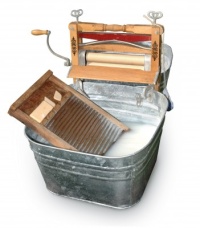
The quirky little historical detail in question is from a laundry scene; After washing Pa and Lijah's shirts, Ma dips them into a vat that contains the water left over from boiling potatoes.  Why would she do this, you ask?  Because the left-over potato water would have had starch suspended in it, and the starch would have made ironing the shirts easier, and the ironed shirts more crisp.  

I remember learning this little historical detail in a Civil War era book of hints for housewives and being fascinated.  I delight in little bits of trivia like this.  I thought that it could lead to many interesting discussions about resource use and thriftiness.  

As I wrote my post last week, I decided that this detail was a perfect example of how little bits of trivial information about everyday life in an historical period could not only bring that period to life for readers, but help readers ask big questions about how history informs the present day. And so I pulled out my manuscript and began searching for the scene.

And this is where I ran into a problem, because the scene wasn't there.  I searched using potato and starch and laundry as key words.  I found several scenes with laundry, but none involved a vat of potato water or even an iron.
Apparently, at some point in my rewriting and revision process I had cut this beloved little bit of trivia from my story and then forgotten about doing so.

Thinking about it now, I'm not surprised that I'd thrown out the vat of potato water.  Even the most interesting bits of historical trivia have to either move the plot along or illuminate the characters.  Although I cannot remember thinking so, I must have decided at some point that the potato water did neither.

Now that I think of it, I'm convinced that using the water left over from boiling potatoes show just how frugal Ma was.  Like most women in her era, she used a good deal of her own elbow grease and determination to make sure to turn everything to good account.

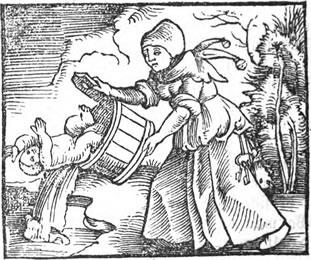
Maybe I threw out the baby with the potato water.


Picture
Picture
Jennifer Bohnhoff is an educator and writer who lives in New Mexico. She has written two novels set in the Civil War: The Bent Reed, which takes place at Gettysburg, and Valverde, set in New Mexico. The sequel to Valverde, Glorieta, will be published this spring. This post was originally published July 14, 2014.
2025 note: Valverde was republished by Artemesia Publishing under the title Where Duty Calls, Glorieta under the title The Worst Enemy. The third in the series, The Famished Country, was published in 2024.

Thursday, January 16, 2020

Celebrating a Civil War Coffee Hero


Picture
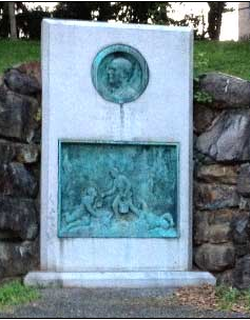
Maryland has one of the most unusual war monuments ever created. It doesn’t show a heroic charge or the valiant defense of a fortified position, but a soldier carrying a bucket and cup.

The battle of Antietam was raging, and the boys from Ohio had been fighting since morning. Their spirits and their energy were waning. But then a 19-year-old private named William McKinley appeared, hauling a bucket of hot coffee. He ladled the steaming brew into the men’s tin cups. They gulped it down and resumed firing.

“It was like putting a new regiment in the fight,” their officer recalled.
When McKinley ran for president three decades later, people remembered this act of culinary heroism and voted him into office.
Coffee was such an important staple in the Union soldiers’ diet that the Army issued about 35 pounds of it to each soldier every year. They drank their hefty ration before marches and after marches, while on patrol, and, as McKinley proved, even during combat. Men ground the beans themselves, often by using their rifle butts to smash them in their tin cups, then brewed it using any water that was available to them.  “Settling” the coffee, getting the grounds to sink to the bottom of the vats in which it was boiled, was so important that escaped slaves who were good at it found work as cooks in Union Army camps.

The Union blockade assured that most Confederates soldiers were not so lucky. The wide variety of attempts at creating substitutes speak to how desperately they wanted a cup of joe. Southerners tried making coffee substitutes from roasted corn, rye, chopped beets, sweet potatoes, chicory, and all sorts of other things. Although none of these brews were good, enjoying them was a source of patriotic pride. Gen. George Pickett, whose failed charge at Gettysburg is also a source of Southern pride, thanked his wife for the delicious “coffee” she had sent by saying that “no Mocha or Java ever tasted half so good as this rye-sweet-potato blend!”

Coffee may not have won the war nor earned McKinley his presidency, but it certainly was one of the small determining factors in both endeavors.


Jennifer Bohnhoff is a writer who lives in rural New Mexico. The soldiers in her Civil War novel, Where Duty Calls, drink a lot of coffee. The Worst Enemy and The Famished Country are sequels.  

A recipe for Union Camp coffee and Confederate acorn coffee will be included in Salt Horse and Rio, a companion cookbook of Civil War recipes that will come out later this year.

​This article was originally published April 23, 2017.

Thursday, January 2, 2020

Fort Union: Guardian of the Santa Fe Trail


Picture
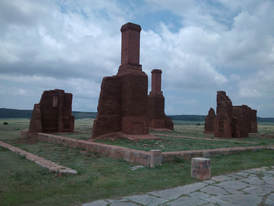
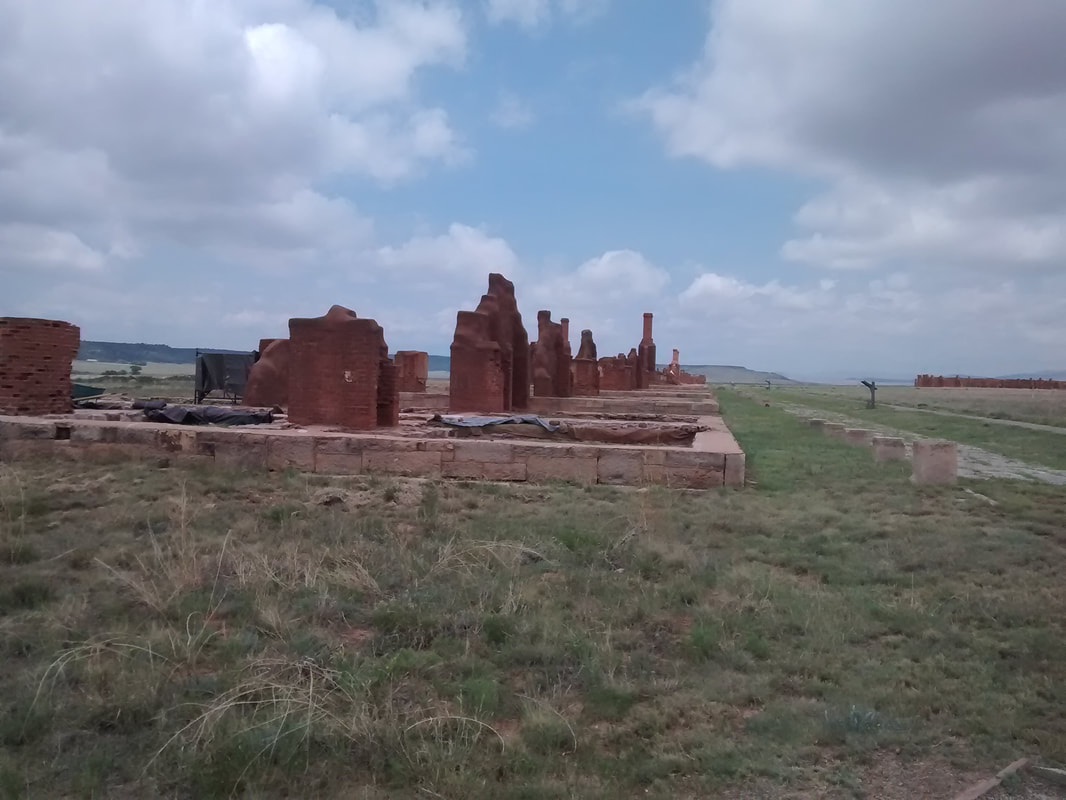
The ruins of the third Fort Union.
Picture
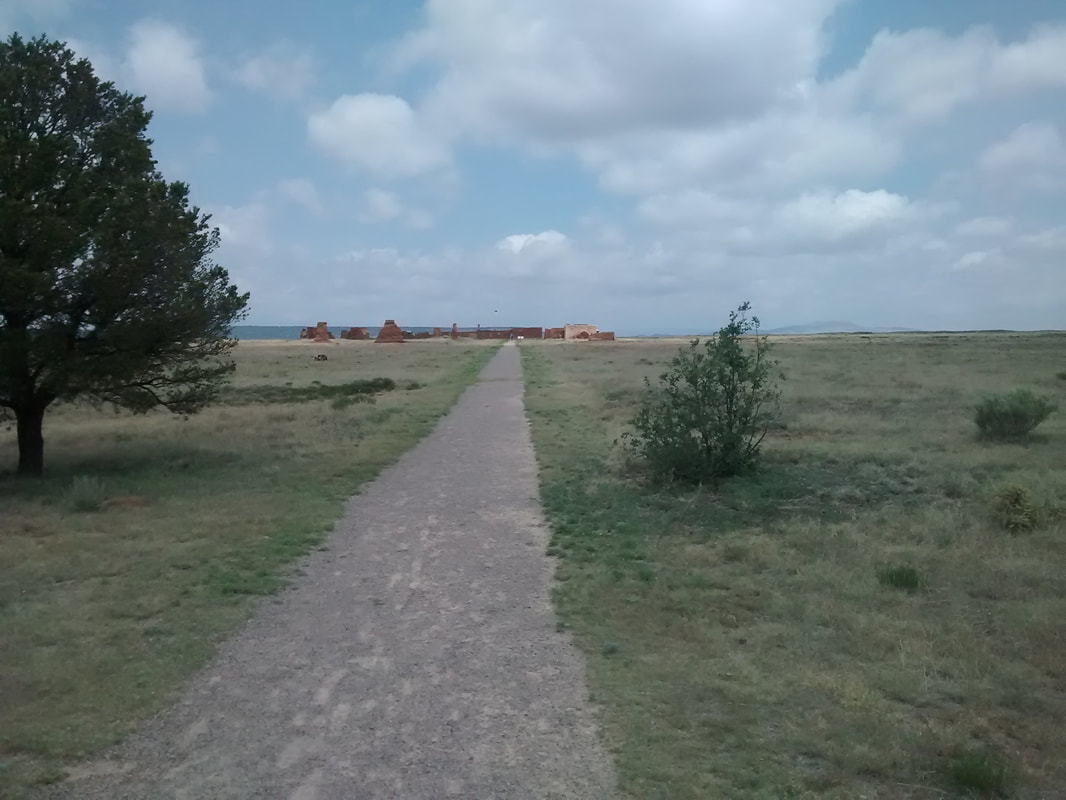
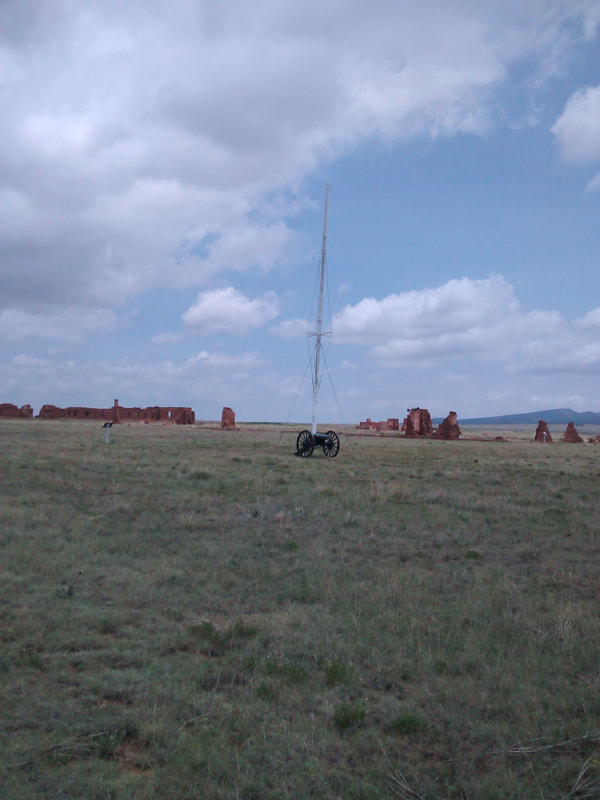
Fort Union rests out in the middle of nowhere, but a century and a half ago it was the center of a lot of activity. It has been rebuilt three times, each time responding to what was happening around it. 

Located near the convergence of the Mountain and Cimmaron branches, Fort Union's original task was to monitor the Santa Fe trail. The soldiers were charged with controlling Native Americans and, if wagon trains came under attack, to respond with campaigns against the Indians. 

The original fort, constructed in the 1850s, was built close by the eastern edge of a high mesa in order to protect it from the incessant winds. Diaries from the period indicate that the protection was minimal, and that sand constantly seeped through cracks around windows and found its way into beds and food supplies.
It was thrown up quickly, and made of adobe and logs that were already in serious disrepair a decade later, when the Civil War began to disrupt life in the territory.

By August 1861, the Confederates under John Baylor had already claimed the southern half of New Mexico Territory and renamed it Arizona. The U.S. Army was convinced that invasion of Northern New Mexico was imminent, and that Fort Union was the key to holding the territory. However, the bluffs that protected it from wind also made it vulnerable to cannon fire should the Confederates be able to take them. A new fort was needed.

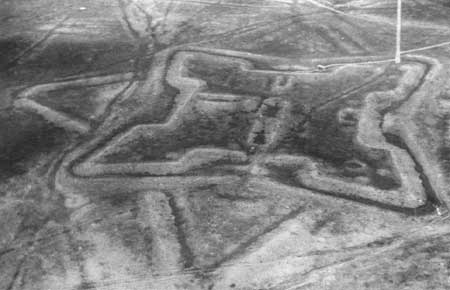
The Second Fort Union was built a mile and a half away from the first, in the open valley. Its earthwork walls, parapets, and moats covered 23 acres and were shaped like a star to accommodate 28 cannon. It was built by Hispanic 
Picture
Volunteers since most of the Union Troops had been called east. The work went on 24 hours a day, with gangs of 200 men taking four hour shifts. The fort was ready by February 1862, when Confederates advanced up the Rio Grande and defeated the Union forces at the battle of Valverde. By March they had taken Albuquerque and then Santa Fe. It seemed that Fort Union was the only thing standing between the Confederates and the rich gold fields of Colorado.

Colonel Edward Canby, the Commander of Union forces in New Mexico Territory, said "The question is not of saving this post, but of saving New Mexico and defeating the Confederates in such a way that an invasion of this Territory will never again be attempted. It is essential to the general plan that this post should be retains if possible. Fort Union must be held."

The standoff at Fort Union never happened. No one on either side anticipated the gritty determination of the Colorado Volunteers when they refused to stay at the fort, and instead confronted the enemy in the mountains east of Santa Fe. 
Picture
Picture
When visitors go to Fort Union National Monument, most of what they see is the remains of the third fort. Begun in 1863, this fort became the largest military outpost west of the Mississippi River. It served as an arsenal and depot, and was a safe resting place for travelers along the Santa Fe Trail. Again, its primary function was controlling the Indians and protecting Americans who used the trail. 

The military abandoned the fort in 1891. By then the Apaches and Comanche had been subdued and the railroad had entered the state, effectively ending the

era of the Santa Fe trail.  When I toured it in June 2017, there were few people there. I was able to walk among the ruins and read the interpretive signs without jostling crowds. The occasional sound of a bugle call broke the constant rush of the winds through the ruins. It was peaceful and pleasant, and I learned a lot from the small museum situated near the parking lot.

The fort is located 28 miles north of Las Vegas, New Mexico. To get there, take exit 366 off I-25 and go 8 miles north and west. The park, which is run by the National Park Service, is open from 8-5 from Memorial Day to Labor Day, and 8-4 the rest of the year. Check their website for special programs and tours.
Picture
Jennifer Bohnhoff is a writer, historian, and novelist who lives in the mountains east of Albuquerque, New Mexico.

This article was originally published on July 22, 2017. This fort is one of the places depicted in The Worst Enemy, the second in a trilogy about the Civil War in New Mexico, which will be published this spring. 

Monday, December 30, 2019

Quilts and History


Sunday, October 6, 2019

If it's October, it must be Pumpkin


Picture
It's October: high season for anything pumpkin.

I know a lot of pumpkin haters who groan about how pumpkin pervades the market every fall. Consider, though, that the American native is a nutritional heavyweight. This variation of squash originated in Mexico and is very high in dietary Fiber, vitamins A and C, riboflavin, potassium, copper, and manganese. Pumpkin is also a good source of vitamin E, thiamin, niacin, vitamin B6, folate, iron, magnesium, and phosphorus. 

I think God made pumpkin a fall fruit so that our bodies would be ready to fight the cold of winter.


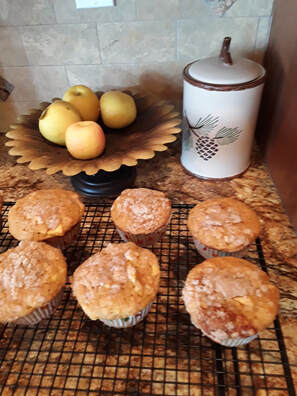
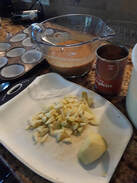
Picturepeeled, cored and chopped, apples give these muffins an extra sweet punch
I love pumpkin so much that my boys grew up eating a lot of pumpkiny food in the fall. My youngest son's favorite pie was pumpkin. We ate a lot of rich pumpkin bread slathered in cream cheese. Pumpkin donuts were a definite every fall. And yes, we ate pumpkin muffins. Interested in any of the above? Let me know and I'll share a recipe with you.

Here's a recipe for muffins that have pumpkin  and diced apple in them, and are crowned with a crunchy streusel topping that would make any muffin special. Try it on blueberry muffins or just plain muffins to make them not-so-plain afterall. 

​I'm including a second pumpkin muffin recipe in my upcoming Manic Muffin Mix Cookbook, which I'll be giving to all the members of my Friends, Fan and Family elist in December. Want in? Sign up to receive my emails here.

Pumpkin Apple Streusel Muffins

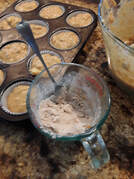
PictureThis topping would make any muffin special

For streusel topping, mix in a small bowl

1/4 cup sugar
2 TBS flour
1/2 tsp cinnamon

Use a fork to blend in, mixing until crumbly:
1 1/2 TBS Butter

Set aside streusel topping.

For muffins, mix thoroughly in a large bowl
2 eggs
1 1/2 tsp. vanilla
1/2 cup salad oil
1 cup water
1 cup solid pack pumpkin
1/2 TBS pumpkin pie spice

Add
1 cup peeled and finely chopped apples
Add and stir in until no dry areas remain
2 3/4 cup muffin mix

Spoon batter into greased or paper-lined muffin cups, filling 3/4 full.
Sprinkle streusel topping over batter
Bake in a preheated 350° oven 30-35 minutes, until a toothpick inserted into one comes out clean.
 

Picture
Jennifer Bohnhoff' lives in the mountains in central New Mexico, where she teaches middle school language arts. Since her three sons have grown up and moved away, she only makes muffins and other foods for her husband and visiting friends. She is the author of historical novels set in several different time periods and a series of funny contemporary novels for middle readers. She is currently working on an historical novel set in New Mexico during the Civil War. You can read more about her books on her website by clicking here.

Sunday, September 29, 2019

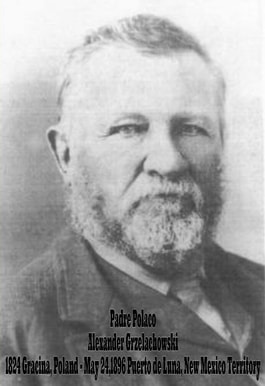
Alexander Grzelachowski: a Famous New Mexican


Picture
Last spring I gave a lecture at the Bear Canyon Senior Center on Civil War battles in New Mexico. Afterwards, one woman in the audience raised her hand and told me that her great-great grandfather had been a chaplain for the Union Army at the Battle of Glorieta. When I asked her if she was Polish, she smiled, knowing that I knew who she was talking about.
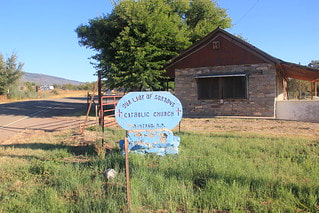
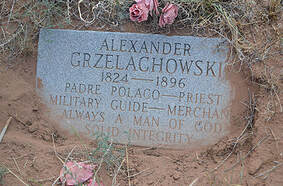
Alexander Grzelachowski was born in 1824 in Gracina, Poland. The son of a Polish Officer in the Napoleonic Wars, he became a Catholic priest, then emigrated to the United States in 1847. He served in Ohio until 1851, when he accompanied Jean Baptiste Lamy, the principle figure in Willa Cather’s novel Death Comes to the Archbishop, to New Mexico. He served several parishes, including Manzano’s Our Lady of Sorrows. Grzelachowski spoke fluent Spanish, and his parishioners called him Padre Polaco, the Polish Father.

Picture
Grzelachowski left the priesthood in 1857 to open a mercantile business in Las Vegas, but when the Civil War broke out, he felt compelled to reenter the priesthood in order to serve his adopted country. He became the 2nd New Mexico Volunteers’ chaplain, and played a critical role in the Battle of Glorieta Pass.
Late on the night of March 28, 1862, Major John Chivington and his men became lost in a snowstorm in the treacherous and uncharted terrain atop Glorieta Mesa. Chivington had set out that morning with orders to drop down on the Confederate rear, so that his 400 men and Colonel John Slough’s 800 men could trap Colonel Scurry’s 1,300 Confederate troops between them. Instead, Chivington and his men had strayed off course, gone too far, and found themselves staring down at Johnson’s Ranch, where the Confederates had left their supply train under a light guard. Chivington had destroyed that train, an act that forced the Confederates to retreat to Texas, securing New Mexico for the Union.


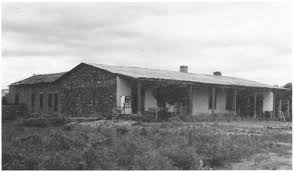
PictureGrzelachowski's store in Puerto de Luna
By nightfall, Chivington’s men were struggling back over Glorieta Mesa. What little intelligence they received suggested that Slough’s inferior numbers had failed to hold the field. The men atop the mesa had no idea where they could descend without encountering enemy troops. The night was dark and stormy, and snow fell heavily. Suddenly, an apparition appeared out of the gloom. It was an imposingly large man on a horse so white that it appeared to glow. Many soldiers thought an angel had appeared in their midst. That angel turned out to be Alexander Grzelachowski, who led the men safely around the Confederate troops and reunited them with Colonel Slough’s men. It was not an easy job. In fact, it was so difficult that Grzelachowski’s horse collapsed and died as he led the men into camp. But without the Father, it might have been Chivington’s troops who died by blundering into an enemy camp or succumbing to the elements.
After the war, Grzelachowski returned to private life. He started a family in 1870, marrying Secundina C. de Baca, with whom he fathered at least two daughters, Emma and Adelina. By 1872, the family had moved to Puerto de Luna, a little town on the bank of the Pecos River, about nine miles south of Santa Rosa. Here he opened a mercantile store similar to the one he operated in Las Vegas. He also ran a ranch, raised sheep, cattle and horses, and maintained a large orchard and vineyard.

Picture
Alexander Grzelachowski’s life intersected with many of New Mexico’s most famous and infamous ​citizens. Even though William Bonney, the young outlaw commonly known as Billy the Kid, reputedly rustled horses from one of his ranches, Grzelachowski seemed to have liked the young outlaw. He instructed his store clerks to allow Billy to take whatever supplies he needed. Bonney attended dances hosted by Grzelachowski, and on December 25, 1880, when Lincoln county Sheriff Pat Garrett and his posse was taking Bonney to jail in Las Vegas, the whole group stopped in Puerto de Luna, where Grzelachowski served Billy wild turkey and all the fixings for his last Christmas dinner.
Grzelachowski continued to be active in civil affairs throughout his life. He was the postmaster for Puerto de Luna, operating the post office out of his mercantile store. He also used the store as his chambers while he served as San Miguel county’s justice of the peace. After he helped lobby the territorial legislature for the creation of Guadalupe county from the southern part of San Miguel county in 1893, he served as the new county's first probate judge. Three new commissioners for Guadalupe county were sworn into office in his store.
In 1896, when he was 72 years old, the man often called Don Alejandro was thrown from a wagon while riding to his Alamogordo ranch. He is buried in the Nuestra Senora De Los Dolores Cemetery outside of Milagro, a small town in Guadalupe county.

Picture
Jennifer Bohnhoff is a native New Mexican who has learned about many interesting New Mexicans while researching her two Civil War novels, Where Duty Calls (published in 2022) and The Worst Enemy (to be published in August 2023.) Book Three, The Famished Country, will be published in 2024. 
​She wishes to thank Bernadette Flores for sharing pictures and stories of her illustrious ancestor, who will have a small role in her upcoming book.

Sunday, September 15, 2019

Running with the Little Dogs


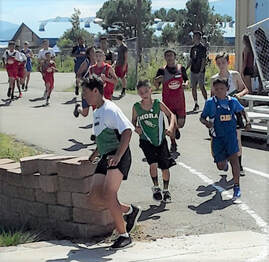
PictureMiddle School boys running at a recent meet in Penasco, New Mexico. One of the author's runners, in blue, is in the far left.

This fall, after a two year hiatus, I have returned to coaching a middle school cross country team. It is an interesting job, to say the least. Middle schoolers, who are in 6th-8th grade, come in all sizes and shapes, and have varying temperaments, from upbeat, silly and optimistic to gothic and depressed. Some middle schoolers run that emotional gamut in a single day. They are raging bundles of adolescent hormones and angst, teetering on the brink of adulthood, then falling backwards into toddler tantrums when they least expect it. If anyone needs the physical release of a good, long run, it's a middle schooler.

My first experience with middle school cross country was in 2007. That was the fall when I returned to teaching after a 22 year stint as a stay-at-home mom. The only job I could find was as a substitute, and I thought that volunteering to help with afterschool activities would help my job prospects. I didn't know that I would find the experience so satisfying that I would continue to coach long after I'd secured a full time teaching position.

When I first began coaching, I was a competent runner who participated in road races of 5K to marathon length, and I could run in the middle of the middle school pack. By the end of that first season, however, I was running in the back. My middle schoolers improved in the course of the season, and I didn't. Each season after that I began a little farther back in the pack and finished a little slower. Students who I'd encouraged to "finish strong" were now doing the same for me. 

I'm now in my third year teaching in a rural school east of Albuquerque, and for the first time, I've rejoined the team. I am slower than ever, which qualifies me to run sweep. I run at the back, helping those who have side stitches, have had encounters with cacti, or just forgot to eat anything but Doritos for lunch and have nothing left to fuel their bodies. Some students only run with me once before they find their mojo and return to the middle and front of the pack. Others run in the back with me every day. They are the little dogs, and the whiners and wheezers.

While the whiners run in the back with me every day, their excuses seem to be new each run. They can be highly entertaining. A couple of weeks ago, one runner couldn't run, he said, because he had a mosquito bite. I asked him where it was. He searched both arms, his legs, and then the back of his neck before admitting that he couldn't remember. Another day, he claimed he had a lung cramp. On a hot afternoon, he asked me to tell his mother than he loved her if he didn't live to see the end of the two mile course.

He is not my only frequent companion. One girl stops to pick wildflowers. Another stops to gawk every time a hawk appears in the sky. Some days I do more walking - and nagging - than running.

Picture
Jennifer Bohnhoff teaches and coaches at a middle school in rural New Mexico. Her most recent book, Super Hec, is about a middle school boy who trains to run a 5K. You can read more about all of her books here. 

Keeping Time with the Romans

  Modern societies rely on precise and standardized timing. Our schedules are synchronized to prevent chaos, ensure safety, and keep complex...