Thursday, April 9, 2020

My Bad-Weather Flower


Picture
A fair-weather friend is one who stays with you for the good times, but isn't around to support you through the hard times. We all probably have a fair-weather friend, and I am ashamed to say that I've been one before. I can think of numerous friends I let down when they really needed me. It's not something I'm proud of, and I wish I could go back and fix it.

I guess the opposite of a fair-weather friend is a bad-weather friend. That would be someone who is willing to weather the storms of life with you, to be by your side when life is painful. I have a few of these, and they are treasures.
Picture
One of my bad-weather friends came and visited me during one of the lowest points in my life. My husband had just lost an election, which meant that he also lost the job that he'd dreamed of for his entire life. It seemed that all our hopes for the future were shattered and we had no idea where to go or how to proceed. Enter said friend, with a boxed amaryllis. 

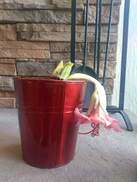
The thing about amaryllises, or any other kind of boxed bulb, is they give you something to look forward to. They are hope in a box. But this one had waited too long, and had started to bud while still in the box. It looked pretty hopeless, but it surprised us an bloomed anyway. You can read about it here.  

But that stubborn little flower wasn't done. It gave us another show after that, which you can read about here. 

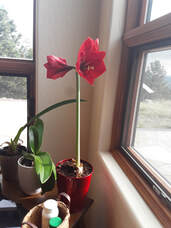
And now it's blooming again! This is the first time I've ever had a forced bulb repeat. The picture at the top of this post was taken this morning.

This is my bad-weather flower. It seemed to know that this was a hard time, and I needed some cheering up. Here's wishing that you have some bad-weather friends and bad-weather flowers to brighten up your darkest days.

Monday, March 2, 2020

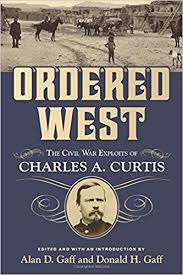
Ordered West: One Soldier's Account of Life in the Territory


Picture
I love writing historical fiction. 
And I really love doing the research. I read over 20 books as I researched The Worst Enemy, the second in my trilogy about the Civil War in New Mexico. 

One of the books that I really enjoyed was Ordered West: The Civil War Exploits of Charles A. Curtis.I couldn't use much of what I read in The Worst Enem; by the time Curtis came to New Mexico in 1862, the Confederates had already lost and were heading back south to Fort Bliss, on their way home to San Antonio. Some of What I read might end up in The Famished Country, the third and final book in my series.

Charles Curtis came to New Mexico with the 5th United States Infantry. He stayed here on garrison duty until 1865. Years after his service, Curtis wrote a memoir of his time in New Mexico and Arizona while he was president of Norwich University. His memoir was serialized and published in a New England newspaper. Alan and Donald Gaff compiled those stories into a book that is heavily and informatively footnoted so that the reader knows who Curtis is referring to. There are also lots of pictures and maps to help orient the reader.
But what I really found interesting were Curtis' descriptions of places in New Mexico that I could identify. One place he talks about is the aguas termales in the Jemez mountains, hot springs so hot that he claims to have frequently boiled eggs in them.Curtis says that in the river opposite the spring was an island about a hundred feet long and encrusted with sulfur so pure that it would burn when lighted with a match. Anyone who's ever been to the Soda Dam knows exactly what he is talking about. 
Another interesting episode is the building of winter quarters near Peralta, New Mexico. Curtis describes how the whole command goes into a low area near the river and cuts terrunos (turfs) using axes and spades. The thick, clayey turf is scored with long parallel lines, cut across every nine inches. Each terron was about six inches tall. These were stacked six feet tall, using local mud as mortar to make huts that were the same size as the tents the men used in summer. Stout spars were lashed together and set over the hut  and a wall tent was pitched over the top of the spars to make a roof. No windows were necessary since light came through the canvas. Each hut had a wide, open fireplace in the back wall and a wooded door hung on hinges at its front. Curtis says that the alkali soil from which the huts were made dried white and crusty, making the huts look like they were covered with frost. After the hut was made, water was poured on the floors and more dirt added until the floor was a foot higher than the outside. When dry, Curtis said the floor was hard and solid. I have seen lots of pictures of Fort Craig and Fort Union, but this description of how quarters were built really brought the process to life for me.
Picture
Jennifer Bohnhoff is an author and educator who lives in the mountains east of Albuquerque. You can read more about her books here

Ordered West is available from the Albuquerque Public Library,  on Amazon, and through independent bookstores.

Thursday, January 23, 2020

Throwing out the Baby with the Potato Water


Picture
My critique partners can attest that sometimes I don't remember my own books.  They've been through so many revisions that I can't remember what's in them and what's been expunged.
I forget sub-plots.  I can't remember characters' names.  Often I've forgotten whole scenes.

This became a bit of a problem for me this past week.  I'd had the honor of being asked to guest-write a post on Project Mayhem, a fabulous blog on writing hosted by a wonderful group of Middle Grade authors.  I decided to address how little historical details can help readers grasp what a period of time was like, and how even the littlest of details could lead to some big questions.  As an example, I decided to use a quirky little historical detail from my Civil War novel, The Bent Reed, which will be published in both paperback and ebook in September.

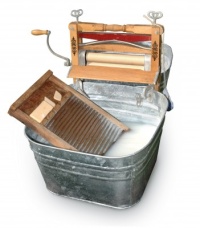
The quirky little historical detail in question is from a laundry scene; After washing Pa and Lijah's shirts, Ma dips them into a vat that contains the water left over from boiling potatoes.  Why would she do this, you ask?  Because the left-over potato water would have had starch suspended in it, and the starch would have made ironing the shirts easier, and the ironed shirts more crisp.  

I remember learning this little historical detail in a Civil War era book of hints for housewives and being fascinated.  I delight in little bits of trivia like this.  I thought that it could lead to many interesting discussions about resource use and thriftiness.  

As I wrote my post last week, I decided that this detail was a perfect example of how little bits of trivial information about everyday life in an historical period could not only bring that period to life for readers, but help readers ask big questions about how history informs the present day. And so I pulled out my manuscript and began searching for the scene.

And this is where I ran into a problem, because the scene wasn't there.  I searched using potato and starch and laundry as key words.  I found several scenes with laundry, but none involved a vat of potato water or even an iron.
Apparently, at some point in my rewriting and revision process I had cut this beloved little bit of trivia from my story and then forgotten about doing so.

Thinking about it now, I'm not surprised that I'd thrown out the vat of potato water.  Even the most interesting bits of historical trivia have to either move the plot along or illuminate the characters.  Although I cannot remember thinking so, I must have decided at some point that the potato water did neither.

Now that I think of it, I'm convinced that using the water left over from boiling potatoes show just how frugal Ma was.  Like most women in her era, she used a good deal of her own elbow grease and determination to make sure to turn everything to good account.

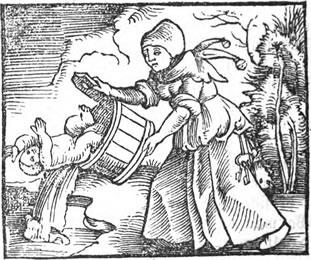
Maybe I threw out the baby with the potato water.


Picture
Picture
Jennifer Bohnhoff is an educator and writer who lives in New Mexico. She has written two novels set in the Civil War: The Bent Reed, which takes place at Gettysburg, and Valverde, set in New Mexico. The sequel to Valverde, Glorieta, will be published this spring. This post was originally published July 14, 2014.
2025 note: Valverde was republished by Artemesia Publishing under the title Where Duty Calls, Glorieta under the title The Worst Enemy. The third in the series, The Famished Country, was published in 2024.

Thursday, January 16, 2020

Celebrating a Civil War Coffee Hero


Picture
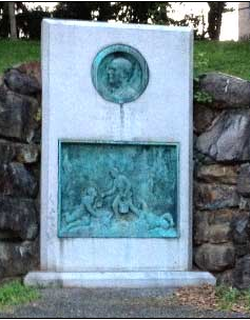
Maryland has one of the most unusual war monuments ever created. It doesn’t show a heroic charge or the valiant defense of a fortified position, but a soldier carrying a bucket and cup.

The battle of Antietam was raging, and the boys from Ohio had been fighting since morning. Their spirits and their energy were waning. But then a 19-year-old private named William McKinley appeared, hauling a bucket of hot coffee. He ladled the steaming brew into the men’s tin cups. They gulped it down and resumed firing.

“It was like putting a new regiment in the fight,” their officer recalled.
When McKinley ran for president three decades later, people remembered this act of culinary heroism and voted him into office.
Coffee was such an important staple in the Union soldiers’ diet that the Army issued about 35 pounds of it to each soldier every year. They drank their hefty ration before marches and after marches, while on patrol, and, as McKinley proved, even during combat. Men ground the beans themselves, often by using their rifle butts to smash them in their tin cups, then brewed it using any water that was available to them.  “Settling” the coffee, getting the grounds to sink to the bottom of the vats in which it was boiled, was so important that escaped slaves who were good at it found work as cooks in Union Army camps.

The Union blockade assured that most Confederates soldiers were not so lucky. The wide variety of attempts at creating substitutes speak to how desperately they wanted a cup of joe. Southerners tried making coffee substitutes from roasted corn, rye, chopped beets, sweet potatoes, chicory, and all sorts of other things. Although none of these brews were good, enjoying them was a source of patriotic pride. Gen. George Pickett, whose failed charge at Gettysburg is also a source of Southern pride, thanked his wife for the delicious “coffee” she had sent by saying that “no Mocha or Java ever tasted half so good as this rye-sweet-potato blend!”

Coffee may not have won the war nor earned McKinley his presidency, but it certainly was one of the small determining factors in both endeavors.


Jennifer Bohnhoff is a writer who lives in rural New Mexico. The soldiers in her Civil War novel, Where Duty Calls, drink a lot of coffee. The Worst Enemy and The Famished Country are sequels.  

A recipe for Union Camp coffee and Confederate acorn coffee will be included in Salt Horse and Rio, a companion cookbook of Civil War recipes that will come out later this year.

​This article was originally published April 23, 2017.

Thursday, January 2, 2020

Fort Union: Guardian of the Santa Fe Trail


Picture
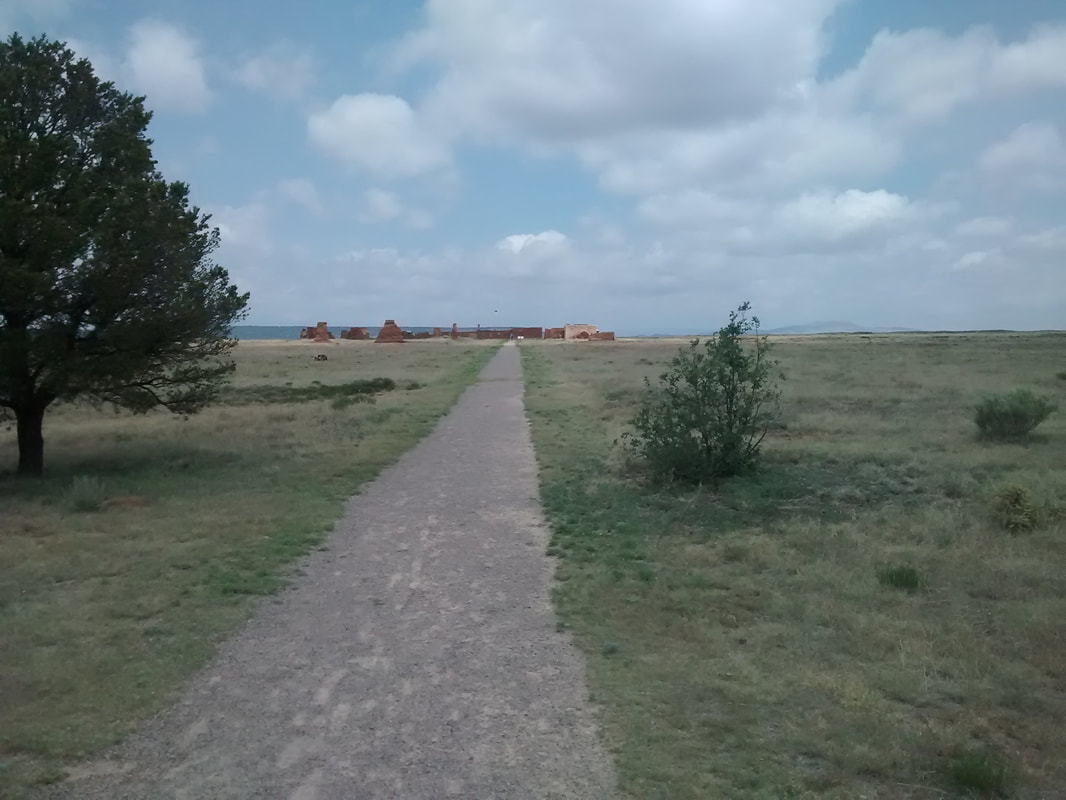
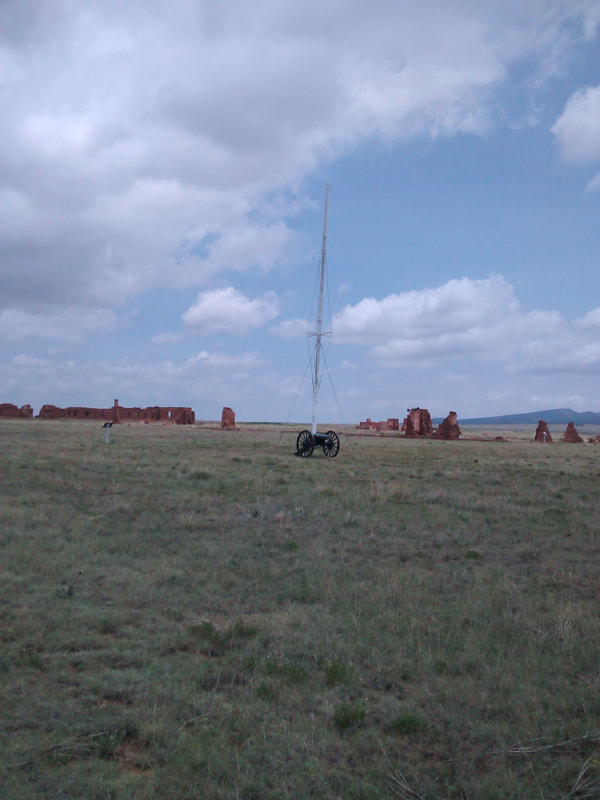
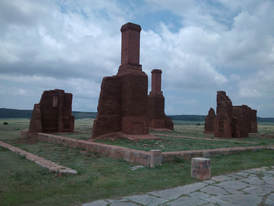
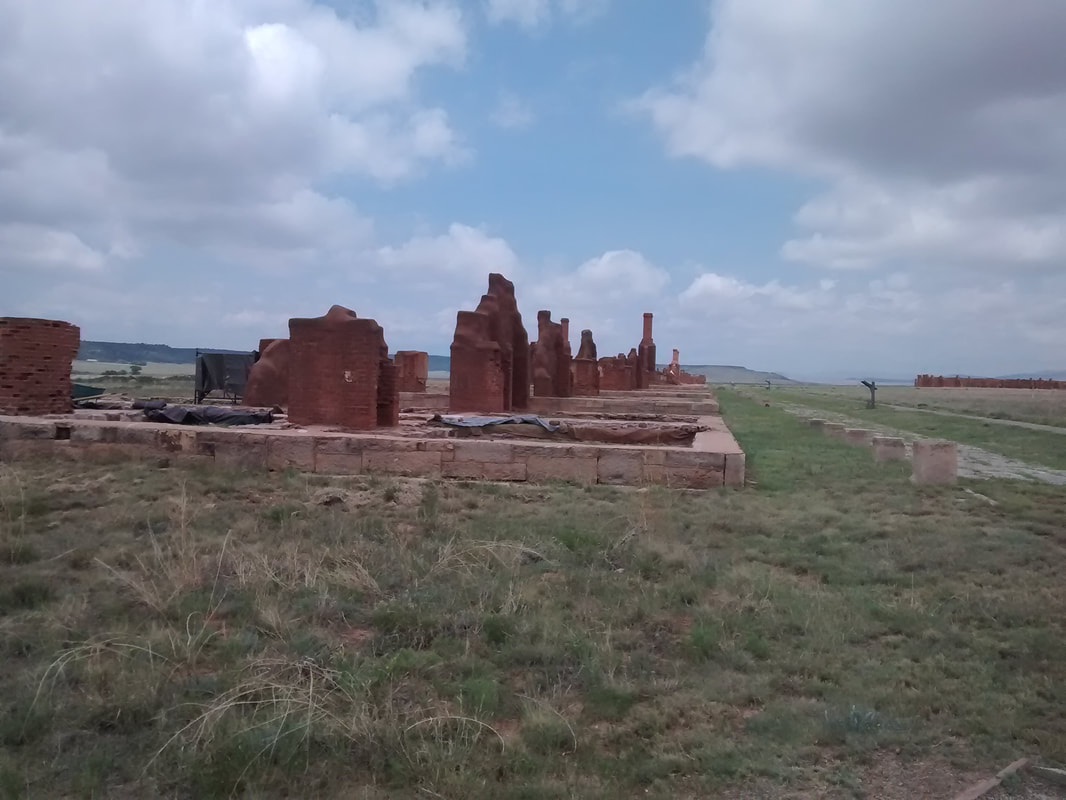
The ruins of the third Fort Union.
Picture
Fort Union rests out in the middle of nowhere, but a century and a half ago it was the center of a lot of activity. It has been rebuilt three times, each time responding to what was happening around it. 

Located near the convergence of the Mountain and Cimmaron branches, Fort Union's original task was to monitor the Santa Fe trail. The soldiers were charged with controlling Native Americans and, if wagon trains came under attack, to respond with campaigns against the Indians. 

The original fort, constructed in the 1850s, was built close by the eastern edge of a high mesa in order to protect it from the incessant winds. Diaries from the period indicate that the protection was minimal, and that sand constantly seeped through cracks around windows and found its way into beds and food supplies.
It was thrown up quickly, and made of adobe and logs that were already in serious disrepair a decade later, when the Civil War began to disrupt life in the territory.

By August 1861, the Confederates under John Baylor had already claimed the southern half of New Mexico Territory and renamed it Arizona. The U.S. Army was convinced that invasion of Northern New Mexico was imminent, and that Fort Union was the key to holding the territory. However, the bluffs that protected it from wind also made it vulnerable to cannon fire should the Confederates be able to take them. A new fort was needed.

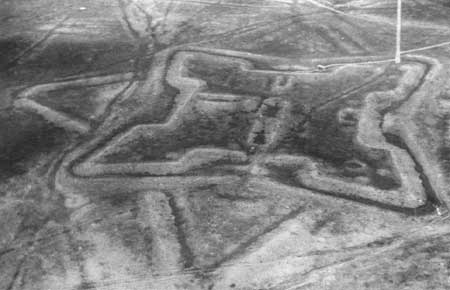
The Second Fort Union was built a mile and a half away from the first, in the open valley. Its earthwork walls, parapets, and moats covered 23 acres and were shaped like a star to accommodate 28 cannon. It was built by Hispanic 
Picture
Volunteers since most of the Union Troops had been called east. The work went on 24 hours a day, with gangs of 200 men taking four hour shifts. The fort was ready by February 1862, when Confederates advanced up the Rio Grande and defeated the Union forces at the battle of Valverde. By March they had taken Albuquerque and then Santa Fe. It seemed that Fort Union was the only thing standing between the Confederates and the rich gold fields of Colorado.

Colonel Edward Canby, the Commander of Union forces in New Mexico Territory, said "The question is not of saving this post, but of saving New Mexico and defeating the Confederates in such a way that an invasion of this Territory will never again be attempted. It is essential to the general plan that this post should be retains if possible. Fort Union must be held."

The standoff at Fort Union never happened. No one on either side anticipated the gritty determination of the Colorado Volunteers when they refused to stay at the fort, and instead confronted the enemy in the mountains east of Santa Fe. 
Picture
Picture
When visitors go to Fort Union National Monument, most of what they see is the remains of the third fort. Begun in 1863, this fort became the largest military outpost west of the Mississippi River. It served as an arsenal and depot, and was a safe resting place for travelers along the Santa Fe Trail. Again, its primary function was controlling the Indians and protecting Americans who used the trail. 

The military abandoned the fort in 1891. By then the Apaches and Comanche had been subdued and the railroad had entered the state, effectively ending the

era of the Santa Fe trail.  When I toured it in June 2017, there were few people there. I was able to walk among the ruins and read the interpretive signs without jostling crowds. The occasional sound of a bugle call broke the constant rush of the winds through the ruins. It was peaceful and pleasant, and I learned a lot from the small museum situated near the parking lot.

The fort is located 28 miles north of Las Vegas, New Mexico. To get there, take exit 366 off I-25 and go 8 miles north and west. The park, which is run by the National Park Service, is open from 8-5 from Memorial Day to Labor Day, and 8-4 the rest of the year. Check their website for special programs and tours.
Picture
Jennifer Bohnhoff is a writer, historian, and novelist who lives in the mountains east of Albuquerque, New Mexico.

This article was originally published on July 22, 2017. This fort is one of the places depicted in The Worst Enemy, the second in a trilogy about the Civil War in New Mexico, which will be published this spring. 

Monday, December 30, 2019

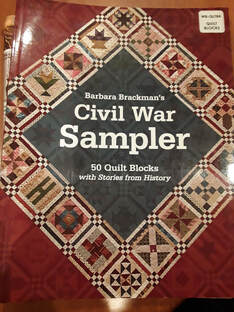
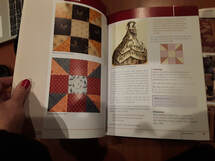
Quilts and History


Sunday, October 6, 2019

If it's October, it must be Pumpkin


Picture
It's October: high season for anything pumpkin.

I know a lot of pumpkin haters who groan about how pumpkin pervades the market every fall. Consider, though, that the American native is a nutritional heavyweight. This variation of squash originated in Mexico and is very high in dietary Fiber, vitamins A and C, riboflavin, potassium, copper, and manganese. Pumpkin is also a good source of vitamin E, thiamin, niacin, vitamin B6, folate, iron, magnesium, and phosphorus. 

I think God made pumpkin a fall fruit so that our bodies would be ready to fight the cold of winter.


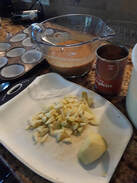
Picturepeeled, cored and chopped, apples give these muffins an extra sweet punch
I love pumpkin so much that my boys grew up eating a lot of pumpkiny food in the fall. My youngest son's favorite pie was pumpkin. We ate a lot of rich pumpkin bread slathered in cream cheese. Pumpkin donuts were a definite every fall. And yes, we ate pumpkin muffins. Interested in any of the above? Let me know and I'll share a recipe with you.

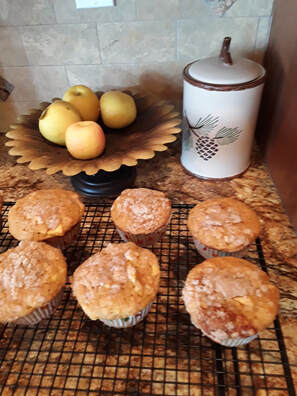
Here's a recipe for muffins that have pumpkin  and diced apple in them, and are crowned with a crunchy streusel topping that would make any muffin special. Try it on blueberry muffins or just plain muffins to make them not-so-plain afterall. 

​I'm including a second pumpkin muffin recipe in my upcoming Manic Muffin Mix Cookbook, which I'll be giving to all the members of my Friends, Fan and Family elist in December. Want in? Sign up to receive my emails here.

Pumpkin Apple Streusel Muffins

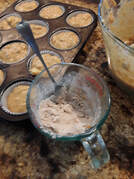
PictureThis topping would make any muffin special

For streusel topping, mix in a small bowl

1/4 cup sugar
2 TBS flour
1/2 tsp cinnamon

Use a fork to blend in, mixing until crumbly:
1 1/2 TBS Butter

Set aside streusel topping.

For muffins, mix thoroughly in a large bowl
2 eggs
1 1/2 tsp. vanilla
1/2 cup salad oil
1 cup water
1 cup solid pack pumpkin
1/2 TBS pumpkin pie spice

Add
1 cup peeled and finely chopped apples
Add and stir in until no dry areas remain
2 3/4 cup muffin mix

Spoon batter into greased or paper-lined muffin cups, filling 3/4 full.
Sprinkle streusel topping over batter
Bake in a preheated 350° oven 30-35 minutes, until a toothpick inserted into one comes out clean.
 

Picture
Jennifer Bohnhoff' lives in the mountains in central New Mexico, where she teaches middle school language arts. Since her three sons have grown up and moved away, she only makes muffins and other foods for her husband and visiting friends. She is the author of historical novels set in several different time periods and a series of funny contemporary novels for middle readers. She is currently working on an historical novel set in New Mexico during the Civil War. You can read more about her books on her website by clicking here.

History Lessons from a Walk in the Maine Woods

  I recently got back from a wonderful month in Maine. My husband and I rented a house right on a lake, and we spent a good portion of our t...