
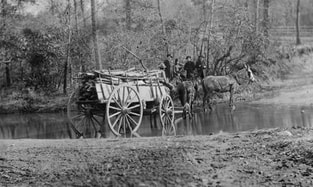
Mules were the backbone of both Confederate and Union Armies during the American Civil War. According to a page on the Stones River Battlefield site, about three million horses and mules served in the war. They pulled the supply wagons, pulled the limbers and caissons for cannons, and moved the ambulances.
Although mules died in battle, just like the soldiers they supported, a greater percentage died of overwork, disease, or starvation. Rarely was the daily feed ration for Union cavalry horses, ten pounds of hay and fourteen pounds of grain, available during the long campaigns.
Although mules died in battle, just like the soldiers they supported, a greater percentage died of overwork, disease, or starvation. Rarely was the daily feed ration for Union cavalry horses, ten pounds of hay and fourteen pounds of grain, available during the long campaigns.
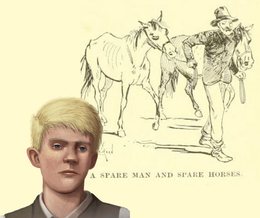
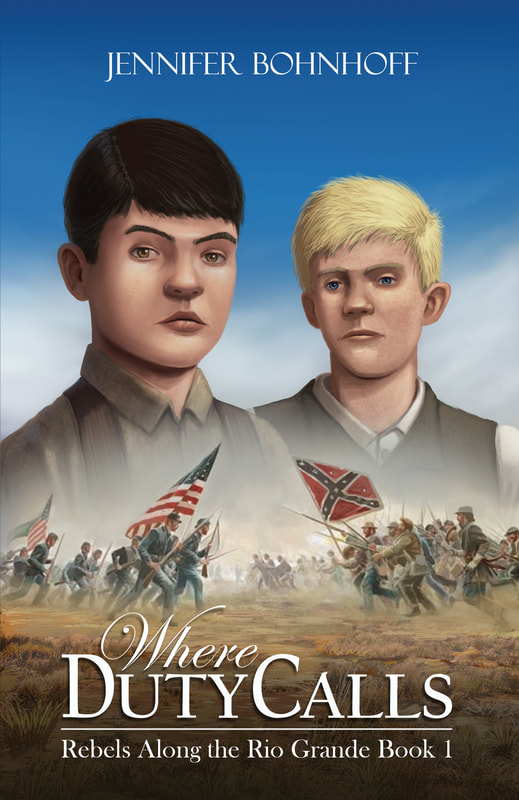
Jemmy Martin, one of the lead characters in Where Duty Calls, my middle grade novel about the Civil War in New Mexico, loves the two mules who work on his family's farm. When his brother sells them to the Confederate Army, Jemmy decides to travel with them to protect them. He tries hard to find good forage for his mules after Major General Henry H. Sibley's army crosses into barren New Mexico territory on its way to capture the gold fields of Colorado.
But Jemmy couldn't protect his mules from Union trickery. The night before the battle of Valverde, a Union spy named Paddy Graydon concocted a plan for killing the Confederate hoofstock using a couple of run-down mules as weapons. While his plan didn't work, he managed to spook the Confederate's pack mules. The animals, who'd been denied access to water for several days, stampeded down to the Rio Grande, where Union soldiers rounded them up. Jemmy finds himself continuing to follow the army even though his reason for being with them is gone.
While Jemmy and his mules are fictional characters that I created for my novel, the story of Paddy Graydon is true. Graydon really did spook the Confederacy's pack mules, and the Union Army did really collect over 100 of the beasts when they broke to gain access to water. They lost over 100 animals and had to reconfigure their supply train. Before they left camp, the Confederates burned what they could no longer carry.
While Jemmy and his mules are fictional characters that I created for my novel, the story of Paddy Graydon is true. Graydon really did spook the Confederacy's pack mules, and the Union Army did really collect over 100 of the beasts when they broke to gain access to water. They lost over 100 animals and had to reconfigure their supply train. Before they left camp, the Confederates burned what they could no longer carry.
In Hardtack and Coffee: The Unwritten Story of Army Life, Civil War veteran John D. Billings shares the story of another mule stampede. During the night of Oct. 28, 1863, Union General John White Geary and Confederate General James Longstreet were fighting at Wauhatchie, Tennessee. The din or battle unnerved about two hundred mules, who stampeded into a body of Rebels commanded by Wade Hampton. The rebels thought they were being attacked by cavalry and fell back.
To commemorate this incident, one Union soldier penned a poem based on Tennyson's Charge of the Light Brigade.
To commemorate this incident, one Union soldier penned a poem based on Tennyson's Charge of the Light Brigade.
Charge of the mule brigade
Half a mile, half a mile,
Half a mile onward,
Right through the Georgia troops
Broke the two hundred.
“Forward the Mule Brigade!”
“Charge for the Rebs!” they neighed.
Straight for the Georgia troops
Broke the two hundred.
“Forward the Mule Brigade!”
Was there a mule dismayed?
Not when the long ears felt
All their ropes sundered.
Theirs not to make reply,
Theirs not to reason why,
Theirs but to make Rebs fly.
On! to the Georgia troops
Broke the two hundred.
Mules to the right of them,
Mules to the left of them,
Mules behind them
Pawed, neighed, and thundered.
Breaking their own confines,
Breaking through Longstreet's lines
Into the Georgia troops,
Stormed the two hundred.
Wild all their eyes did glare,
Whisked all their tails in air
Scattering the chivalry there,
While all the world wondered.
Not a mule back bestraddled,
Yet how they all skedaddled--
Fled every Georgian,
Unsabred, unsaddled,
Scattered and sundered!
How they were routed there
By the two hundred!
Mules to the right of them,
Mules to the left of them,
Mules behind them
Pawed, neighed, and thundered;
Followed by hoof and head
Full many a hero fled,
Fain in the last ditch dead,
Back from an ass's jaw
All that was left of them,--
Left by the two hundred.
When can their glory fade?
Oh, the wild charge they made!
All the world wondered.
Honor the charge they made!
Honor the Mule Brigade,
Long-eared two hundred!
Half a mile, half a mile,
Half a mile onward,
Right through the Georgia troops
Broke the two hundred.
“Forward the Mule Brigade!”
“Charge for the Rebs!” they neighed.
Straight for the Georgia troops
Broke the two hundred.
“Forward the Mule Brigade!”
Was there a mule dismayed?
Not when the long ears felt
All their ropes sundered.
Theirs not to make reply,
Theirs not to reason why,
Theirs but to make Rebs fly.
On! to the Georgia troops
Broke the two hundred.
Mules to the right of them,
Mules to the left of them,
Mules behind them
Pawed, neighed, and thundered.
Breaking their own confines,
Breaking through Longstreet's lines
Into the Georgia troops,
Stormed the two hundred.
Wild all their eyes did glare,
Whisked all their tails in air
Scattering the chivalry there,
While all the world wondered.
Not a mule back bestraddled,
Yet how they all skedaddled--
Fled every Georgian,
Unsabred, unsaddled,
Scattered and sundered!
How they were routed there
By the two hundred!
Mules to the right of them,
Mules to the left of them,
Mules behind them
Pawed, neighed, and thundered;
Followed by hoof and head
Full many a hero fled,
Fain in the last ditch dead,
Back from an ass's jaw
All that was left of them,--
Left by the two hundred.
When can their glory fade?
Oh, the wild charge they made!
All the world wondered.
Honor the charge they made!
Honor the Mule Brigade,
Long-eared two hundred!
The Stones River Battlefield Website stated that roughly half the horses and mules employed during the Civil War didn't survive. Jemmy Martin loses his to Paddy Graydon's plan. He spends the next two books in the Rebels Along the Rio Grande series trying to find them and return them to his home near San Antonio, Texas.


No comments:
Post a Comment