

November is National Novel Writing Month, and I’m participating again this year. I’ll be working on a middle grade historical novel inspired by, but not in any way based on my recent hike around the Mont Blanc massif. I don’t have a title for this work as of yet; perhaps you, dear readers can help me determine a good title sometime during November.
What I do know thus far is that my novel will be set in 1799-1800 and will take place in Great Saint Bernard Pass, a route through the Alps that travels up the Rhone Valley from Martigny, Switzerland to Aosta, Italy. Great Saint Bernard pass is not the prettiest of passes, but it is convenient and offers the additional attraction of the Saint Bernard Hospice, the highest winter habitation in the Alps, at the top of the pass. The Hospice is also the place where the eponymous dog breed got its start.
What I do know thus far is that my novel will be set in 1799-1800 and will take place in Great Saint Bernard Pass, a route through the Alps that travels up the Rhone Valley from Martigny, Switzerland to Aosta, Italy. Great Saint Bernard pass is not the prettiest of passes, but it is convenient and offers the additional attraction of the Saint Bernard Hospice, the highest winter habitation in the Alps, at the top of the pass. The Hospice is also the place where the eponymous dog breed got its start.


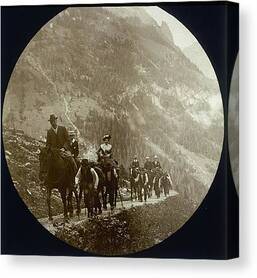
When I went through the Great Saint Bernard Pass this past September, I traveled by bus: not a city bus or a school bus, but the kind of tour bus that holds perhaps fifty passengers, with two big upholstered seats on each side of a central aisle. The road itself, which is now called highway E27, was paved, but it had only two lanes, one in each direction, and it had more hairpin turns than a roller coaster. More than once, I was convinced that the bus wasn’t going to be able to negotiate a turn. A few times I was right, and the bus driver had to throw the bus into reverse and make an extra cut in order to make it around a tight bend.
I’ve been doing a lot of research this past month, and I’ve discovered that Charles Dickens went through the Great Saint Bernard Pass (and yes, there is a Lesser Saint Bernard Pass.) in September of 1846 when he was touring Switzerland. Dickens did not ride in a tour bus. In his day, the path was so rocky that the only way to travel along what was then called the Chemin des Chanoines, or the pathway taken by the canons of the hospice, was on foot or astride a donkey or horse. Even carriages could not make the journey; they were disassembled at Bourg-Saint-Pierre, the highest village on the Swiss side, then carried over the pass by porters and reassembled on the Italian side.
I’ve been doing a lot of research this past month, and I’ve discovered that Charles Dickens went through the Great Saint Bernard Pass (and yes, there is a Lesser Saint Bernard Pass.) in September of 1846 when he was touring Switzerland. Dickens did not ride in a tour bus. In his day, the path was so rocky that the only way to travel along what was then called the Chemin des Chanoines, or the pathway taken by the canons of the hospice, was on foot or astride a donkey or horse. Even carriages could not make the journey; they were disassembled at Bourg-Saint-Pierre, the highest village on the Swiss side, then carried over the pass by porters and reassembled on the Italian side.
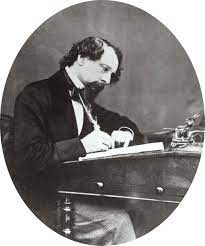
Dickens includes his perception of traveling Great Saint Bernard Pass in his novel Little Dorrit. In Book 2, chapter 1, his travelers ride through “the searching old of the frosty rarefied night air at a great height,” through a landscape marked by “barrenness and desolation. A craggy track, up which the mules, in single file, scrambled and turned from block to block, as through they were ascending the broken staircase of a gigantic ruin.” In these upper reaches of the pass, “no trees were to be seen, nor any vegetable growth, save a poor brown scrubby moss, freezing in the chinks of rock.” At the front of the mules is “a guide on foot, in his broad-brimmed had and round jacket, carrying a mountain staff or two upon his shoulder.”
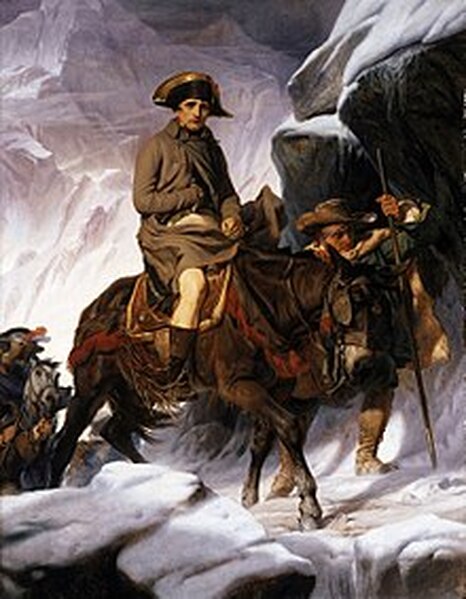
I’ve seen a painting of another rider on a mule, guided by another man who knew the trail, but that is a story best saved for another blog.
Jennifer Bohnhoff writes for middle grade and adult readers. Most of her books are works of historical fiction. You can read more about her and her book on her blog.
Jennifer Bohnhoff writes for middle grade and adult readers. Most of her books are works of historical fiction. You can read more about her and her book on her blog.


No comments:
Post a Comment