
Merriam Webster defines a trope as a recurring element or a frequently used plot device in a work of literature or art. One common trope in not only literature but in cartoons is the mismatched duo, particularly a big guy partnered with a little guy. Often the smaller character is also physically weaker and needs the protection of his big friend. In return, he supplies the ideas that move the story forward. The big guy, often a misunderstood gentle giant or suffering a mental deficiency or disability, needs his little buddy to keep him out of trouble.
The big guy/little guy partnership has been used repeatedly in cartoons. When my sons were little, the TV cartoon that used this trope most obviously was Pinky and the Brain. The cartoon focused on two genetically enhanced laboratory mice who resided in a cage inside the Acme Labs research facility. Brain, the littler of the two mice, was highly intelligent, self-centered and scheming. Pinky was Brain’s sweet-natured but feeble-minded henchman. In every episode, Brain devised a new plan to take over the world, but his plans always failed, with hilarious results.
The big guy/little guy partnership has been used repeatedly in cartoons. When my sons were little, the TV cartoon that used this trope most obviously was Pinky and the Brain. The cartoon focused on two genetically enhanced laboratory mice who resided in a cage inside the Acme Labs research facility. Brain, the littler of the two mice, was highly intelligent, self-centered and scheming. Pinky was Brain’s sweet-natured but feeble-minded henchman. In every episode, Brain devised a new plan to take over the world, but his plans always failed, with hilarious results.

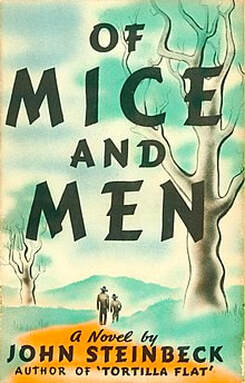
Not all works that use the big guy/ little guy trope are funny, however. Probably the most famous and most literary of the trope’s treatments has been in Of Mice and Men, John Steinbeck’s 1937 novella. In it, George Milton is the little, smart guy who tries to protect Lennie Small, a slow thinking giant of a man who does not understand his own strength. The two displaced ranch workers move from job to job in Depression-era California, until fate catches up to them and Lennie can no longer protect his friend. The story is a tragedy and appears on the American Library Association's list of the Most Challenged Books of the 21st Century because many consider the material both offensive and racist, but it is also a beautiful depiction of the difficulties some people seem to never be able to shrug off, and the importance of watching after each other. It is a book that is, by turns, noble and base, vulgar and tender, and is frequently taught in high school courses. I consider it a little too mature for middle school readers, but hope that middle schoolers will have the chance to encounter it when they are older.
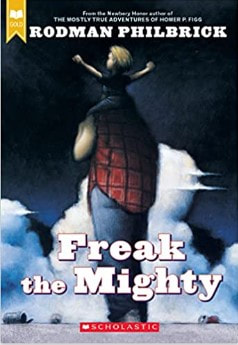
A book that features the big guy/ little guy trope, but is appropriate for middle school readers is Rodman Philbrick’s Freak the Mighty (Scholastic Paperbacks; Reprint edition, June 1, 2001, ISBN-13: 978-0439286060) In this novel, the big guy is Max, a teenage giant with a learning disability and a terrible secret. The little guy is Kevin, whose tiny body is wracked with a syndrome that is slowly killing him. Together, they are Freak the Mighty, and they can overcome bullies and brutes. This story does not end up happily, either, but the reader is left with a sense of hope for the future. The book was made into a movie titled The Mighty, and stars Kieran Culkin and an all-star cast. When I taught middle school Language Arts, this was one of my favorite books to share. The movie to book comparison always led to good discussions on how characters were presented and what and why certain plots lines, scenes and themes were left out of the movie version.
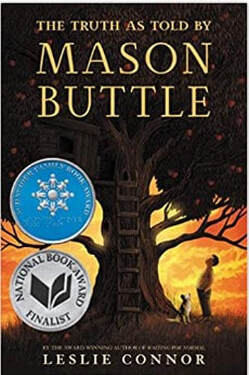
The most hopeful middle grade big guy/ little guy book I found was Leslie Connor’s multiple-award winning The Truth As Told by Mason Buttle (Katherine Tegen Books; Reprint edition, January 7, 2020, ISBN-10: 0062491458.) Mason is a big, sweaty kid whose learning disabilities make reading and writing impossible. His down and out family has suffered several deaths and the sell-off of their orchard land that had been their livelihood for generations. Then, the body of Mason’s best friend, Benny Kilmartin, was found in what remained of the family orchard and he is shunned by the town and bullied by neighboring boys. Mason’s luck begins to change when little guy Calvin Chumsky befriends him. Together, the two manage to enjoy their circumstances while the investigation drags on, and Mason tries to convince Lieutenant Baird that he is not responsible for Benny’s death. The truth does come out, in ways that no one has anticipated.
I think it is important for parents and teachers to talk with children about the big guy/little guy trope. The line between trope and stereotype is slim, indeed. Not every big guy is a gentle giant with limited mental ability. Some big guys are big on brains, too. Others are not gentle at all. Nor is every little guy a genius trapped in a weak frame. But regardless of its limitations, the trope remains an important one in literature and worthy of study. I think comparing books to cartoon depictions and movies is a good place to start. Perhaps middle schoolers would be better prepared for Steinbeck if they began with Philbrick and Connor.
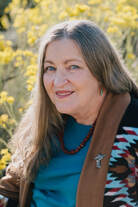
Jennifer Bohnhoff is a retired High School and Middle School Language Arts and History teacher. She is the author of historical novels for both middle grade and adult readers.
The book links in this article are to Bookshop.org, an online bookseller that gives 75% of its profits to independent bookstores, authors, and reviewers. As an affiliate, Jennifer Bohnhoff receives a commission when people buy books by clicking through links on her blog or browsing her shop at bookshop.org/shop/jenniferbohnhoff. A matching commission goes to independent booksellers. However, Ms. Bohnhoff is just as happy when people borrow books from their local library or shop at their local independent booksellers.
The book links in this article are to Bookshop.org, an online bookseller that gives 75% of its profits to independent bookstores, authors, and reviewers. As an affiliate, Jennifer Bohnhoff receives a commission when people buy books by clicking through links on her blog or browsing her shop at bookshop.org/shop/jenniferbohnhoff. A matching commission goes to independent booksellers. However, Ms. Bohnhoff is just as happy when people borrow books from their local library or shop at their local independent booksellers.


No comments:
Post a Comment